8 books to understand the importance of customer experience Comments Off on 8 books to understand the importance of customer experience 5357

In any field and at any stage of life, book recommendations are always welcome. But they can be even more valuable when it comes to professional development and improving the services provided in retail.

Among the demands of this market, customer experience is one of the factors that has most inspired learning. And the good news is that there is a wealth of books that cover important concepts on the subject.

The starting point for a great customer experience is understanding consumer behavior. After that, the work focuses on shaping everything about your retail business to make the interaction between customer and store as satisfying as possible.

To help you with this mission, here are 8 books that will be important along the way!

1. The Experience Economy – Joseph Pine II, James H. Gilmore

The Experience Economy is one of the most important books ever published on customer experience. It highlights the importance of taking an innovative approach to the way retailers relate to their customers.

The book places special emphasis on a key aspect of today’s landscape: the competition for consumer attention is fiercer than ever. Meanwhile, the time people are willing to spend keeps shrinking. After all, there are countless interactions and triggers vying for their focus, which means you need to stand out more and more, and that takes expertise.

2. The Power of Moments – Chip Heat, Dan Heat

Delighting customers is a unique ability that not every experience is able to deliver. And if your business falls short at that moment, it may never manage to build connections and drive engagement. The Power of Moments addresses this need and shows why having above-average impact in these interactions is essential.

With this premise, the authors tell stories and break down success cases of business leaders who managed to turn small moments into historic ones. This way, you’ll understand which conceptual foundations were used and then be able to think about how to replicate them within the context of your own business.

3. The Apple Experience – Carmine Gallo

Apple never wanted its customers to be one-time buyers. And that becomes quite clear when we see people who have owned several generations of the iPhone, for example. But it’s important to know that this starts right at the top of the funnel, more specifically, when a consumer walks into an Apple Store, the brand’s official retail location.

There, everything is amazing, from customer service to the free talks and workshops on offer. The process of assisting and guiding customers toward a purchase decision follows a consultative approach, far more than a sales one. And all of this is covered in detail in The Apple Experience. Without a doubt, a great book!

4. Driven to Delight – The Mercedes-Benz Way – Joseph Michelli

Just as Apple has its own method for delighting customers and building loyalty in consumer electronics retail, German automaker Mercedes-Benz operates in a unique way in the automotive market. Luxury and sophistication are the brand’s foundations, but there’s more behind it. Reaching the top required an intense, in-depth effort to understand customers and their needs.

The book presents the brand’s take on a process that ranges from identifying the demands of the average consumer to establishing a rewards system for loyal customers. All of this while still delighting customers and treating them like members of an exclusive club. After all, we’re talking about Mercedes-Benz!

5. The Disney Way of Delighting Customers – Richard Branson

Anyone who has had the chance to spend a day at the Disney parks in Orlando, Florida, will immediately understand what this kind of delight is all about. There, everything is designed to be unique, immersive and, above all, part of an experience you’ll remember for the rest of your life. And of course, all of it is strategically planned.

The book takes you behind the scenes of the company, showing the concepts applied to business management and customer service. You’ll understand how the Disney environment is designed to evoke emotions and turn them into purchases, all without losing the magic the studios build with every new release.

6. Guide to Customer Relationships and Customer Experience – Roberto Madruga

Customer Experience is, without a doubt, one of the foundations of business success in today’s world. More than providing good service and driving sales, this concept shapes consumer involvement and engagement. Building on this strong relationship, developed through intuition and expert analysis, retailers can grow considerably in the market.

The book takes a very technical approach to the subject, offering a look at topics such as the customer journey, sales KPIs, the impact of CRM on companies, customer service methodologies, and omnichannel strategies, among other points. That’s why it’s a great book for learning more and revisiting the fundamentals of customer service.

7. Storybrand – Donald Miller

Storybrand is a book that emphasizes the need to create clear messages to reach customers and help them understand what your business wants from its relationship with them. In fact, Storybrand is the methodology created by Donald Miller, focused on crafting a virtually irresistible idea around a product or service.

Essentially, the book shows how to create unique branding stories, empowering companies to become extremely compelling in the customer’s mind. But it goes further: you also need to work on the customer experience alongside it, and only then can you create the perfect scenario for engagement followed by sales.

8. Customer Success – How Innovative Companies Are Reducing Churn and Growing Recurring Revenue – Nick Metha, Dan Steinman, Lincoln Murphy

The customer lifecycle is more than just a widely discussed concept in retail. It’s something that truly needs to be put into practice. That way, you can keep renewing relationships, ensuring that a loyal customer never stops being an active consumer of your company.

In this book, the authors also show how to turn consumers into true brand advocates. Through innovative approaches, large companies have been achieving this more easily, which depends on a well-established business vision. The book is almost a manual on how to accomplish this effectively.

So, did you enjoy these book recommendations? We hope your business grows a lot and that your customers are increasingly delighted by the experiences you create for them every day in your physical space.

Want more tips like these and other important retail content? Then follow Alice Wonders on social media! Facebook | Instagram | YouTube | Vimeo


Inscreva-se em nossa Newsletter

Receba no seu email todas as novidades do nosso blog sobre tecnologia e varejo, além de ficar por dentro do novos projetos Alice Wonders.

Thank you for subscribing.

Something went wrong.

Previous ArticleNext Article

The End of Traditional Window Displays? How Technology Is Redefining the Retail Storefront Comments Off on The End of Traditional Window Displays? How Technology Is Redefining the Retail Storefront 383

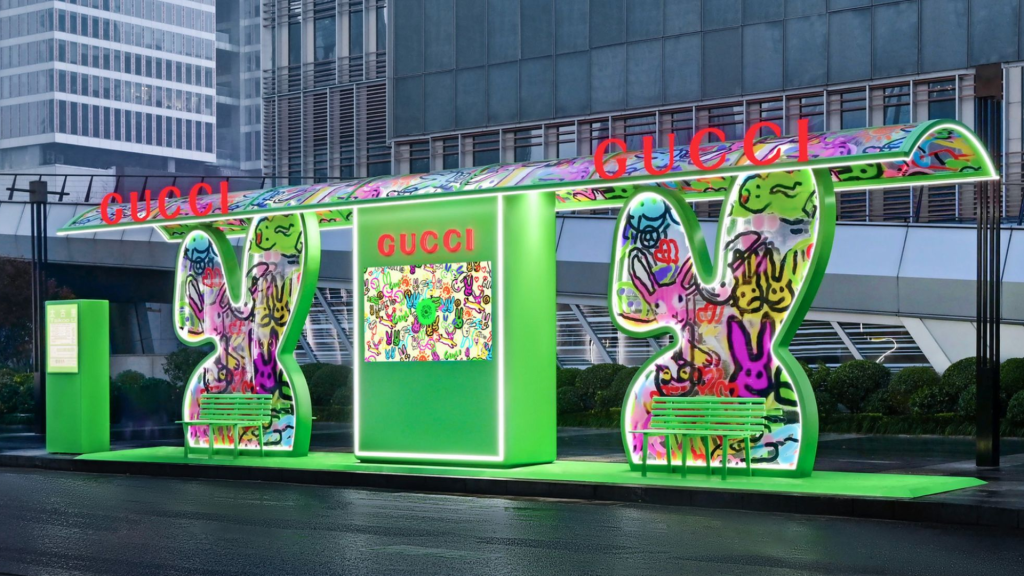
Vitrine tecnológica da Gucci com instalação interativa e iluminação verde em espaço urbano

What were the last three store windows you saw? Maybe you can’t remember, and that’s okay, because it’s only natural. The market has been shifting toward a new reality, one in which the windows that truly grab attention are no longer the ones that simply display a product. 

A shopper who is used to walking around with their face glued to their phone screen isn’t going to put it away to pay attention to a window featuring nothing but a mannequin wearing a new piece of clothing. Consumers have changed. They’re hyperconnected and crave dynamism. If your storefront has looked the same for a decade, it has become “invisible scenery.”

Traditional window displays aren’t necessarily dying, but the static model, the one focused solely on passively showcasing products, is living on borrowed time. That’s why, in today’s post, we’ll look at the reasons traditional window displays are dying out and the technologies emerging to take their place. 

Why are traditional window displays losing ground?

Today’s consumers are looking for more than transactions. After all, shopping has never been as easy as it is today. These consumers want products that create an emotional connection and memorable experiences. 

Competing with the convenience and personalization of e-commerce requires physical spaces to offer “something extra” from the very first touchpoint. And that first touchpoint, the one that grabs shoppers’ attention and holds their gaze, is precisely the storefront.

In a world where people want to shop with a sense of fun and personal connection, static, traditional window displays no longer bring to the point of sale the most valuable resource consumers have today: their attention.

Within this context, we can talk more about the concept of Retailtainment (retail as entertainment). Click here to check out the post we wrote on this topic. It reminds us that a store needs to invite shoppers in without saying a word.

Static glass, mannequins, and posters no longer tell dynamic stories. Fortunately, technology has brought solutions that directly enhance the customer experience and help build storefronts that invite people not just to buy a product, but to live an experience. 

Technologies redefining window displays at the point of sale

Among the many solutions technology has brought to this space, we’ve selected some of the key innovations to inspire you to put new window display ideas into practice for your business. Take a look: 

Digital windows and dynamic LED panels

The era of paper posters and static decals that take days to replace and generate waste is behind us. With digital windows and high-definition LED panels, your storefront takes on a life of its own, enabling seamless transitions from still images to motion content that captures attention instantly. 

Beyond their irresistible aesthetic appeal, this technology offers unprecedented strategic agility: you can update entire campaigns, launch flash sales, or adjust your visual messaging based on the weather and time of day with just a few clicks. It’s the perfect blend of sustainability, lower printing costs, and highly dynamic brand positioning.

Interactive elements and gamification

Imagine turning the sidewalk in front of your store into an entertainment stage where passersby stop being mere spectators and become the stars of the show. By integrating motion sensors, touchscreens, or experiences that connect the window directly to the customer’s smartphone, the storefront begins to respond to people’s movements and choices. 

Whether through a quick game that unlocks an exclusive discount coupon or an interactive catalog that lets people “flip through” the new collection without even stepping inside, gamification breaks down the cold barrier of the glass. This interactive connection drives deep engagement, sparks curiosity, and creates an irresistible invitation for customers to take the next step and walk through your door.

Projections and holographic displays

For brands that want to stand out in the urban landscape and imprint their identity on consumers’ minds, projection mapping and holographic displays are the ultimate tools. By creating a striking sense of depth and projecting three-dimensional effects that seem to float in midair, this technology pushes past the physical limits of the window and delivers the coveted “wow factor.” 

Products can be deconstructed in midair, microscopic details take on monumental proportions, and visual narratives gain an air of futuristic magic. This high-impact visual experience not only interrupts the hurried flow of pedestrians, but also becomes a powerful driver of earned media, encouraging people to film, photograph, and share your window on social media.

Data capture

Anyone who thinks storefront technology is just eye candy is mistaken; above all, it’s a powerful business intelligence tool. Through smart sensors installed in the window, your brand can measure, with scientific precision, data that used to be invisible, such as: 

  • How many people walk past the store;
  • How many of them actually stop to look (attraction rate);
  • How long they stay engaged;
  • The demographic profile of that audience. 

Turning your storefront into an analytics data collection point lets you test the performance of different visual campaigns in real time, optimize inventory, and understand consumer behavior before shoppers even decide to step into the physical store.

Want to take your store to the next level of in-person experience?

At Alice Wonders, we transform traditional points of sale into true interactive ecosystems. We combine advanced technology, strategic design, and data intelligence to create memorable experiences that attract, engage, and convert.  

Don’t let your brand become invisible in consumers’ everyday lives. Click here to see our case studies or talk to one of our specialists and discover how to create the ideal smart window displays for your business.

Inscreva-se em nossa Newsletter

Receba no seu email todas as novidades do nosso blog sobre tecnologia e varejo, além de ficar por dentro do novos projetos Alice Wonders.

Thank you for subscribing.

Something went wrong.

How to Design Customer Experience KPIs at the POS Comments Off on How to Design Customer Experience KPIs at the POS 894

KPIs no PDV com análise de métricas e dashboards de experiência do consumidor no varejo

Customer experience KPIs at the POS have become essential for brands that want to turn data into strategic decisions in brick-and-mortar retail. In a landscape where the consumer journey is increasingly integrated across physical and digital channels, measuring experience is no longer optional.

It becomes a space for experimentation, relationship-building, and brand building. However, despite this evolution, many companies still face a central challenge: how to measure the customer experience in retail in a structured, results-driven way.

Traditionally, POS performance has been evaluated using indicators such as revenue, average ticket, and conversion rate. While relevant, these metrics don’t capture the complexity of the experience lived by the consumer — a factor that increasingly has a direct influence on purchase decisions and loyalty.

This is where customer experience KPIs take center stage, making it possible to translate subjective perceptions into actionable data. More than measuring satisfaction, these indicators help you understand behavior, identify friction points, and uncover opportunities to optimize the journey.

By properly structuring experience indicators at the point of sale, companies stop treating experience as an abstract concept and start using it as a strategic asset, one capable of supporting ROI and justifying investments in innovation in the physical environment.

With that in mind, today we’ll take a deep dive into this topic and learn more about how to design KPIs focused on the consumer experience within the point of sale, ensuring a seamless journey for the customer and valuable data for the brand.

POS KPIs: a framework for measuring experience

For consumer experience metrics at the POS to be truly strategic, it’s essential to structure them around a clear framework that connects journey, behavior, and business outcomes. You can do this by following a few best practices, such as:

Mapping the in-store journey

The first step in structuring effective KPIs is understanding how consumers experience the physical space at each stage of the journey. This involves mapping everything from the moment they enter the store until they leave, considering stages such as exploration, product interaction, customer service, and checkout.

More than describing the flow, it’s essential to identify the pain points, such as lines, navigation difficulties, or lack of support, as well as the moments of delight, such as immersive experiences, ambiance, or consultative service.

This mapping is one of the first steps and also one of the most important, because it allows you to build a more accurate picture of the behaviors that really matter and, consequently, guide the definition of experience indicators at the point of sale.

Defining experience objectives

Defining KPIs only makes sense when they are directly tied to a clear experience objective. At this stage, companies need to determine which behaviors they want to encourage at the POS, considering the store’s strategic role in the consumer journey.

This may include increasing dwell time, encouraging product interaction, reducing friction, or strengthening perceived brand value. These objectives act as drivers for consumer experience metrics at the POS, ensuring that measurement isn’t generic but geared toward specific results.

They also help align the teams involved — such as marketing, operations, and sales — around a shared vision of the experience, strengthening the use of customer experience KPIs as a management tool.

Translating experience into metrics

Once the objectives are defined, the next step is to translate the experience into measurable indicators. This process requires turning subjective perceptions into concrete data that can represent real behaviors at the POS.

There are many consumer experience metrics for the POS, and we’ll cover the main ones shortly. But the challenge here isn’t just choosing the metrics; it’s making sure they are directly tied to the strategic objectives defined earlier.

When well structured, these metrics make it possible not only to track the experience but also to identify opportunities for improvement and generate actionable insights on how to measure the customer experience in retail more accurately.

Integrating with operational and business data

For experience KPIs to generate real value, it’s essential to connect them to business performance indicators. This means cross-referencing behavioral and perception data with metrics such as sales, average ticket, and purchase frequency, creating an integrated view of the consumer journey.

This step is essential to demonstrate, in practice, the impact of experience on financial results. By carrying out this type of analysis, companies can identify important correlations, such as increased dwell time driving conversion, or reduced friction impacting the average ticket.

This kind of insight strengthens not only the role of customer experience KPIs as strategic instruments, but also tactical projects that impact an entire business, encouraging more informed decision-making driven by reliable data.

Setting a baseline and goals

Finally, building an effective measurement system depends on setting a baseline and clear improvement goals. The baseline serves as a starting point, making it possible to understand current experience performance at the POS and identify gaps relative to the desired scenario.

Without this benchmark, it becomes difficult to assess progress or justify strategic changes. From there, you can set realistic goals and track the evolution of consumer experience metrics at the POS over time.

This ongoing tracking ensures that experience indicators at the point of sale aren’t just monitoring instruments, but active management tools capable of guiding improvements and sustaining the evolution of the experience in the physical environment.

Key POS KPIs for measuring the consumer experience

In practice, defining experience indicators at the point of sale should start from a strategic logic: understanding what journey the brand wants to build and which behaviors need to be encouraged to support that objective.

This means abandoning the idea of measuring everything indiscriminately and focusing on what truly connects experience to results. Customer experience KPIs become relevant precisely at this point — when they stop being merely descriptive metrics and start guiding decisions, optimizations, and investments in the physical environment.

That’s why, as we mentioned earlier, we’ve selected some of the key consumer experience metrics for the POS, the ones that stand out for their ability to translate behavior into actionable data:

Average dwell time

More than just showing how long shoppers stay in the store, this KPI helps you understand their level of engagement with the space. When analyzed alongside store zones (via heat maps, for example), it reveals which areas are most appealing and which need to be rethought. And when correlated with conversion, it lets you determine whether longer dwell time is actually generating value or just friction.

Product or activation interaction rate

This metric measures how actively shoppers engage with the store, whether by trying out products, using interactive technologies, or taking part in experiences. It’s especially relevant in experiential retail, since it signals the level of curiosity and interest the brand sparks, and it also anticipates purchase intent.

In-store NPS

By capturing the overall perception of the experience, NPS helps you understand the emotional impact of the journey at the POS. More than just a number, it should be analyzed alongside qualitative feedback, so you can pinpoint which elements (service, environment, assortment) are influencing brand recommendation.

Wait time (actual vs. perceived)

This metric goes beyond operational efficiency and into the realm of perception. In many cases, the time perceived by the shopper matters more than the actual time. Monitoring this gap helps identify bottlenecks and opportunities for improvement, whether through more streamlined processes or by creating experiences that make waiting feel less negative.

Conversion rate per interaction

This KPI directly connects experience and results. It measures how many interactions, whether with sales associates, products, or technologies, actually turn into purchases, helping you assess the quality of those exchanges and their impact on the shopper’s final decision.

The real value of these customer experience KPIs lies in their ability to reveal behavioral patterns that traditional metrics wouldn’t surface. An increase in dwell time, for example, may indicate greater engagement, but without cross-referencing it with sales data, it could also signal indecision or friction in the journey.

That’s why, when thinking about how to measure customer experience in retail, the challenge isn’t just collecting data, but being able to interpret it in context. Beyond monitoring indicators, you need to use them to generate insights that drive practical decisions, optimize the journey, and reinforce the role of the POS as a strategic space for value creation.

How technology boosts KPIs at the POS

The evolution of technology has been key to making it possible to measure the experience in physical spaces. Sensors, cameras, analytics, CRM, and artificial intelligence make it possible to capture behavioral data in real time, expanding companies’ analytical capabilities.

In this context, the POS is no longer just a sales channel and becomes a true data hub, where you can accurately track in-store customer experience metrics and identify opportunities for continuous optimization.

These technologies are also essential to supporting trends like Store Living, a concept that turns the store into a living, hybrid, multifunctional space that blends retail, services, community, and lifestyle.

This has a direct impact on how companies define their customer experience KPIs. Traditional metrics are no longer enough; you need indicators that capture engagement, interaction, and relationship building.

In this way, technology not only enables data collection but also allows brands to understand, in depth, how to measure customer experience in retail in an increasingly dynamic, experience-driven landscape.

Inscreva-se em nossa Newsletter

Receba no seu email todas as novidades do nosso blog sobre tecnologia e varejo, além de ficar por dentro do novos projetos Alice Wonders.

Thank you for subscribing.

Something went wrong.

Most Popular Topics

Editor Picks

Send this to a friend