Data and Insights at the POS: How a Data-Driven Culture Will Help You Sell More Comments Off on Data and Insights at the POS: How a Data-Driven Culture Will Help You Sell More 2739

Are you still not doing data and insight collection at your POS? If not, I’m sorry to tell you, but you may be losing a big chunk of your valuable time and money. This may sound like an exaggeration, but it isn’t, and I’m about to show you why.

From the moment a customer walks into your store, they leave behind a huge trail of information through their behaviors, interactions, and reactions at the point of sale.

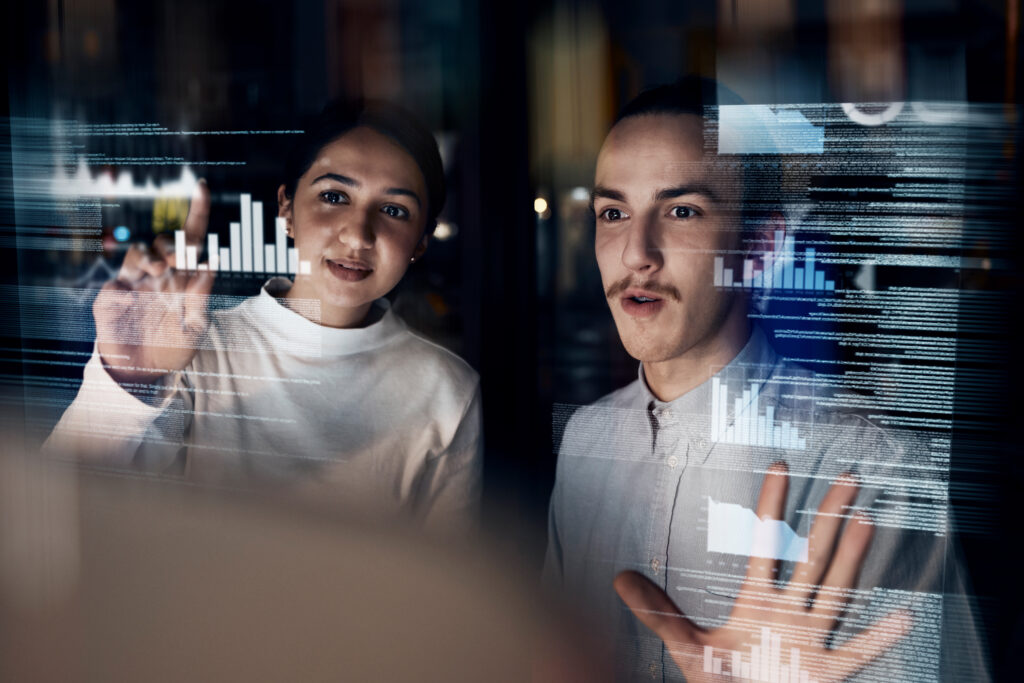
So a company that combines its POS with digital experiences can better understand the shopper journey and capture that massive trail of information to use it to drive new sales.

This way, brands and retailers can better understand consumer buying habits, identify the products and store areas that get the most traffic and attention, learn more about customer preferences, anticipate their needs and wants, create personalized offers, and more.

These are just a few of the many benefits your business misses out on when you don’t map data and insights at your POS.

But don’t worry, because if you’ve made it to this article, I’m sure you won’t leave without spotting some great opportunities for change.

Stick around to learn why collecting data at the POS matters, the difference between data and insights and how both can strengthen your strategy, the retail of the future, and the key technologies you can implement at your POS to take your sales strategies to new heights.

Let’s get started!


The difference between data and insights

Data and insights are two terms that are often confused, but they’re quite different from each other. In fact, even though they’re distinct, they complement each other in a solid Data-Driven strategy.

Put simply, data makes up the information needed to build deep, comprehensive insights. In other words, to get good insights, you need a lot of data.

Insights are extremely valuable because they provide the information you need to create a smart, strategic POS that delivers more results, both in sales volume and in experiences that spark the “WOW factor” in customers.

They’re also ideal for driving high organizational performance, since they provide the triggers for taking action to improve and evolve processes within a POS.

However, this information can’t be obtained without data—and data depends on good analysis to make the information truly useful and turn it into an insight.

That’s why one can’t live without the other. Without data, there are no insights, and without insights, there’s no way to make strategic decisions.

What does it mean to be Data-Driven?

Before we define Data-Driven, it’s worth knowing that no matter how brilliant your business idea is, if your future decisions aren’t based on data, the company won’t achieve lasting, sustainable success.

Now, back to the term: Data-Driven is a strategic concept that can be applied to any business model, especially when it comes to collecting data at the POS. Simply put, it’s data-driven management, meaning strategic decision-making based on data analysis and interpretation.

To be a Data-Driven company, you need to collect data, and keep in mind that without collecting data and insights to make better decisions at your POS, you’re falling short as a retailer in several ways.

  • You’re not taking advantage of market opportunities;
  • You’re ignoring your consumers’ key behaviors and interactions;
  • You’re turning a blind eye to new developments and potential trends in your market;
  • You don’t have access to market forecasts and future demand;
  • You may be missing what’s right in front of you.

For this kind of POS data collection, digitalization solutions are essential, making it possible to store and access the data generated every day in brick-and-mortar stores.

Not to mention that they also transform the environment, making customer service more modern, convenient, and fast. In other words, they deliver impressive experiences for consumers.

Why using data and insights in your strategy matters

When Lewis Carroll wrote Alice in Wonderland, he made famous the line the Cheshire Cat says to Alice: “If you don’t know where you’re going, any road will get you there”.

Although Alice in Wonderland is just fiction—and perhaps our favorite one, as our name probably gives away—the cat’s line is as real as your need to collect data at your POS.

This line is actually a piece of advice that applies to every area of our personal and/or professional lives, so from here on, we’ll build on it a bit.

When you run your POS without the information you need to innovate, please consumers, and stand out in the market, you’re “shooting in the dark,” and your days in the market are numbered.

The data generated at the POS is like a guide that tells you where to go, which path is best to follow, and which strategy to use to stay hot in the market. Without POS data collection, you don’t know which path to take, so any road will do.

The future lies in delivering memorable experiences

Yes, the future lies in delivering memorable experiences, and that’s only possible by collecting data at the POS, which generates insights.

The future belongs to brands that truly care about their customers and, in their wisdom, listen and analyze data more than they talk. After all, your audience is your company’s most important asset, and if they don’t buy from you and you’re not on the same page, your business goes under.

In this case, the well-known saying “the voice of the people is the voice of God” rings true, since listening to customers and observing their behavior through POS data collection, in order to please them more and more, will become an increasingly common practice in the day-to-day operations of major retailers.

And since the future belongs to brands that deliver memorable experiences, the goal now is to delight the audience from their very first contact with the brand (during the learning and discovery stage) all the way to the final stages of purchase decision and loyalty.

The best way to do this is by improving your business strategy so you can make data-driven decisions.

It’s not exactly a simple task, but it’s a necessary one if you want your retail business and its results to be contagious. However, you won’t get those results without data collection.

What does the market usually use?

The market is always looking for new ways to solve problems that come up for customers and businesses alike. That’s actually quite common. Often, though, the solutions the market comes up with do solve the problem, but only part of it, not the problem as a whole.

When it comes to POS data collection, the main technologies used today by retailers and companies specializing in data are:

– Cameras;

– Foot traffic counters.

Both of these, as I said, do solve the problem, but only part of it.

Advantages of traditional market tools

The advantage these technologies offer is that cameras make it quite easy to collect data at the POS. This customer monitoring lets you see shoppers’ behavior and actions inside the POS.

The advantage of a foot traffic counter is that you can see which spots get the most traffic and, from there, figure out what is and isn’t working at your POS.

But this data is far too shallow to build a solid sales strategy for your POS, and the disadvantages of these technologies outweigh the advantages.

Disadvantages of traditional market tools

Besides solving only part of the problem and providing data too shallow to build a solid sales strategy, these commonly used technologies come with a few more disadvantages:

They’re expensive for retailers

Both technologies have high maintenance costs for POS data collection and, considering how few insights can be drawn from the shallow data they deliver, they’re definitely not worth it.


LGPD impacts video monitoring

Another factor that hinders these traditional technologies in POS data collection is Brazil’s General Data Protection Law (LGPD).

To use technologies like cameras at the POS, stores and brands must prove to auditors that they aren’t using any consumer’s image or face, for any purpose whatsoever. On top of that, consumers still need to trust and authorize the recording.

What Alice Wonders uses

Here at Alice Wonders, with the goal of delivering better results to our clients, gathering data that generates truly tangible and valuable insights, and bringing a new concept of effective, qualitative data generation to the market, we created our own data capture technology.

That technology is Granometrics.io, a way to reinvent POS data collection and generate insights and information that can boost sales, attract customers, delight them with great experiences, and take retailers to a whole new level.

Granometrcis.io is a multisensor platform that maps the physical store at a granular level and provides insights for decision-making and immediate action.

With Granometrics.io, you can measure consumer interest and view behavior maps by zone, category, and even by product.

That way, you’ll know everything that is and isn’t working at the POS, with valuable insights for immediate decision-making, putting you on the path to better results.

What sets Granometrics (multisensor) apart

  • It offers the best cost-benefit ratio compared to other technologies;
  • It’s a multisensor that doesn’t run into LGPD issues;
  • It’s updated in real time (every hour);
  • It offers desktop and mobile access for Trade Marketing teams (both managers and operators);
  • It’s economical in cost, but not in efficiency;
  • It creates opportunities to increase sales;
  • It creates opportunities to increase your product’s average ticket;
  • prevents disruptions;
  • It anticipates market demand.

To see more Granometrics benefits, check out the product presentation by clicking HERE.

Case Studies

Now that you’ve seen how we collect data at the POS in an innovative and far more sustainable way, check out some of the success stories we have here at Alice Wonder with Granometrics.

Smart Store Intel

The Smart Store Intel was a case we developed for the Intel brand to collect data at the POS and help consumers choose the laptop that best suited their needs.

At the POS, inside the Extra hypermarket, we designed and delivered a new interactive space where shoppers could try out and explore every type of computer using screen mirroring, touch technology, and proximity sensors.

The smart table helped consumers find the perfect laptop.

“Answer simple questions on the touchscreen about how you use your computer, and based on your answers, you can find the ideal models at the push of a button.”

This was yet another Alice Wonders project that combined POS data collection + design + technology + architecture.

Smart Fitting Room and Interactive Mirror

Here are 2 cases we developed for POS data collection for fashion retail brands.

The first was the Wonder Fitting Room, which brought content and innovation to boost sales.

The Wonder Fitting Room is a smart fitting room that recognizes garments and suggests complementary looks and accessories, using content to drive more sales. The fitting room feeds a dashboard with data on the items tried on, generating powerful insights.

The other case we used was the Espelho Interativo + DATA (Interactive Mirror + DATA), which delivered real-time data and shopper engagement.

In addition to offering looks, accessories, and tutorials to the shopper, the Alice Wonders interactive mirror delivers real-time DATA to the retailer.

Both fashion retail technologies collected POS data in a very rich way, generating insights into which garments customers searched for and tried on most, as well as the highest-traffic aisles, walkways, and more. This data was extremely important for the brands to make strategic decisions that drove better results.

Beyond these 2 cases we selected, Granometrcis.io is a proven product validated by brands such as Intel, Fast Shop, Nestlé, Gafisa, MPD, and many others.

Conclusion

Collecting POS data is an essential strategy for retailers who want to stay at the top of the market.

Alice Wonders specializes in data capture and real-time insight generation. Data that truly delivers relevant information and drives results for your business.

If you’re interested in our technologies, get in touch with our customer service team. We’d love to learn more about how we can help you. See you soon.

Inscreva-se em nossa Newsletter

Receba no seu email todas as novidades do nosso blog sobre tecnologia e varejo, além de ficar por dentro do novos projetos Alice Wonders.

Thank you for subscribing.

Something went wrong.

Previous ArticleNext Article

Innovative Retail Experiences: Augmented Reality at the POS Comments Off on Innovative Retail Experiences: Augmented Reality at the POS 2892

Innovative Retail Experiences: Augmented Reality at the POS

If you’re a retailer looking for innovation, we’ve got good news for you: Augmented Reality at the POS is here to transform your business into a space of innovative experiences and efficiency.

Here’s what we’ll explore:

  • Benefits of Augmented Reality at the POS – Learn how AR can take the customer experience to a whole new level and, as a result, boost your sales.
  • Augmented Reality Use Cases in Retail – Discover practical examples of how to implement AR in your store.
  • Challenges and Solutions – Get to know the obstacles you may face and how to overcome them efficiently.

Get ready to transform your point of sale and captivate your customers like never before!

What Is Augmented Reality?

Have you ever seen those social media filters that add bunny ears or sunglasses to your photo in real time? That’s a simple but effective example of Augmented Reality.

Augmented Reality (AR) is a technology that overlays digital information — such as images, videos, and sounds — onto the real world through a device, whether it’s a smartphone, a tablet, or special glasses.

This means that with AR, your customers can use their own smartphones to view additional information about a product, see reviews from other shoppers, or even visualize how a piece of furniture or an appliance would look in their home. And all of this happens while they’re physically in your store.

The magic of Augmented Reality lies in its ability to create a hybrid shopping experience that combines the best of the online and offline worlds.

The result is a more interactive, informative, and engaging sales environment.

Augmented Reality at the POS

Augmented Reality in Retail

Bringing Augmented Reality into your store represents a significant leap forward, not only in the way you sell, but also in the way customers shop.

Product Try-Ons

With Augmented Reality, trying on products reaches a whole new level. If you run a clothing store, your customers can “try on” different styles and sizes without having to deal with the fitting room. The same goes for eyewear, jewelry, and even sneakers.

All the customer has to do is point their smartphone at the item they want and see it virtually projected onto their own image.

Personalized Shopping

Augmented Reality enables a highly personalized shopping experience. Based on the customer’s interactions and choices, you can provide product recommendations, show related items, or even create a unique virtual store environment for each visitor.

Wayfinding and Information

Let he who has never gotten lost in a big store cast the first stone! With Augmented Reality, your customers can easily find what they’re looking for.

By pointing their smartphone at an aisle, they can see digital cues about the products in front of them, saving time and boosting customer satisfaction

Engagement and Gamification

Augmented Reality technology offers a range of opportunities to make shopping more interactive and fun.

You can create digital treasure hunts, quizzes, or other games that encourage customers to explore more of the store and, as a result, discover more of your products.

Watch the video of an Augmented Reality activation Alice Wonders created — packed with technology, fun, and engagement — to showcase all the technology available in modern agriculture:

Customer Behavior Analytics

With Augmented Reality, you can collect valuable data on how customers interact with products and the store environment. This data can be used to improve layout, inventory, and even marketing strategies.

Benefits of Augmented Reality at the POS

  • Higher Sales and Average Order Value

When you offer a more engaging and informative shopping experience, customers are more likely to spend more. Augmented Reality lets shoppers visualize how a product will fit into their lives before they even make a purchase, building confidence and encouraging higher-value sales.

  • Fewer Returns

One of the biggest challenges in retail is the high rate of returns. With Augmented Reality, customers get a clearer, more accurate picture of what they’re buying, which minimizes the chances of dissatisfaction and, consequently, of returns.

  • Competitive Differentiation

In a saturated market, every edge counts. Implementing Augmented Reality at your POS not only improves the customer experience but also positions your brand as innovative and in tune with tech trends.

  • Better Customer Experience

Augmented Reality’s power to deliver detailed information and realistic visualizations makes the buying process much easier and more enjoyable for the customer. On top of that, this technology can eliminate many of the uncertainties customers have when shopping, resulting in a more positive overall experience.

  • Store Space Optimization

Augmented Reality lets you make the most of your store’s physical space. How? By using Augmented Reality features, you can display a virtually unlimited inventory, which is especially useful if your store is short on space.

  • Employee Training

That’s right, Augmented Reality doesn’t just benefit customers. It’s also a valuable tool for training your team. Customer service scenarios, for example, can be simulated to prepare your employees for a wide variety of situations.

Conclusion

There’s no doubt that Augmented Reality is more than just a trend; it’s the future of retail.

By leveraging Augmented Reality at your Point of Sale, you’re taking a significant step toward a world of interactive possibilities, more effective sales, and happier customers.

So, what are you waiting for? The time to act is now.

Frequently Asked Questions

What is Augmented Reality at the Point of Sale (POS)? Augmented Reality at the Point of Sale is a technology that overlays digital information, such as images and data, onto the real world through mobile devices or special glasses. It gives customers a more interactive and informative shopping experience.

What are the benefits of Augmented Reality at the POS? The benefits are numerous and include increased sales, competitive differentiation, a better customer experience, optimized store space, and the potential for more effective employee training.

How can I implement Augmented Reality in my store? Implementation can range from simple mobile apps to more complex systems that use Augmented Reality glasses. The first step is to understand your specific needs and goals, then consult with specialized professionals to choose the best approach for your business.

Is Augmented Reality expensive to implement? Costs can vary, but thanks to technological advances, there are options for businesses of all sizes and budgets. The key is to start with a pilot project and scale up as you see the benefits and return on investment.

Is Augmented Reality just a fad, or is it here to stay? With continuous improvements in the technology and clear proof of value across many industries, Augmented Reality is an innovation that’s here to stay. Its power to engage customers in new and meaningful ways makes it a valuable tool for any retailer striving for operational excellence.

Inscreva-se em nossa Newsletter

Receba no seu email todas as novidades do nosso blog sobre tecnologia e varejo, além de ficar por dentro do novos projetos Alice Wonders.

Thank you for subscribing.

Something went wrong.

Sensory Rooms: Transforming Experiences at the Point of Sale (POS) Comments Off on Sensory Rooms: Transforming Experiences at the Point of Sale (POS) 1711

Sala imersiva Dior

Today we’re going to talk about an amazing tool that can completely transform your customers’ shopping experience: sensory rooms for points of sale.

A New Concept in Shopping Experience

You’re always looking for ways to stand out from the sea of competition in retail, right? One way to do that is by offering personalized, engaging experiences to your customers, and this is where sensory rooms come into play.

Sensory rooms are spaces designed to draw customers into an immersive experience, activating all of their senses: sight, hearing, touch, smell, and taste.

All five senses come into play, making the shopping experience truly memorable. Let’s look at some examples of how to use each sense:

Sight

You can use sensory rooms with lighting, colors, and visual effects to create a specific atmosphere.

Imagine, for example, that you own a furniture store. How about a sensory room that simulates different types of daytime and nighttime lighting? That way, your customers can see how the furniture looks under various lighting conditions.

  • Tok&Stok, a leading name in furniture and home decor, uses the visual experience in its stores so customers can picture themselves using the furniture in their own homes. Settings are put together with the store’s products, simulating living rooms, kitchens, bedrooms, offices, and more. The lighting is designed to highlight the products and create a welcoming atmosphere.

Hearing

Music or other sounds can be used to create a relaxing, welcoming environment.

For example, if you own a camping gear store, nature sounds, like birdsong or rain falling on a tent, can enhance your customers’ sensory experience and make them feel more connected to the camping environment.

Centro Nacional Store
Livraria Cultura is an example of a company that uses the auditory experience to create a more pleasant environment. Its stores usually have a soft soundtrack playing in the background, creating a relaxing environment that invites customers to spend more time in the store.

Touch

You can create sensory rooms that involve customers’ sense of touch.

If you own a clothing store, how about offering different fabrics and textures for customers to touch? It’s an amazing way for them to connect with your products.

  • Natura, the well-known cosmetics brand, lets customers try many of its products in its brick-and-mortar stores. They can feel the texture of creams, lotions, and makeup by applying them directly to their skin. This helps create a deeper connection with the products and allows customers to choose the items that best meet their needs and preferences.

Smell

Smell is a powerful sense, often underestimated when it comes to creating shopping experiences.

However, you can use it to create sensations and environments that match your products. For example:

  • Some stores, like coffee shops, already use the smell of coffee to create a more welcoming environment.
  • Imagine walking into a clothing store and smelling freshly washed fabrics. That would definitely improve the shopping experience.
  • Pão de Açúcar creates an olfactory experience through the aroma of breads and cakes baking in its in-store bakery. When customers walk into the store, they’re enveloped by these delicious smells, which creates a welcoming atmosphere and encourages purchases from the bakery.

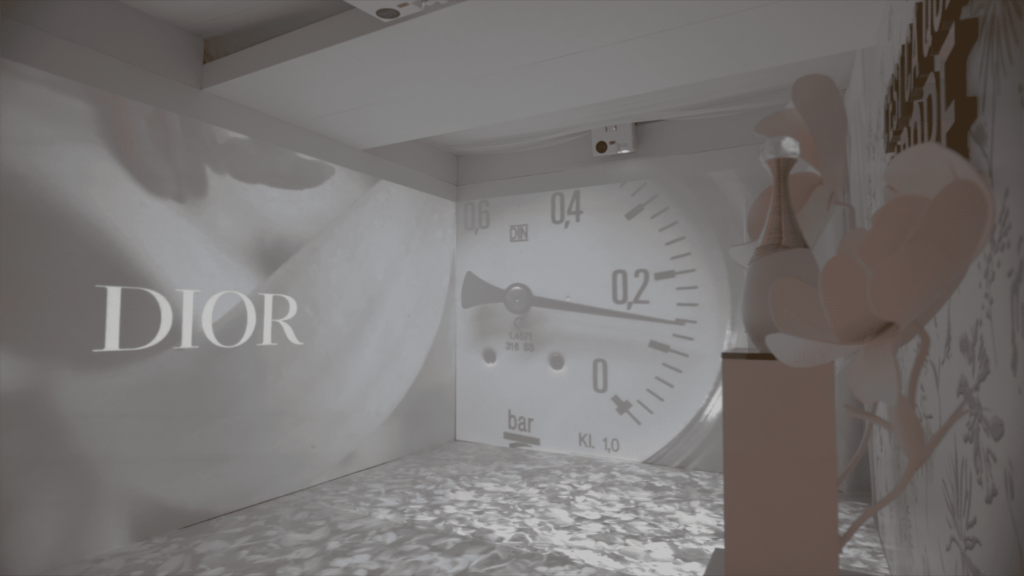
A perfect example of a Sensory Room is the Dior activation at Hotel Sephora, developed by Alice Wonders. For a captivating, multisensory immersion in the brand’s exclusive space, we created projection mapping that brought to life the launch of J’adore Eau de Parfum, the brand’s newest fragrance. Check it out:

Taste

Last, but certainly not least, we have taste.

In some stores, especially those that sell food or beverages, you can offer tastings to customers.

  • Pão de Açúcar combines the sensory experience of smell with taste, also offering tastings of wines, cheeses, breads, and other products in its stores. This not only lets customers try before they buy, but also creates a more engaging and enjoyable shopping experience.
  • Another company that embraces this practice is Cacau Show, a chain of chocolate stores, which often offers samples of its products, letting customers enjoy the flavor before deciding to buy.

The Impact of Sensory Rooms at the POS

Now that we’ve talked about how to engage and stimulate each of your customers’ 5 senses at the POS, how about we look at the benefits of bringing it all together in Sensory Rooms for your brand?

The main goal of a sensory room at a point of sale is to create a unique and memorable experience for the customer.

On top of that, you not only set your store apart from the competition, but also encourage customers to come back. It’s a win-win strategy!

Here are some of the many benefits of creating sensory experiences in your store:

Benefits of the sensory experience for brands

The sensory experience helps brands stand out from the competition, increase the perceived value of their products, and create an emotional connection with customers.

Creating an Emotional Connection

When we engage all five senses in a shopping experience, we’re going beyond the simple act of selling a product. We’re creating an emotional connection with the customer.

We know that strong emotions are tied to our most lasting memories, so by providing a memorable, emotionally charged experience, we’re fostering customer loyalty and making sure they remember our brand in the future.

Market Differentiation

In today’s competitive retail world, it’s vital for your brand to stand out.

Sensory rooms can provide a unique advantage, setting your brand apart from competitors. Offering an immersive, multisensory experience is a powerful way to stand out and create a unique identity for your brand.

Added Value

The sensory experience adds value to the customer’s purchase, making it more than a simple transaction.

The customer isn’t just taking a product home, but a complete experience that engaged all of their senses. This can justify a higher price and increase profit margins for your brand.

Longer Dwell Time in the Store

When you provide an engaging sensory experience, customers tend to stay in the store longer. That’s because they’re immersed in an environment that stimulates their senses.

As a result, a longer visit increases the chances that customers will discover more products they like, which in turn raises the likelihood of generating more sales.

It Drives Word of Mouth

Creating a unique, unforgettable shopping experience makes customers want to share it with friends and family.

That’s where valuable word-of-mouth marketing comes into play, amplifying your brand’s visibility in a genuine, personal way.

Conclusion

Investing in sensory experiences at the point of sale is a strategy for transforming the way your customers interact with your brand.

By creating a shopping environment that engages all the senses, you deliver a richer, more appealing, and more memorable retail experience.

This not only boosts your sales opportunities and dwell time in the store, but also drives valuable word-of-mouth marketing, helping expand your brand’s visibility.

However, it’s important to conduct research to truly understand your audience and offer experiences that align with their expectations and desires. And you can count on us to help.

Get in touch with us and learn how you can create unique experiences for your customers and unlock your business’s full potential.

FAQ – People Also Ask:

  • What are sensory rooms for points of sale? Sensory rooms are spaces specially designed to engage the customer’s senses, delivering an immersive, delightful, and unique experience. This involves using techniques and technologies to stimulate customers’ sight, hearing, touch, smell, and taste.
  • Why should I consider the sensory experience in retail? The sensory experience can significantly improve the customer experience and increase sales. When their senses are engaged, customers tend to spend more time in the store, increasing the chances that they’ll make a purchase. In addition, a unique and memorable experience can lead customers to share it with others, driving word-of-mouth marketing.
  • What types of retail sectors can benefit from sensory experiences? Any retail sector can benefit from sensory experiences. Whether it’s a furniture store that uses different lighting scenarios to showcase its products or a bakery that uses the aroma of fresh bread to draw in customers, the possibilities are nearly endless.
  • How can I implement a sensory experience in my store? There are several strategies for introducing a sensory experience into your store, and they can be adapted to the nature of your business and the profile of your target audience. For example, you can use lighting and décor to create an environment that highlights your products’ attributes and encourages customer interaction. You can include themed spaces and strategic lighting to spotlight specific products, and choose colors and materials that evoke certain emotions or sensations.

Inscreva-se em nossa Newsletter

Receba no seu email todas as novidades do nosso blog sobre tecnologia e varejo, além de ficar por dentro do novos projetos Alice Wonders.

Thank you for subscribing.

Something went wrong.

Most Popular Topics

Editor Picks

Send this to a friend