The New Customer Journey: How Can You Reinvent the Consumer Shopping Experience? Comments Off on The New Customer Journey: How Can You Reinvent the Consumer Shopping Experience? 5552

A nova jornada do cliente

The customer journey has been shifting since the start of the pandemic, and over the past few months retailers have been looking for new ways to reach their consumers. Processes and ways of dealing with people have changed, and we need to keep up with the new trends to stay in the game.

Today we have a variety of channels and new approaches for talking directly to customers. Thanks to technology, we’ve been able to expand our reach on a global scale. However, something got lost amid all this digital evolution, and now we need to rethink our strategies if we want to understand customers and their needs. And the best way to do that is to take an individual, personalized approach.

It may seem impossible to operate this way nowadays, but if we look at how brands have come to behave, we see that they currently struggle to truly “know” their customers, while their customers form weaker relationships with them: this directly affects the bottom line through lost engagement, lower retention, and reduced brand loyalty. Whatever a brand’s size or niche, people today are more selective in their choices. We’re dealing with demanding consumers with high expectations – and many brands are missing the mark, or at the very least, trying to get back on target.

Keep reading to better understand how to build a new customer journey.

How to implement a solid customer journey today

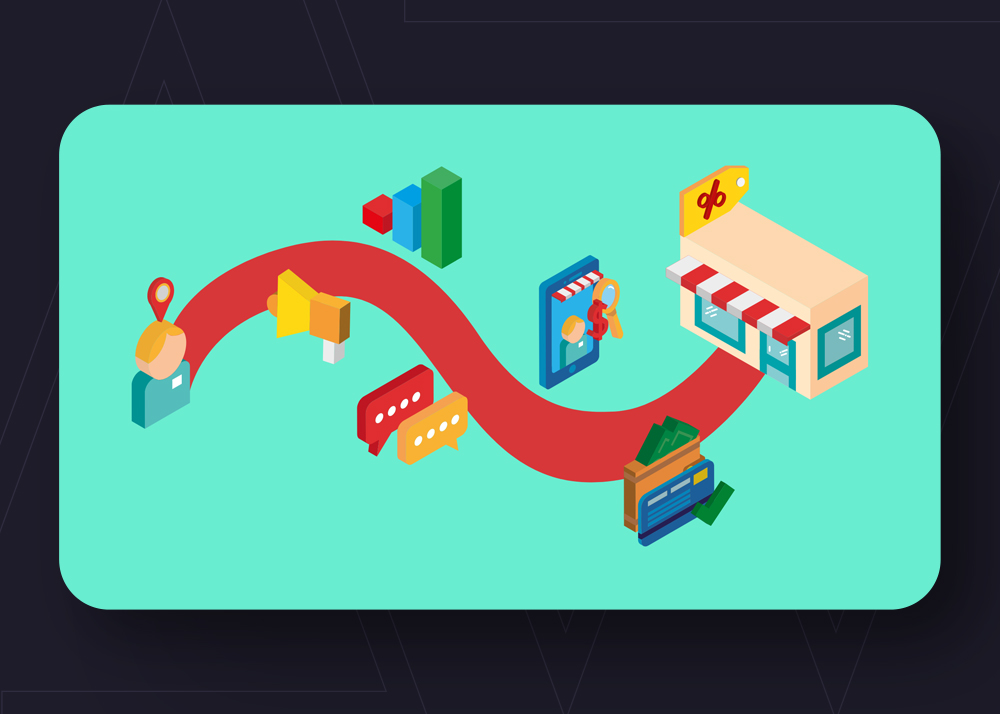
In another post, we talked about the different Sales Channels vs Consumer Experience – check it out here. It’s important to understand how customer touchpoints work today, all the way through to the ways purchases are completed.

From the advent of the telephone to the rise of digital channels, the customer experience has been taking place across a wide range of touchpoints. This is great for customers, since it gives them the freedom to interact with their favorite brands however and whenever they want.

Data shows that 81% of shoppers research online before buying. The Sales Channels vs Consumer Experience map itself shows that some consumers start their journey online and only complete the purchase after researching the product and the brand. And the purchase won’t necessarily happen online.

What you need now to build the customer journey is to understand what people need in the current scenario we’re living in. To start, list the following:

  • Which research and sales channels are having the greatest impact on your business?
  • How and when are consumers being reached today?
  • How is your product sold? And how can people find their way to your product?
  • Are your customers coming back? If so, how often?
  • How is that relationship being built? Is it a two-way exchange? Or is only one side giving more?

You see, even with a list of questions, it’s still complicated to establish a customer journey these days, due to a number of factors that create uncertainty. Tracking customers across every channel and creating a single source of truth is no easy task, and it can even result in disjointed brand experiences. For example, it’s common to see physical stores that can’t process returns for online purchases, or brick-and-mortar sales associates who can’t access customer information from the web.

Fortunately, there are new tools that help companies better track all of this customer information across touchpoints. It’s possible to pull this information from each channel to build stronger customer profiles, resulting in smarter, more unified campaigns that deliver a truly consistent brand experience – no matter how customers interact with brands.

What helps build a solid journey is the relationship with the customer. Delivering experiences is key to keeping contact closer and more genuine. Extracting data and connecting it to your goals is the surest way to find your path. Steer clear of guesswork, superficiality, and generalizations when it comes to market research and customer service. The closer a brand gets to understanding consumer behavior, the better its chances of delivering what consumers need.

The customer experience has always revolved around a continuous journey. The rise of new touchpoints may have added a new layer of complexity, especially now with quarantine and social distancing, but new tools allow brands to realign their customer journeys.

What makes a great customer experience?

We’ve already discussed in another post how to create experiences tied to the customer journey – after all, the two are deeply connected. You can check it out here. Now we need to think about improving experiences by understanding the new behavior of consumers. To do that, we need to revisit good old practices and update them with the resources and tools we have today.

This may sound a bit contradictory, since at the beginning of this post we said to abandon old methods. But if we want to think about individual strategies, we need to look at how merchants of the past dealt with their customers. Some good one-on-one interactions from the past were forgotten in the rush to reach more and more customers.

Delivering experiences is nothing new. In another era, with fewer technological resources, business owners knew the specific needs of each customer, which allowed them to offer a real differentiator and build lasting relationships. The only accessible strategy was a one-on-one approach and serving people in their local community. This made for a more personal level of service. After all, people like to feel important and to have an individual relationship with brands, and they appreciate it. That appreciation builds brand recognition.

Data reveals that 26% of customers say trust and consistency are the main factors in business relationships. All signs indicate that today’s customer experience is an old battle fought with new tools. Whether a brand serves a specific niche or millions of potential customers around the world, customers demand a quality experience and won’t settle for less.

Although customer experience may be a new challenge for retail in this moment of change in commerce, we know it’s an old practice. The big new challenge is knowing how to combine the latest marketing tools with ways of delivering unique, individual, and memorable experiences. Retailers can reinvent their strategies for the new customer journey and make them even more compelling. Take advantage of these tools and embark on a new customer journey. Every moment matters.

The importance of personalization

Personalization is back! But with a new look, of course. It’s possible to personalize the customer experience, even at large scale, through audience segmentation marketing tools, which deliver behavioral data to professionals so they can extract insights and create relevant, well-targeted content.

Why is it so important to use personalization as a strategy? Here’s a very simple, straightforward example: no more offering lawn mowers to people who live on the 20th floor of an apartment building. Personalization can boost results. For example, segmenting website visitors and delivering industry-specific content can result in 34% more conversions. Personalization can range from delivering relevant content to sending product suggestions that meet the needs of each customer profile, and every combination improves the consumer experience.

With the rise of artificial intelligence, the growing volume and variety of marketing software tools, and data science, the importance of data-driven personalization will continue to grow and become increasingly important for retail. And we’re not just talking about e-commerce data. Physical stores will go through a digital transformation that is absolutely necessary for them to survive in the post-pandemic world we’re approaching.

We can also look at ERP and CRM solutions that empower companies to create a better experience for their customers. They can target prospects more efficiently, deliver the right information at the right time, and improve visibility into customer relationships. However, it all starts with the relationship, and even the integration, between the systems and the data each one provides. Without this joint effort, the relevance of initiatives may suffer. In other words, breaking down the barriers between systems of engagement and systems of record will allow brands to deliver better experiences.

Although new tools make it possible to expand reach globally, we should keep in mind the importance of valuing the local community. A focus on community, which is responsible for the success of any early-stage business, is still essential, and it’s more important than ever to embrace location context to deliver relevant experiences to customers in different regions. It’s a return to a “community first” focus without sacrificing global scale, keeping in mind that 49% of customers want to receive personalized information based on their immediate location. So serving the local audience effectively and efficiently is a great strategy for delivering personalized customer experiences.

Did you enjoy this content? Alice Wonders specializes in creating unique, personalized experiences that bring brands ever closer to their customers. Get in touch so we can create amazing things together! And be sure to subscribe to our newsletter to get the latest news delivered straight to your inbox.

Inscreva-se em nossa Newsletter

Receba no seu email todas as novidades do nosso blog sobre tecnologia e varejo, além de ficar por dentro do novos projetos Alice Wonders.

Thank you for subscribing.

Something went wrong.

Previous ArticleNext Article

Retailtainment: When Shopping Is No Longer the Main Focus Comments Off on Retailtainment: When Shopping Is No Longer the Main Focus 331

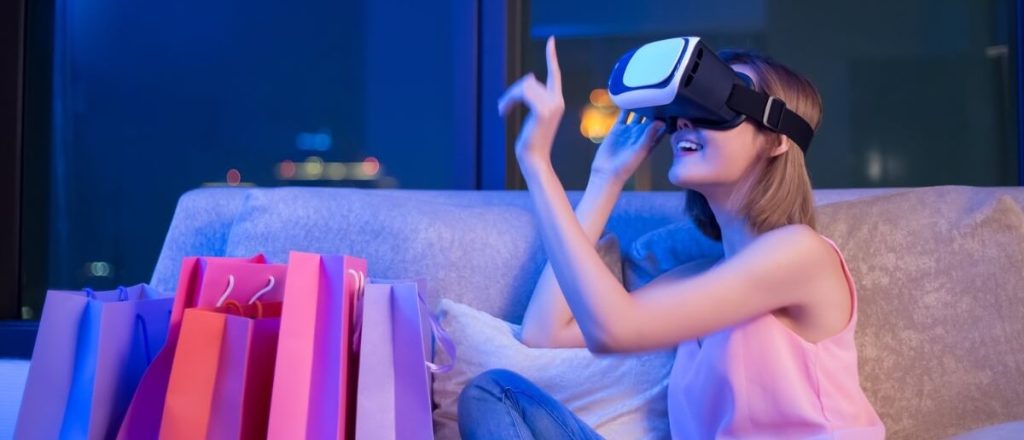
Consumidora utilizando óculos de realidade virtual ao lado de sacolas de compras, ilustrando como o retailtainment combina tecnologia e entretenimento para transformar a experiência no varejo.

The rise of e-commerce has profoundly transformed the way people shop. With just a few clicks, you can compare prices, read reviews, make purchases and have products delivered to your door without ever leaving the couch. In this context, physical stores now face a major challenge: offering something that goes beyond convenience and a simple commercial transaction. That’s where retailtainment comes in.

At the same time, we’ve seen the rise of the so-called experience economy, in which consumers increasingly value memorable moments, emotional connections and meaningful interactions with brands. In an ever more competitive market, simply making products available isn’t enough: brands need to create experiences that delight, engage and stick in people’s minds.

This is the backdrop for retailtainment, a strategy that combines retail and entertainment to turn the point of sale into an experience destination. More than a trend, retailtainment represents a new way of thinking about the role of the physical store in the retail customer journey, bringing brands and people closer together through experiences that spark emotion, interaction and a sense of belonging.

Beyond selling products, stores are becoming spaces for socializing, discovery, entertainment and relationship-building. And it’s precisely this transformation that is redefining the future of experiential marketing in retail, which we’ll explore a bit further in today’s post. 

The concept of retailtainment and its rise in retail

The concept of retailtainment emerged from combining the words retail and entertainment, representing an approach that seeks to turn a store visit into a more engaging and memorable experience.

Although the term has gained popularity in recent years, its essence could already be seen in shopping malls that incorporated movie theaters, food courts and leisure areas to attract visitors. 

Today, however, retailtainment has evolved into something far more strategic: instead of simply adding entertainment to the commercial environment, brands have begun integrating experiences directly into their value proposition, making interaction with the space just as important as the products on offer.

This shift goes hand in hand with the growth of experiential retail and reflects significant changes in consumer behavior. In a landscape where purchases can be made quickly and conveniently online, people have started looking to physical stores for something e-commerce can hardly replicate: human connection, sensory stimulation, a sense of belonging and experiences that evoke emotion. 

Especially among millennials and Gen Z, there’s a growing appreciation for authentic, shareable experiences that align with their interests and lifestyles. In this context, buying is no longer the sole purpose of the visit and becomes part of a broader journey marked by discovery, inspiration and relationship-building.

That’s exactly why the physical store has been taking on an increasingly strategic role in the retail customer journey. Direct contact with products, the store atmosphere, scents, lighting, interaction with staff and the chance to try things out create a unique experience that can strengthen the brand’s perceived value. 

In this scenario, experiential marketing in retail takes center stage, while store design no longer serves a merely operational function and becomes a strategic tool for connection. Every detail of the space helps build narratives, evoke sensations and reinforce the brand’s positioning.

When well planned, the store stops being just a point of sale and becomes a place for socializing, discovery and relationship-building, capable of creating a competitive edge and fostering lasting bonds with consumers.

Retailtainment elements that turn stores into experience destinations

When it comes to retailtainment, certain elements are essential for entertaining the public and offering them a unique experience, one that can be crucial to their final purchase decision. Bringing these two worlds together isn’t easy, but several factors help make it happen, such as: 

Interactivity and active consumer participation

One of the defining features of retailtainment is placing the consumer at the center of the experience. Instead of just looking at products on display, shoppers actively interact with the brand.

That’s why product demos, hands-on testing, try-out areas and gamification features make the visit more engaging and participatory. This model is directly tied to the concept of experiential retail, in which learning and discovery are part of the experience.

A good example is stores that allow real-time product customization. By taking part in creating a one-of-a-kind item, consumers develop a stronger emotional connection with the brand.

In addition, interactive experiences can be replicated across different locations, creating scalable experiences that maintain brand consistency without losing their engagement potential. This ability to reproduce relevant experiences across multiple points of sale has become a priority for companies investing in experiential marketing in retail.

In-person events and activations

In-person events have once again become a great showcase for businesses, especially since the pandemic. Workshops, talks, meetups with experts, product launches and themed events are increasingly popular tools brands use to strengthen their physical presence.

These initiatives turn stores into spaces for socializing and learning, expanding their role in the retail customer journey. Instead of visiting the store only when they need to buy something, consumers start seeing it as a place that’s relevant to their lifestyle.

Events also help build brand communities, allowing consumers not only to listen but also to speak up and swap notes with industry professionals, strengthening emotional bonds and driving repeat visits.

When aligned with store design and the brand’s proposition, these events are activations that reinforce the retailtainment strategy and amplify the results of experiential retail.

Food and drink as an extension of the experience

You probably never forget the taste of a dish from your favorite restaurant, right? Well, that’s an example of how even our sense of taste can shape an entire experience within a physical space.  

In this context, we can talk about cafés, restaurants and food spaces inside commercial environments, which have become one of the most visible expressions of retailtainment.

More than just offering food, these initiatives increase dwell time and help create more comfortable, welcoming experiences. Food stimulates the senses, sparks emotions, and strengthens the connection with the brand.

From the perspective of experiential retail marketing, food works as a complementary element capable of enriching the entire visit. In addition, store design can strategically integrate these spaces to create fluid, inviting journeys that encourage discovery and longer stays.

Technology as an experience enabler

Technology also plays a key role in the evolution of retailtainment. Features such as augmented reality, smart mirrors, virtual fitting rooms, artificial intelligence, and immersive experiences help enrich the interaction between consumers and brands.

It’s no secret that technological advances are already a reality in physical spaces, and these solutions expand the possibilities of experiential retail, allowing people to explore products in innovative, personalized ways.

However, it’s important—and our duty—to point out that technology shouldn’t exist just to impress. Its role is to make the experience easier, reduce friction, and add value to the consumer journey in retail.

When strategically integrated into store design, technology boosts the results of experiential retail marketing and strengthens the retailtainment proposition and the brand’s entire narrative.

Instagrammable spaces and the power of social sharing

Last but far from least, we know very well that social media has completely changed the way people interact with physical spaces. Today, many consumers choose to visit certain places motivated by the chance to capture and share experiences.

That’s why Instagrammable environments—visually appealing, aesthetically pleasing spaces—have become part of retailtainment strategies. Creative murals, art installations, immersive settings, and striking visual elements encourage spontaneous content creation.

This strategy strengthens experiential retail marketing by turning customers into brand promoters. User-generated content extends the reach of campaigns and helps increase the company’s visibility.

In this context, the consumer is no longer just a customer but becomes a media channel for the brand, reinforcing the power of experiential retail and extending the impact of the experience beyond the physical space.

Cases that show retailtainment in practice

Now that we understand a bit more about the essential elements of retailtainment, it’s time to see it in practice. Check out some examples of companies and brands that know how to use entertainment as a great tool for creating memorable experiences: 

LEGO and experimentation-based retail

LEGO is one of the global benchmarks in retailtainment. Its stores are designed to encourage creativity and interaction, allowing children and adults to explore products even before buying.

In LEGO’s brick-and-mortar stores, it’s no surprise to find areas for playing, building, and creating that turn the environment into a natural extension of the brand’s purpose. The result is an experience aligned with the principles of experiential retail and experiential retail marketing.

Nike and the store as a community space

Nike, one of the world’s largest sportswear brands, uses its stores for much more than selling sporting goods. Events, training sessions, product testing, and interactive technologies are all part of the experience.

By integrating physical activity and relationship-building into the retail environment, the brand strengthens not only its own culture but also its presence in the consumer journey in retail, creating connections that go beyond the purchase.

Starbucks Reserve

And coffee lovers aren’t left out. Starbucks Reserve locations, the brand’s premium line of experiences, represent an evolution of the traditional coffee shop concept. The focus is on sensory immersion, food, and celebrating coffee culture.

The experience involves aromas, brewing processes, storytelling, and interaction, showing how retailtainment can be applied to deepen relationships with consumers.

CAMP NYC

CAMP NYC is often cited as one of the most complete examples of retailtainment today. The space combines a store, theme park, children’s entertainment, and interactive experiences.

The concept shows how store design, combined with experiential retail and a well-crafted narrative, can completely transform how the public perceives the role of a point of sale.

To wrap up this section, do you know what all these examples have in common? Despite differences in segments and audiences, all these cases share similar characteristics:

  • Active consumer participation;
  • Entertainment integrated into the experience;
  • Consistent brand narrative;
  • Strong emotional component;
  • Extended dwell time;
  • Strategic integration of space, experience, and relationship.

These factors, sometimes invisible within the overall strategy, show why retailtainment has established itself as one of the leading strategies for transforming brick-and-mortar retail.

Retail beyond the purchase: retailtainment as a tool

Retailtainment doesn’t replace the sale. In fact, it turns the sale into a natural consequence of a well-built experience. When consumers feel engaged, inspired, and emotionally connected to a brand, the purchase decision happens much more organically.

In this context, the value of physical stores is shifting from simple product availability to the ability to create memorable connections. Investing in experiential retail marketing, experiential retail, and strategies centered on the consumer journey in retail is becoming increasingly important for brands that want to stand out.

At the same time, store design takes on a strategic role in building these experiences, helping turn commercial spaces into environments for discovery, social interaction, and relationship-building.

In an increasingly digital landscape, the future of brick-and-mortar retail depends less on the transaction and more on the experience. And that’s exactly why retailtainment will remain one of the main forces capable of redefining the relationship between brands, consumers, and commercial spaces in the years ahead.

Inscreva-se em nossa Newsletter

Receba no seu email todas as novidades do nosso blog sobre tecnologia e varejo, além de ficar por dentro do novos projetos Alice Wonders.

Thank you for subscribing.

Something went wrong.

How to Design Customer Experience KPIs at the POS Comments Off on How to Design Customer Experience KPIs at the POS 894

KPIs no PDV com análise de métricas e dashboards de experiência do consumidor no varejo

Customer experience KPIs at the POS have become essential for brands that want to turn data into strategic decisions in brick-and-mortar retail. In a landscape where the consumer journey is increasingly integrated across physical and digital channels, measuring experience is no longer optional.

It becomes a space for experimentation, relationship-building, and brand building. However, despite this evolution, many companies still face a central challenge: how to measure the customer experience in retail in a structured, results-driven way.

Traditionally, POS performance has been evaluated using indicators such as revenue, average ticket, and conversion rate. While relevant, these metrics don’t capture the complexity of the experience lived by the consumer — a factor that increasingly has a direct influence on purchase decisions and loyalty.

This is where customer experience KPIs take center stage, making it possible to translate subjective perceptions into actionable data. More than measuring satisfaction, these indicators help you understand behavior, identify friction points, and uncover opportunities to optimize the journey.

By properly structuring experience indicators at the point of sale, companies stop treating experience as an abstract concept and start using it as a strategic asset, one capable of supporting ROI and justifying investments in innovation in the physical environment.

With that in mind, today we’ll take a deep dive into this topic and learn more about how to design KPIs focused on the consumer experience within the point of sale, ensuring a seamless journey for the customer and valuable data for the brand.

POS KPIs: a framework for measuring experience

For consumer experience metrics at the POS to be truly strategic, it’s essential to structure them around a clear framework that connects journey, behavior, and business outcomes. You can do this by following a few best practices, such as:

Mapping the in-store journey

The first step in structuring effective KPIs is understanding how consumers experience the physical space at each stage of the journey. This involves mapping everything from the moment they enter the store until they leave, considering stages such as exploration, product interaction, customer service, and checkout.

More than describing the flow, it’s essential to identify the pain points, such as lines, navigation difficulties, or lack of support, as well as the moments of delight, such as immersive experiences, ambiance, or consultative service.

This mapping is one of the first steps and also one of the most important, because it allows you to build a more accurate picture of the behaviors that really matter and, consequently, guide the definition of experience indicators at the point of sale.

Defining experience objectives

Defining KPIs only makes sense when they are directly tied to a clear experience objective. At this stage, companies need to determine which behaviors they want to encourage at the POS, considering the store’s strategic role in the consumer journey.

This may include increasing dwell time, encouraging product interaction, reducing friction, or strengthening perceived brand value. These objectives act as drivers for consumer experience metrics at the POS, ensuring that measurement isn’t generic but geared toward specific results.

They also help align the teams involved — such as marketing, operations, and sales — around a shared vision of the experience, strengthening the use of customer experience KPIs as a management tool.

Translating experience into metrics

Once the objectives are defined, the next step is to translate the experience into measurable indicators. This process requires turning subjective perceptions into concrete data that can represent real behaviors at the POS.

There are many consumer experience metrics for the POS, and we’ll cover the main ones shortly. But the challenge here isn’t just choosing the metrics; it’s making sure they are directly tied to the strategic objectives defined earlier.

When well structured, these metrics make it possible not only to track the experience but also to identify opportunities for improvement and generate actionable insights on how to measure the customer experience in retail more accurately.

Integrating with operational and business data

For experience KPIs to generate real value, it’s essential to connect them to business performance indicators. This means cross-referencing behavioral and perception data with metrics such as sales, average ticket, and purchase frequency, creating an integrated view of the consumer journey.

This step is essential to demonstrate, in practice, the impact of experience on financial results. By carrying out this type of analysis, companies can identify important correlations, such as increased dwell time driving conversion, or reduced friction impacting the average ticket.

This kind of insight strengthens not only the role of customer experience KPIs as strategic instruments, but also tactical projects that impact an entire business, encouraging more informed decision-making driven by reliable data.

Setting a baseline and goals

Finally, building an effective measurement system depends on setting a baseline and clear improvement goals. The baseline serves as a starting point, making it possible to understand current experience performance at the POS and identify gaps relative to the desired scenario.

Without this benchmark, it becomes difficult to assess progress or justify strategic changes. From there, you can set realistic goals and track the evolution of consumer experience metrics at the POS over time.

This ongoing tracking ensures that experience indicators at the point of sale aren’t just monitoring instruments, but active management tools capable of guiding improvements and sustaining the evolution of the experience in the physical environment.

Key POS KPIs for measuring the consumer experience

In practice, defining experience indicators at the point of sale should start from a strategic logic: understanding what journey the brand wants to build and which behaviors need to be encouraged to support that objective.

This means abandoning the idea of measuring everything indiscriminately and focusing on what truly connects experience to results. Customer experience KPIs become relevant precisely at this point — when they stop being merely descriptive metrics and start guiding decisions, optimizations, and investments in the physical environment.

That’s why, as we mentioned earlier, we’ve selected some of the key consumer experience metrics for the POS, the ones that stand out for their ability to translate behavior into actionable data:

Average dwell time

More than just showing how long shoppers stay in the store, this KPI helps you understand their level of engagement with the space. When analyzed alongside store zones (via heat maps, for example), it reveals which areas are most appealing and which need to be rethought. And when correlated with conversion, it lets you determine whether longer dwell time is actually generating value or just friction.

Product or activation interaction rate

This metric measures how actively shoppers engage with the store, whether by trying out products, using interactive technologies, or taking part in experiences. It’s especially relevant in experiential retail, since it signals the level of curiosity and interest the brand sparks, and it also anticipates purchase intent.

In-store NPS

By capturing the overall perception of the experience, NPS helps you understand the emotional impact of the journey at the POS. More than just a number, it should be analyzed alongside qualitative feedback, so you can pinpoint which elements (service, environment, assortment) are influencing brand recommendation.

Wait time (actual vs. perceived)

This metric goes beyond operational efficiency and into the realm of perception. In many cases, the time perceived by the shopper matters more than the actual time. Monitoring this gap helps identify bottlenecks and opportunities for improvement, whether through more streamlined processes or by creating experiences that make waiting feel less negative.

Conversion rate per interaction

This KPI directly connects experience and results. It measures how many interactions, whether with sales associates, products, or technologies, actually turn into purchases, helping you assess the quality of those exchanges and their impact on the shopper’s final decision.

The real value of these customer experience KPIs lies in their ability to reveal behavioral patterns that traditional metrics wouldn’t surface. An increase in dwell time, for example, may indicate greater engagement, but without cross-referencing it with sales data, it could also signal indecision or friction in the journey.

That’s why, when thinking about how to measure customer experience in retail, the challenge isn’t just collecting data, but being able to interpret it in context. Beyond monitoring indicators, you need to use them to generate insights that drive practical decisions, optimize the journey, and reinforce the role of the POS as a strategic space for value creation.

How technology boosts KPIs at the POS

The evolution of technology has been key to making it possible to measure the experience in physical spaces. Sensors, cameras, analytics, CRM, and artificial intelligence make it possible to capture behavioral data in real time, expanding companies’ analytical capabilities.

In this context, the POS is no longer just a sales channel and becomes a true data hub, where you can accurately track in-store customer experience metrics and identify opportunities for continuous optimization.

These technologies are also essential to supporting trends like Store Living, a concept that turns the store into a living, hybrid, multifunctional space that blends retail, services, community, and lifestyle.

This has a direct impact on how companies define their customer experience KPIs. Traditional metrics are no longer enough; you need indicators that capture engagement, interaction, and relationship building.

In this way, technology not only enables data collection but also allows brands to understand, in depth, how to measure customer experience in retail in an increasingly dynamic, experience-driven landscape.

Inscreva-se em nossa Newsletter

Receba no seu email todas as novidades do nosso blog sobre tecnologia e varejo, além de ficar por dentro do novos projetos Alice Wonders.

Thank you for subscribing.

Something went wrong.

Most Popular Topics

Editor Picks

Send this to a friend