The rise of e-commerce has profoundly transformed the way people shop. With just a few clicks, you can compare prices, read reviews, make purchases and have products delivered to your door without ever leaving the couch. In this context, physical stores now face a major challenge: offering something that goes beyond convenience and a simple commercial transaction. That’s where retailtainment comes in.
At the same time, we’ve seen the rise of the so-called experience economy, in which consumers increasingly value memorable moments, emotional connections and meaningful interactions with brands. In an ever more competitive market, simply making products available isn’t enough: brands need to create experiences that delight, engage and stick in people’s minds.
This is the backdrop for retailtainment, a strategy that combines retail and entertainment to turn the point of sale into an experience destination. More than a trend, retailtainment represents a new way of thinking about the role of the physical store in the retail customer journey, bringing brands and people closer together through experiences that spark emotion, interaction and a sense of belonging.
Beyond selling products, stores are becoming spaces for socializing, discovery, entertainment and relationship-building. And it’s precisely this transformation that is redefining the future of experiential marketing in retail, which we’ll explore a bit further in today’s post.
The concept of retailtainment and its rise in retail
The concept of retailtainment emerged from combining the words retail and entertainment, representing an approach that seeks to turn a store visit into a more engaging and memorable experience.
Although the term has gained popularity in recent years, its essence could already be seen in shopping malls that incorporated movie theaters, food courts and leisure areas to attract visitors.
Today, however, retailtainment has evolved into something far more strategic: instead of simply adding entertainment to the commercial environment, brands have begun integrating experiences directly into their value proposition, making interaction with the space just as important as the products on offer.
This shift goes hand in hand with the growth of experiential retail and reflects significant changes in consumer behavior. In a landscape where purchases can be made quickly and conveniently online, people have started looking to physical stores for something e-commerce can hardly replicate: human connection, sensory stimulation, a sense of belonging and experiences that evoke emotion.
Especially among millennials and Gen Z, there’s a growing appreciation for authentic, shareable experiences that align with their interests and lifestyles. In this context, buying is no longer the sole purpose of the visit and becomes part of a broader journey marked by discovery, inspiration and relationship-building.
That’s exactly why the physical store has been taking on an increasingly strategic role in the retail customer journey. Direct contact with products, the store atmosphere, scents, lighting, interaction with staff and the chance to try things out create a unique experience that can strengthen the brand’s perceived value.
In this scenario, experiential marketing in retail takes center stage, while store design no longer serves a merely operational function and becomes a strategic tool for connection. Every detail of the space helps build narratives, evoke sensations and reinforce the brand’s positioning.
When well planned, the store stops being just a point of sale and becomes a place for socializing, discovery and relationship-building, capable of creating a competitive edge and fostering lasting bonds with consumers.
Retailtainment elements that turn stores into experience destinations
When it comes to retailtainment, certain elements are essential for entertaining the public and offering them a unique experience, one that can be crucial to their final purchase decision. Bringing these two worlds together isn’t easy, but several factors help make it happen, such as:
Interactivity and active consumer participation
One of the defining features of retailtainment is placing the consumer at the center of the experience. Instead of just looking at products on display, shoppers actively interact with the brand.
That’s why product demos, hands-on testing, try-out areas and gamification features make the visit more engaging and participatory. This model is directly tied to the concept of experiential retail, in which learning and discovery are part of the experience.
A good example is stores that allow real-time product customization. By taking part in creating a one-of-a-kind item, consumers develop a stronger emotional connection with the brand.
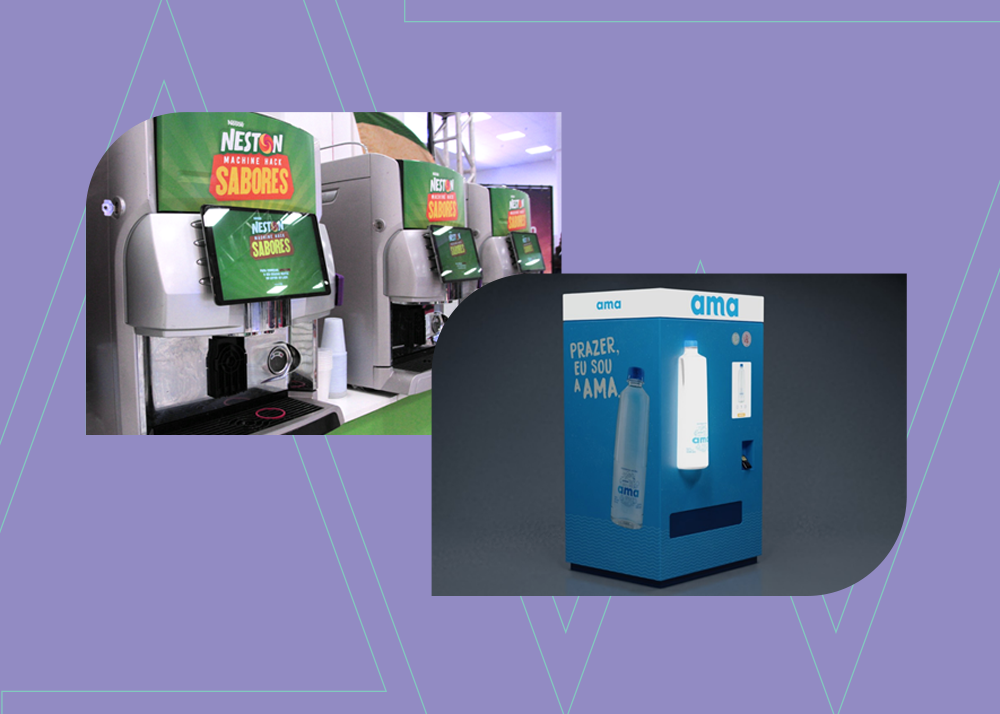
In addition, interactive experiences can be replicated across different locations, creating scalable experiences that maintain brand consistency without losing their engagement potential. This ability to reproduce relevant experiences across multiple points of sale has become a priority for companies investing in experiential marketing in retail.
In-person events and activations
In-person events have once again become a great showcase for businesses, especially since the pandemic. Workshops, talks, meetups with experts, product launches and themed events are increasingly popular tools brands use to strengthen their physical presence.
These initiatives turn stores into spaces for socializing and learning, expanding their role in the retail customer journey. Instead of visiting the store only when they need to buy something, consumers start seeing it as a place that’s relevant to their lifestyle.
Events also help build brand communities, allowing consumers not only to listen but also to speak up and swap notes with industry professionals, strengthening emotional bonds and driving repeat visits.
When aligned with store design and the brand’s proposition, these events are activations that reinforce the retailtainment strategy and amplify the results of experiential retail.
Food and drink as an extension of the experience
You probably never forget the taste of a dish from your favorite restaurant, right? Well, that’s an example of how even our sense of taste can shape an entire experience within a physical space.
In this context, we can talk about cafés, restaurants and food spaces inside commercial environments, which have become one of the most visible expressions of retailtainment.
More than just offering food, these initiatives increase dwell time and help create more comfortable, welcoming experiences. Food stimulates the senses, sparks emotions, and strengthens the connection with the brand.
From the perspective of experiential retail marketing, food works as a complementary element capable of enriching the entire visit. In addition, store design can strategically integrate these spaces to create fluid, inviting journeys that encourage discovery and longer stays.
Technology as an experience enabler
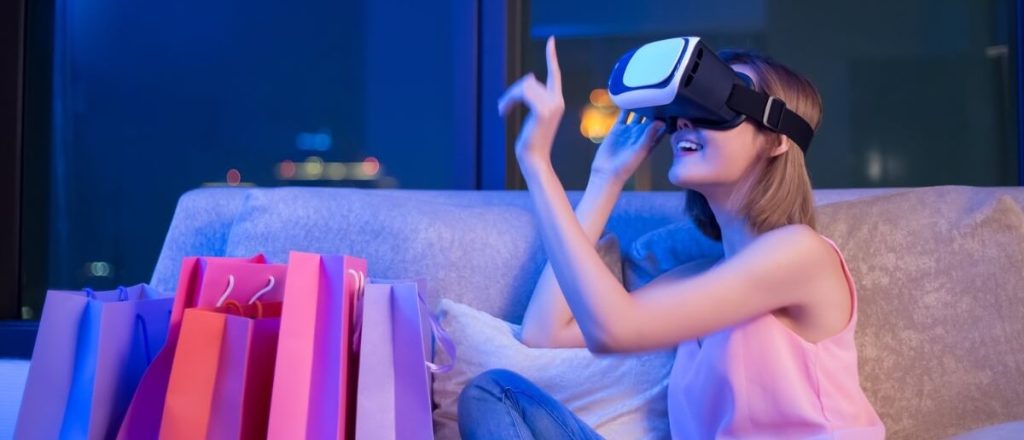
Technology also plays a key role in the evolution of retailtainment. Features such as augmented reality, smart mirrors, virtual fitting rooms, artificial intelligence, and immersive experiences help enrich the interaction between consumers and brands.
It’s no secret that technological advances are already a reality in physical spaces, and these solutions expand the possibilities of experiential retail, allowing people to explore products in innovative, personalized ways.
However, it’s important—and our duty—to point out that technology shouldn’t exist just to impress. Its role is to make the experience easier, reduce friction, and add value to the consumer journey in retail.
When strategically integrated into store design, technology boosts the results of experiential retail marketing and strengthens the retailtainment proposition and the brand’s entire narrative.
Instagrammable spaces and the power of social sharing
Last but far from least, we know very well that social media has completely changed the way people interact with physical spaces. Today, many consumers choose to visit certain places motivated by the chance to capture and share experiences.
That’s why Instagrammable environments—visually appealing, aesthetically pleasing spaces—have become part of retailtainment strategies. Creative murals, art installations, immersive settings, and striking visual elements encourage spontaneous content creation.
This strategy strengthens experiential retail marketing by turning customers into brand promoters. User-generated content extends the reach of campaigns and helps increase the company’s visibility.
In this context, the consumer is no longer just a customer but becomes a media channel for the brand, reinforcing the power of experiential retail and extending the impact of the experience beyond the physical space.
Cases that show retailtainment in practice
Now that we understand a bit more about the essential elements of retailtainment, it’s time to see it in practice. Check out some examples of companies and brands that know how to use entertainment as a great tool for creating memorable experiences:
LEGO and experimentation-based retail
LEGO is one of the global benchmarks in retailtainment. Its stores are designed to encourage creativity and interaction, allowing children and adults to explore products even before buying.
In LEGO’s brick-and-mortar stores, it’s no surprise to find areas for playing, building, and creating that turn the environment into a natural extension of the brand’s purpose. The result is an experience aligned with the principles of experiential retail and experiential retail marketing.
Nike and the store as a community space
Nike, one of the world’s largest sportswear brands, uses its stores for much more than selling sporting goods. Events, training sessions, product testing, and interactive technologies are all part of the experience.
By integrating physical activity and relationship-building into the retail environment, the brand strengthens not only its own culture but also its presence in the consumer journey in retail, creating connections that go beyond the purchase.
Starbucks Reserve
And coffee lovers aren’t left out. Starbucks Reserve locations, the brand’s premium line of experiences, represent an evolution of the traditional coffee shop concept. The focus is on sensory immersion, food, and celebrating coffee culture.
The experience involves aromas, brewing processes, storytelling, and interaction, showing how retailtainment can be applied to deepen relationships with consumers.
CAMP NYC
CAMP NYC is often cited as one of the most complete examples of retailtainment today. The space combines a store, theme park, children’s entertainment, and interactive experiences.
The concept shows how store design, combined with experiential retail and a well-crafted narrative, can completely transform how the public perceives the role of a point of sale.
To wrap up this section, do you know what all these examples have in common? Despite differences in segments and audiences, all these cases share similar characteristics:
- Active consumer participation;
- Entertainment integrated into the experience;
- Consistent brand narrative;
- Strong emotional component;
- Extended dwell time;
- Strategic integration of space, experience, and relationship.
These factors, sometimes invisible within the overall strategy, show why retailtainment has established itself as one of the leading strategies for transforming brick-and-mortar retail.
Retail beyond the purchase: retailtainment as a tool
Retailtainment doesn’t replace the sale. In fact, it turns the sale into a natural consequence of a well-built experience. When consumers feel engaged, inspired, and emotionally connected to a brand, the purchase decision happens much more organically.
In this context, the value of physical stores is shifting from simple product availability to the ability to create memorable connections. Investing in experiential retail marketing, experiential retail, and strategies centered on the consumer journey in retail is becoming increasingly important for brands that want to stand out.
At the same time, store design takes on a strategic role in building these experiences, helping turn commercial spaces into environments for discovery, social interaction, and relationship-building.
In an increasingly digital landscape, the future of brick-and-mortar retail depends less on the transaction and more on the experience. And that’s exactly why retailtainment will remain one of the main forces capable of redefining the relationship between brands, consumers, and commercial spaces in the years ahead.
Inscreva-se em nossa Newsletter
Receba no seu email todas as novidades do nosso blog sobre tecnologia e varejo, além de ficar por dentro do novos projetos Alice Wonders.
Thank you for subscribing.
Something went wrong.
Respeitamos sua privacidade e levamos a sério a sua proteção