




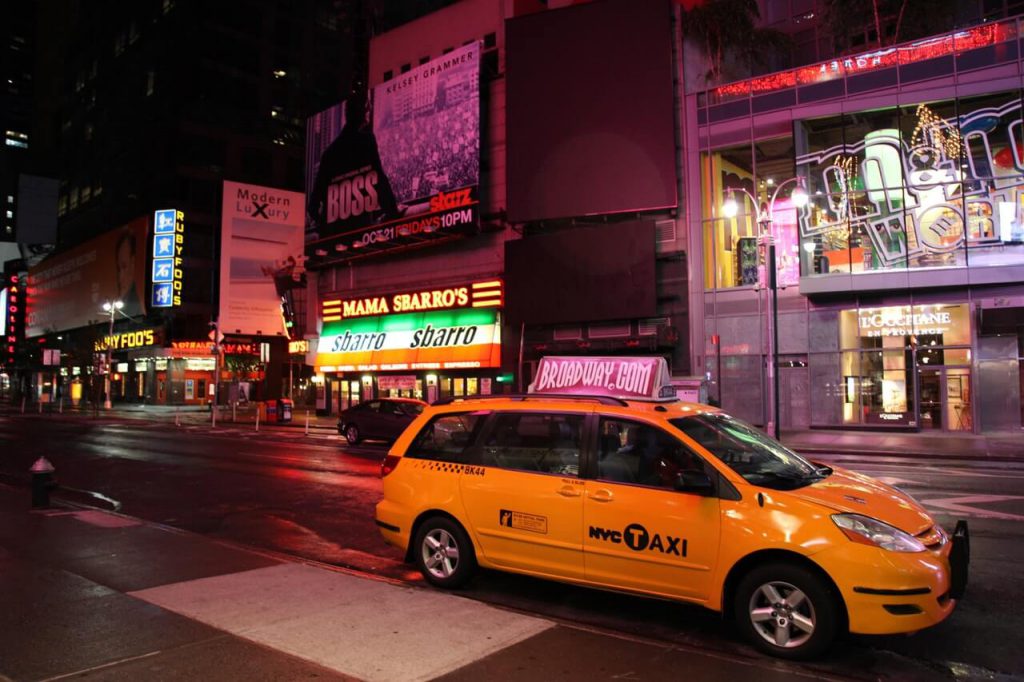
A digital storefront display is an innovative tool that turns stores into interactive spaces customers actually enjoy walking into. The concept behind this kind of technology is very simple: it’s built from LED panels featuring custom artwork that is updated periodically and is usually in motion.
Walking through the mall or down city streets, we pass countless store windows along the way. But when was the last time one of them really caught your attention?
Using technology at the POS makes your store more appealing and helps you attract new customers. In today’s article, discover the benefits of investing in digital storefront displays and what other tools are available to deliver better returns for your point of sale.
What is a digital storefront display?
A digital storefront display is quite different from the conventional setups used to promote a store’s products. Instead of showcasing products, it’s made up of LED panels that can host a variety of custom artwork. Displays can be simple, showing what a store sells and why customers should come in — much like traditional store windows — or interactive, drawing passersby outside the store into eye-catching animations and compositions.
Using the term “LED panels,” however, might lead you to think of virtual store windows as a bunch of TVs playing simple images. But the technology is a lot more sophisticated than that. These panels are bezel-free, so videos can fill an area as large as a jumbo screen, but with digital quality. Each panel plays a slice of the content simultaneously, so the result looks like a regular video with seamless, invisible joins.
Promotional videos aren’t the only thing that can be shown in these spaces. Displays equipped with sensors can capture the movements of people outside the store, prompting them to turn toward the point of sale while the images follow their gaze or gestures. They can also be used to create compositions similar to those of conventional store windows.
The panel can serve either as the backdrop for an elaborate design, in which mannequins are also used to create compositions that highlight your products, or as the medium that delivers all of the display’s content.
So what’s different, beyond the format of the LEDs used? The technology behind digital storefront displays usually involves tools such as projection mapping, which make it possible to apply images at different angles and proportions so they come together as a coherent whole.
Digital storefront displays don’t have to be square or rectangular. They can be curved, creating a sense of perspective and helping build a 360º retail experience.
Why are digital storefront displays a POS trend?
The digital storefront display is one of the point-of-sale innovations that has been grabbing customers’ attention the most. Right now, few businesses use them, which makes them a great opportunity to make your store stand out among the many others that rely solely on conventional visual merchandising.
The spread of digital technologies and the falling cost of hardware and software is another factor that has helped make this media more popular. Ever-thinner and cheaper screens mean digital storefront displays offer companies better cost-effectiveness and make differentiators such as panoramic displays possible.
In addition, the use of technology at the point of sale has grown significantly, and with it, the paradigms and POS trends we knew in the past are changing.
Integration between the virtual and physical worlds is already part of our daily lives, and we’re used to pulling our phones out of our pockets to scan QR codes or look up product information even while we’re in the store. That’s why Marketing teams have been working hard to understand which innovations keep customers in stores longer and lead them to buy more.
Just as we have plenty of tools online to track customers and understand how they behave, we’ve evolved offline, too. Today we can measure brand interactions on social media thanks to cookies and beacons — which follow consumers and build a profile of them even after they leave a website — and in stores, we’re well past the point where the only innovation was offering WiFi.
Digital solutions that put data in business owners’ hands so they can feed their Business Intelligence and Big Data systems are being integrated into points of sale, making brands more competitive.
Below, we show other technology tools that, like digital storefront displays, have been delivering incredible returns for retailers.
Audience measurement
Wouldn’t it be great if you could track everything a shopper does in your store, from the moment they walk in until they reach the checkout? Until recently, the only way to do that was to follow them around everywhere (which isn’t exactly welcoming).
With audience measurement devices, retailers get the chance to better understand their visitors without making them uncomfortable. They also get far more accurate data than they would with a do-it-yourself approach.
These devices are cameras installed above screens. They make it possible to continuously collect information about how people interact with products at the point of sale. Retailers who use them can understand which products are touched, how long shoppers spend looking at each one, and what actions they take next.
Many other types of information can be captured by devices like these, such as metrics on customers’ gender and age. This makes it less complicated to adapt to the evolution of the store’s target audience and to know whether you’re advertising to the right people.
People counters
Have you always wanted to know exactly how many people pass through your POS every day? People counters automate that task.
These devices, installed at store entrances, record shopper traffic and how long each person stays in the store.
Small retailers may be able to estimate foot traffic in their stores. However, as traffic grows, or in larger and more complex stores, it’s easy to lose track of how many people are coming through.
People counters don’t miss a single visitor, and they generate information that, when integrated with BI systems, can reveal the busiest times at your point of sale, as well as the days and time slots where improvements can be made to attract customers.
Interactive catalogs
Managing and presenting huge product catalogs to customers is another challenge in retail. Digital solutions have emerged as a way to deliver the best possible service. An electronic catalog makes everything in your store available at the touch of a finger.
A shoe store, for example, may not have every color of a given style on display. Searching for it in the back room and making the customer wait isn’t a good option. They might simply leave.
An interactive catalog only requires typing or selecting the name of the desired product and checking its availability. With it, customers can see whether the shoe is available in the color they want and even serve themselves. This encourages them to close the purchase and makes the shopping experience more immersive.
How does it work?
Many technologies work directly with POS interactivity, but the digital storefront focuses on presenting services in a more attractive way to whoever is on the other side of the glass.
Running custom animations designed to fit your company’s marketing strategies, these displays act as a calling card that helps you attract people who walk past your door and have never even thought about coming in.
A combination of panels sharing the same CPU, technologies such as 4G and Wi-Fi to stay connected to the internet, and specialized software is all a store needs to start creating and using virtual storefronts.
Once installed, new artwork can be added without much hassle, and it’s easy to rotate between multiple versions, running a kind of A/B test on the materials shown to customers. Pairing the storefront with sensors makes these tests even more effective. They will detect which versions of your display captivated passersby the most.
Every day, the only task your staff will have is turning the systems on. Everything else happens automatically, since the monitors connect on their own so that videos and photos play continuously.
What are the advantages of a digital storefront?
We could say that storefronts are the biggest symbol of digital transformation in retail. The reason we say this is the results they deliver. Some research helps us better understand the impact visuals have on attracting customers.
For example: about 79% of people surveyed by FedEx Office say they remember the messages they saw on digital signage. People who walk past a virtual storefront feel more inclined to enter the store, according to the same study. At least 48% of respondents reported a positive reaction to this feature.
Signage has always been very important for delighting consumers, and in the digital age it’s no different. Even before these resources were available, 8 out of 10 people walked into stores simply because they were impressed by the visual quality of window displays, posters, and banners.
We should keep in mind, however, that different audiences may yield different results. Signage is more popular among women, which makes digital storefronts a great option for winning them over. 42% of respondents in the same survey report being more likely to visit a store if they like its exterior signage.
Creativity, color, and legibility are what catch consumers’ attention most in store signage. Storefronts that are graphically appealing, well lit, combine multiple colors, and are easy to read are the ones that bring the most shoppers into the store, according to the study.
There are plenty of other advantages to using digital storefronts. Check out some of them in the following sections.
Attract more visitors with digital experiences
The numbers we mentioned above make it clear that consumers are extremely visual. A good presentation can either draw them into a store or make them forget it entirely.
Human beings prefer moving images over static ones. Web traffic is proof of that. At least 79% of the bandwidth we use to browse the internet goes to video, and that’s not just because video files are heavier.
People are more interested in this type of content than in others, since a video can convey a lot of information more concisely than other media. In an era of multiple screens (phone, tablet, TV, computer, and smartwatches), adding one to your store will make all the difference when it comes to winning customers.
That’s because users who have a good experience watching a video are up to 97% more likely to buy a product. In storefronts, media are short, which is important for creating attractive campaigns. Videos of up to 2 minutes get the highest engagement rates, and in a store, that means visits and conversions.
Save on materials with interactive storefronts
Besides mannequins, one of the resources visual merchandisers use most when putting together a display is paper. It can be used to create backdrops and artwork that include text and images. Paper costs, however, vary a lot as stores change their displays.
Depending on the size of the business, reproducing the same window display can already be too expensive. That’s why digital experiences stand out as a more cost-effective way to showcase a store’s concept and products.
They allow communication to be updated more frequently and gain not only motion but also visual quality. 4K monitors offer far better resolution than any poster could and, in the long run, save resources for your company, which can reuse them across thousands of displays for a long time.
Implement digital architecture to captivate customers
The concept of “digital architecture” may sound unfamiliar to you. It refers to making changes to the store environment so that it becomes more attractive through the use of technology. These applications can be as simple as customizing the space so that interconnected audio systems provide an interactive shopping experience for consumers.
Digital storefronts are part of this concept, and it’s important to understand that they don’t have to be limited to the store entrance. Integrated into product display areas, they are the ideal channels for describing the features of what you sell and even for showing instructional videos on how to use the items.
Integrating media inside a store makes it more attractive and gets people to spend more time in that space, feeling as comfortable getting to know a product as they would researching it online. A pleasant environment is one of the main factors that make someone buy more.
According to Retail Week Reports, in the study “Shopping with emotion”, 75% of people prefer to shop in physical stores and do so more often when they find the environment pleasant. Half of the consumers who took part in the survey also report that technology intrigues them and makes them spend more time in these spaces.
Gain a competitive advantage for your business
Take a moment to think: how many of your direct competitors use digital solutions inside their stores? Even if we look beyond virtual window displays and add Internet of Things sensors, augmented reality and other interactive technologies to the equation, the answer is the same: very few.
That’s a huge opportunity for your company. Getting ahead of the curve and introducing consumers to a new store concept, one that fits the digital routine they’ve built over the past few years, is enough to get a lot of people to know your brand better. From there, a strong relationship is all your business needs to sell more.
Sell more with virtual window displays
We couldn’t leave out the results a store achieves by integrating technology into the shopping experience. Digital window displays are part of this process and can significantly boost your business’s sales.
77% of them feel that most stores don’t do enough to create truly engaging shopping experiences. That’s one of the reasons they stop buying at the POS and move online.
What’s clear to 61% of these shoppers is that, by using technology, a store becomes a much more interesting place than a website or app. That’s why they’re demanding environments with interactive screens and smart features.
The challenge retailers face every day to increase profits can be overcome by investing in these areas.
How do you implement a digital window display at the POS?
Interested in making your store more inviting for customers with a digital window display? It’s time to understand how to do it in your store. The tips we’ve put together will help.
Understand your target audience
To produce the most suitable content for your virtual window display, the first step should be thinking about your audience. Which messages are most likely to catch their attention?
Your Marketing department can help. They’re used to mapping out strategies to win customers’ attention and have a deep understanding of the personas they need to reach.
A successful virtual window display project is born in the planning and concept phase.
Create your digital window display concept
Drawing inspiration from other people’s creations is a good idea. Since virtual window displays are a very new technology, they’re still evolving to become part of our lives.
Some brands have already created amazing projects using screens, and you should look at case studies to develop a window display concept that delivers great results.
Combine your digital window display with other features
As we mentioned, many technologies work well with window displays. Virtual reality is one of them. A digital fitting room, for example, can be built with motion sensors and cameras.
From outside the store, customers can already try on the dress or shirt they liked. Working together, these two features turn the window display into an invitation to visit the store.
Look for experienced vendors to help you
Technology projects should be custom-built. Designed from the ground up to turn what you envisioned into reality, they benefit greatly from the help of experienced professionals. Look for a partner who can translate your concept into action.
Find the right KPIs to measure results
Measuring the results of a digital strategy is important. Of course, the same goes for virtual window displays. Performance indicators will show you what needs to change in the display so it keeps working for the business, and they’ll also be essential for tracking the ROI of your investment.
Determine which metrics matter most for your business: number of views, proximity to the window display, store entries and purchases could be some of them. Then, define the best strategy to measure these KPIs. Some of the technologies we mentioned among the POS trends can guide you in gathering these numbers.
Digital features will help your store sell more, win new customers, better understand the audience it serves and stand out from the competition. Creating immersive experiences is a great way to break your store out of the same old routine and achieve surprising results.
Technology investments, when well adapted to the reality of your business and the customers it serves, are a way to stand out and offer more to those who visit you. A good concept, a great idea and the right tools are the best strategy to win new consumers and delight the ones the retailer already knows well.
What do you think? Want to install a digital window display in your store? Get in touch with AliceWonders and find out how we can help you create an optimized shopping experience for your customers!
Inscreva-se em nossa Newsletter
Receba no seu email todas as novidades do nosso blog sobre tecnologia e varejo, além de ficar por dentro do novos projetos Alice Wonders.
Thank you for subscribing.
Something went wrong.
Respeitamos sua privacidade e levamos a sério a sua proteção






