Most industries already use the Internet of Things in their day-to-day business (or are at least planning ways to use it). However, you may not be completely familiar with the concept yet and could use a little help.
That’s why we’ve put together a guide on how the Internet of Things is being used in retail and the changes it can bring to the industry. When we talk about this concept, we’re referring to devices that have a unique IP address and are able to connect thanks to the internet.
These “things” include smartphones, but they also refer to sensors and other objects that can connect to a network and interact according to programmed instructions.
The Internet of Things is what gave us the tools to create smart homes, and it’s with its help that smart stores have become part of retail initiatives and point-of-sale differentiation.
Want to find out how it brings value to your brand? Check out below what you can do with it when the goal is to enrich the user experience!
Improving logistics with the Internet of Things
The logistics sector has benefited from these innovations. After all, internet-connected sensors have huge potential to streamline the supply chain and simplify the steps that take products from manufacturers to store shelves.
When you think about the Internet of Things, instead of starting with the shopping experience and the interactions that happen directly, it’s worth considering the elements that keep a store running.
Retailers need a whole series of things to go right before they can make products available to customers. So we can say that success lies in the details. The Internet of Things increases process visibility and helps you identify things in real time, such as when a product will be delivered.
But the technology also works for loss prevention, for measuring how each logistics stage impacts results, and for generating data. This data, originating from RFID devices and stored in the cloud, can help a business optimize its own operations and move toward better results.
Monitoring customer traffic
When it comes to analyzing business information, certain data should take priority in retail. A good example is the level of traffic your store gets.
Online, it’s very easy to use measurement and analytics tools for this purpose that automatically track your visitors and provide information about them.
In physical stores, however, it can be relatively complex to accurately estimate how many people visit a given location.
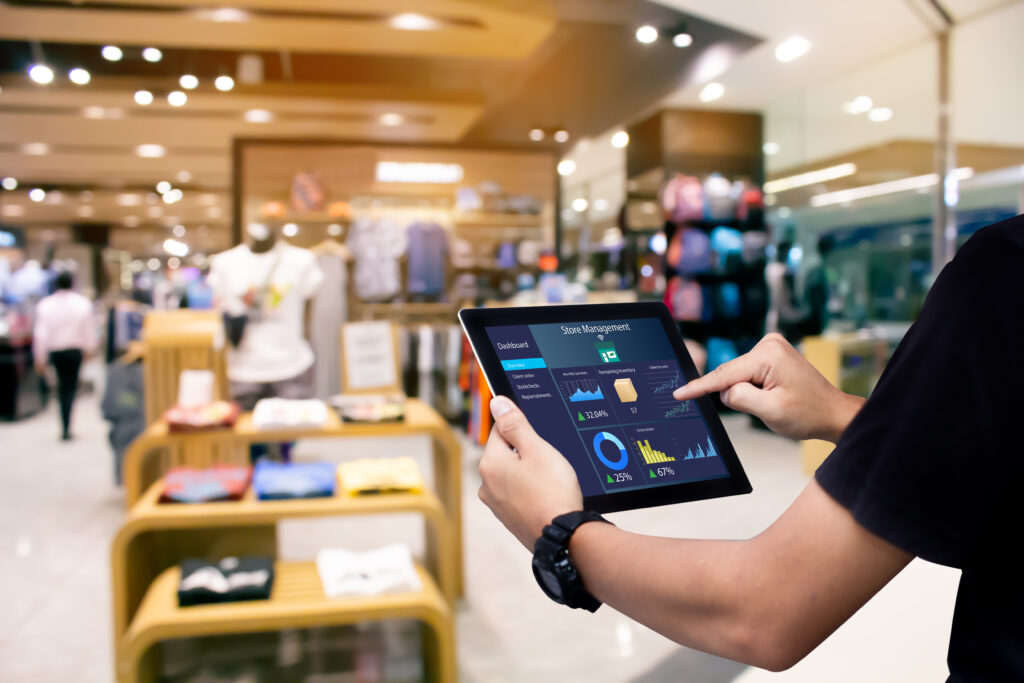
In this context, the Internet of Things brings significant advances, since installed sensors can accurately determine how many people visited a store, recording the times and, in some cases, even which areas they preferred.
All this information can be essential for creating better stores and more efficiently tapping into their full potential.
Identifying consumer habits
The Internet of Things narrows the gap between digital and physical shopping experiences. And that’s great news for retailers, who can rely on this technology to identify consumer habits and, as a result, customize their product offering.
Just like your customers, you have high expectations for the products and/or services you offer.
How you interact with them, the speed of service, its efficiency, and the ability to have on hand all the products they need are important factors in getting them to come back to your store.
The Internet of Things can help optimize all of these points because it provides data-driven guidance and allows retailers to understand the context of customer interactions with every experience offered in the store.
By making it possible to accurately identify consumer habits, the Internet of Things brings unique opportunities to refine strategies.
In short, the Internet of Things lets you understand how other technologies, such as Digital Signage and smart mirrors, are working to make POS more efficient.
Enriching data analysis
The use of data is one of the most incredible possibilities among the innovations driven by the Internet of Things. In fact, technologies you already use, such as Big Data and Business Intelligence, can be combined to determine key variables in your retail performance.
Richer data helps us spot a business’s shortcomings and pinpoint its differentiators. It also helps us build more meaningful spaces and interactions for our audience.
Bringing interactivity to the point of sale
Today’s consumers expect significantly better shopping experiences. They carry these expectations across every shopping channel, which means there’s little point in knowing a lot about the customer and improving how they interact with an online store if that isn’t backed up in the real world.
What matters most about the Internet of Things in this context is its ability to radically change interaction at the point of sale.
It makes it possible to redefine customer service case by case. And it brings customization and personalization to in-store service. These features make it essential for the store of the future.
Think of interactive refrigerators and smart shelves. They’re there to improve the in-store selection process and entertain consumers, making the stores that use them more interesting and generating traffic that converts into sales.
Internet of Things technology is already changing the way brands and retailers engage with customers in their stores. It offers new customer service opportunities and enriches key points of the consumer experience, helping companies improve their logistics and better understand who they’re selling to.
So, did you enjoy learning about the Internet of Things and its main applications? Then follow us on social media and stay up to date on other retail news. We’re on Facebook, LinkedIn, Twitter and Instagram, ready to welcome you!
Inscreva-se em nossa Newsletter
Receba no seu email todas as novidades do nosso blog sobre tecnologia e varejo, além de ficar por dentro do novos projetos Alice Wonders.
Thank you for subscribing.
Something went wrong.
Respeitamos sua privacidade e levamos a sério a sua proteção