Half the year is already behind us, and from architectural to tech projects, we’ve taken on all kinds of cases here at Alice Wonders. Of course, we weren’t going to let this milestone go by unnoticed. After all, a lot can happen, change, and arrive in just 6 short months.
The first half of 2026 was marked by many special projects delivered by the Alice Wonders team, spanning a range of industries, from real estate to technology. After all, delivering a memorable experience to consumers is something every brand needs to care about.
And to keep you even more up to speed on what’s been happening here during this first half of the year, we’ve selected a few special cases that have shaped our journey so far, so you can learn a little more about what we do and about the brands that have trusted us with their projects.
Mitre Case: A Madrid-Inspired Immersive Corridor
Kicking things off in style, we bring you the Alice Wonders case with Mitre, a Brazilian real estate developer and builder specializing in mid- to high-end residential projects. Our team transformed a walkway in Mitre’s sales showroom into a true experience inspired by the city of Madrid, showing how experiential retail can add value to the presentation of real estate developments.
Rather than using the space merely as a passage between rooms, the project was designed to spark emotions from the visitor’s very first contact with the development. The combination of scenic greenery, strategic lighting, audiovisual content, and Spanish cultural references creates an immersive atmosphere that emotionally prepares the customer even before the sales presentation begins.
The path was planned to encourage continuous discovery. Along the corridor, classic frames serve as digital screens displaying animations about Madrid’s architecture, art, and culture. The visual narrative unfolds gradually, sparking curiosity and encouraging visitors to explore every detail of the space.
In addition to strengthening Mitre’s positioning, the corridor has strong potential for social media sharing. The Instagrammable settings encourage visitors to create spontaneous content, extending the brand’s reach beyond the sales showroom.
The case shows that Alice Wonders sees physical space as a strategic communication channel. The corridor is no longer just a functional architectural element; it becomes an active part of the development’s narrative, sparking emotions and building connections between visitor and brand.
Click here to watch the special video about this case.
Fast Shop: Technology-Driven Retail Design
In a landscape shaped by digital transformation, Fast Shop set out to make its stores more connected and dynamic through a solution developed by Alice Wonders that integrates commercial architecture, digital signage, and smart content management. The project shows how experiential retail can use technology to strengthen brand communication at the point of sale, creating environments that keep pace with sales campaigns and market shifts.
One of the project’s key differentiators is the implementation of a centralized content management platform. Through this system, campaigns, product launches, and corporate communications can be pushed simultaneously to different screens across the store, ensuring agility, consistency, and greater operational control.
The integration of architecture and technology is another key aspect of the case. Large digital surfaces are seamlessly built into the fixtures and walls, preserving the store’s aesthetic and reinforcing its visual identity. Rather than being just pieces of tech equipment, the screens become part of the space’s architectural language, creating continuous communication between the physical space and digital content.
More than modernizing communication, the project shows how innovation can help strengthen Fast Shop’s positioning as a brand in tune with the transformations of today’s retail. The combination of smart content management, commercial architecture, and technology boosts operational efficiency and significantly improves the customer experience.
The case makes it clear that the future of experiential retail depends on integrating physical spaces with digital solutions that create value for both consumers and businesses. In this context, store design takes on a strategic role in shaping the retail customer journey, delivering an immersive retail experience that brings brand, product, and consumer together far more effectively.
Click here to watch the special video about this case.
Galeria Laguna Case: Magic Floor as an Interactive Platform
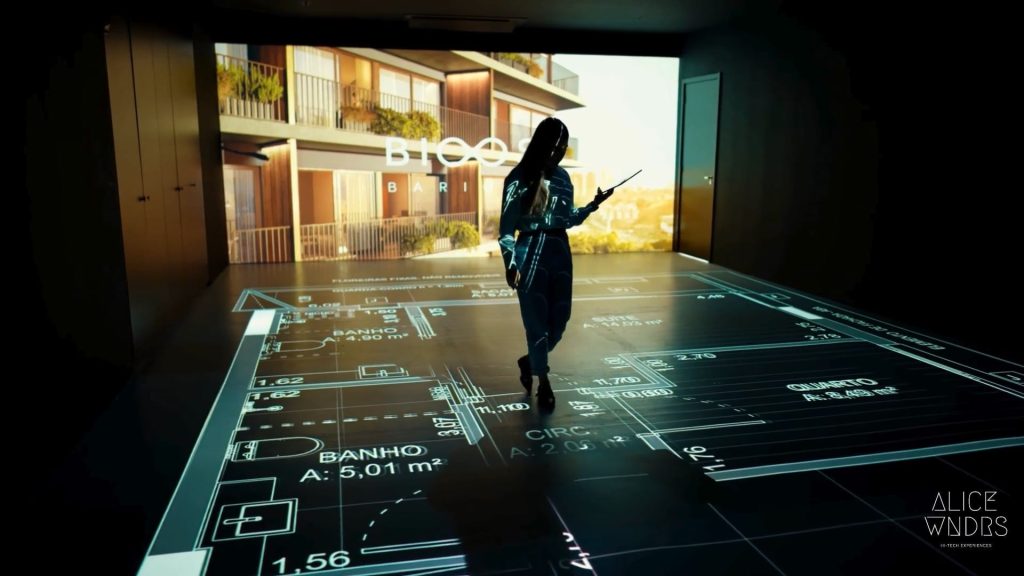
Alice Wonders also developed the Magic Floor for Galeria Laguna, a tech solution that turns the floor into an interactive interface capable of guiding visitors through a dynamic narrative about the development. Instead of relying on traditional resources such as scale models and information panels, the project puts the consumer at the center of the experience, letting their movement through the space reveal information, animations, and digital content.
The Magic Floor’s main differentiator lies in the interaction between visitor and environment. As people walk across the projection, new information is revealed progressively, creating a discovery-based narrative. The consumer is no longer just a spectator but an active participant in the project presentation, making the process of understanding it more intuitive and engaging.
Another key aspect is the invisible integration of technology into the physical space. Rather than spotlighting equipment or devices, the project keeps all the attention on the experience itself. Digital projections, animations, and architecture work together to create a sophisticated, intuitive environment, reinforcing the idea that technology should enhance the experience, not compete with it.
The case shows how digital solutions can redefine the way products and services are presented in the real estate market. More than informing, the Magic Floor creates emotional connections that increase dwell time, spark curiosity, and strengthen the perceived value of the development.
By integrating architecture, storytelling, and technology, Alice Wonders demonstrates how experiential retail can turn physical spaces into relationship-building platforms. The result is an innovative store design that elevates the entire retail customer journey and establishes the immersive retail experience as a strategic differentiator.
Click here to watch the special video about this case.
Gran Incorporadora: Magic Room as a Sensory and Narrative Experience
For Gran Incorporadora, Alice Wonders developed the Magic Room, an immersive room designed to present the development’s concept through digital projections, storytelling, and audiovisual resources. The project replaces conventional presentations with an experience that emotionally engages visitors even before they tour the model apartment.
The narrative developed for the Magic Room uses high-definition imagery, synchronized motion, and large-scale projections to transport visitors into the world of the development. Rather than simply presenting technical data, the experience conveys sensations, lifestyle, and brand attributes through a carefully planned sequence.
Beyond creating a sense of wonder, the Magic Room strengthens Gran Incorporadora’s positioning as an innovative company committed to standout experiences. The space increases visitor dwell time, boosts brand recall, and helps keep the development top of mind throughout the entire purchase decision process.
By replacing traditional presentations with a sensory narrative, Alice Wonders highlights a growing market trend: using physical spaces as platforms for emotional communication. The Magic Room shows that memorable experiences increase consumer engagement and strengthen real estate developers’ branding.
In this way, experiential retail becomes an important competitive advantage, while store design shapes the retail customer journey to deliver an immersive retail experience aligned with consumers’ new expectations.
Click here to watch the special video about this case.
Casa Bola Kohler Case: Architecture and Brand Experience
Last but certainly not least, in the activation developed for Kohler, Alice Wonders transformed the iconic Casa Bola into a space for experiencing the brand, using architecture as the centerpiece of the narrative. Instead of creating a conventional product display, the project brought together design, innovation, and architectural heritage to deliver an experience capable of sparking emotions and bringing the public closer to the company’s values.
Casa Bola’s unique architecture plays a fundamental role in shaping the experience. Its curved forms, organic flow, and unusual layout turn the walkthrough into a journey of discovery, with each space revealing new products and new possibilities for interaction.
Rather than adapting the space to exhibition conventions, Alice Wonders used its architectural features as part of the narrative, reinforcing the potential of experiential retail and demonstrating how store design can make the retail customer journey more engaging through a truly immersive retail experience.
The project also has high potential for social media sharing. Casa Bola’s architecture itself sparks curiosity and encourages people to take photos and videos, organically expanding the activation’s reach.
By transforming Casa Bola into a sensory experience, Alice Wonders reinforces Kohler’s premium positioning and demonstrates that architecture, technology, and storytelling can work together to deliver meaningful results.
Click here to watch the special video about this case.
These were just a few of the projects Alice Wonders developed in the first half of this year, standing out not only for their innovation but also for the impact they had on the message each brand conveyed and for the memorable experience they offered consumers.
We still have another half of the year ahead and many more projects to bring to life. Follow Alice Wonders on social media to keep up with our new cases, and get in touch to learn more about our work and discover how innovation and experience can make all the difference for your business and your audience.