Experience as a Service Comments Off on Experience as a Service 2902

Experience as a Service

How do you turn a product into a service experience?

Experience as a Service (EaaS) means turning your product into customer experiences that add value to a service. It’s a set of actions your brand can explore to build relationships with customers.

Building a reference mindset for your brand in customers’ minds establishes your identity and generates influence. For a brand, it’s important to keep an eye on three essential aspects: recognition, awareness, and image. Recognition is the first stage: it’s about connecting your service to the brand’s symbols and name. Awareness means positioning your service at a certain purchasing level, whether it’s a luxury item or a mass-market one, for example. And image is the result of customers’ evaluations of the brand or service; it’s what defines your reputation and quality.


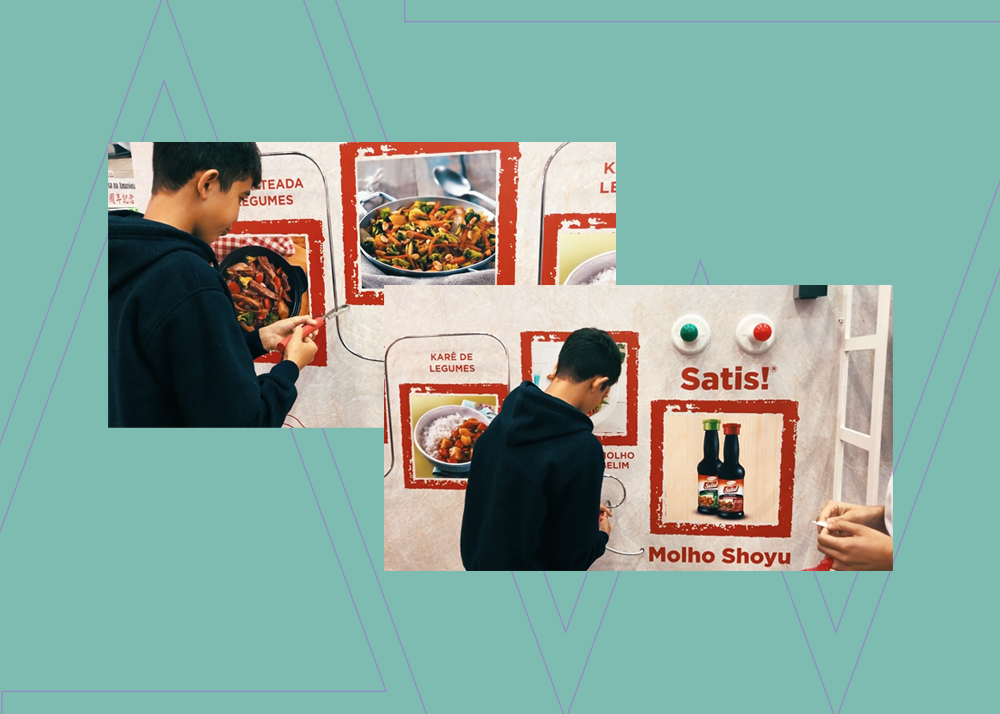
Interactive activation for Ajinomoto, by Alice Wonders.
Interactive activation for Ajinomoto, produced by Alice Wonders. We brought technological innovation to the Japan Festival with Ajinomoto through our interactive experiences, engaging the audience with Lift & Learn, Invisible TV, an Interactive Timeline, and the Nerve Test.

Focusing on the customer’s consumer profile, we’ve listed the key elements of a service experience:

Customer journey

Customer-Journey-Map
When creating your customer journey map, think through every stage the customer goes through to find the decisive moments where you’ll deploy your strategy.

Think from the customer’s perspective and map out a journey that runs from the first contact with your brand or the discovery of the service, through the purchase conversion, to the post-sale experience. All of this counts when creating the experience:

  • Break it down into smaller journeys
  • Select the ones that matter most to the customer
  • Define the best processes for each of them
  • Distribute the issues across the organization and find solutions
  • Focus on continuously improving the journey

Retail as a Service

Retail as a service is a way to drive and implement innovative technologies such as artificial intelligence (AI), augmented reality (AR), holography, and even sensors for real-time data capture. Incorporating these solutions into retail takes a lot of time and effort in project planning, creation, and production. That’s why RaaS exists: specialized companies or vendors that already have the solution in hand and carry out this kind of work. They develop technologies, bringing advances and innovation to the market.

Service design

In increasingly instant-gratification times, with the rise of a new generation of demanding consumers, holding the customer’s attention is one of the biggest challenges and pain points we face in the market. In this scenario, service design can help deliver an instant reward to that consumer. That’s what we call experience. It ranges from building a store environment designed to engage and immerse the consumer in that space, to an app interface that lets users navigate intuitively without having to think too hard.

Service quality

Putting a quality monitoring process in place for your service drives scalable improvement. Gathering feedback or extracting data provides the information you need to evaluate your performance. Making a habit of collecting data on results can help you anticipate risks to avoid and even create solutions in advance, before the customer has to report a failure or problem, which causes friction and puts your reputation at stake.

Liked these tips and ready to create new experiences for your brand? Get in touch with us and let us help you bring amazing projects to life.

Inscreva-se em nossa Newsletter

Receba no seu email todas as novidades do nosso blog sobre tecnologia e varejo, além de ficar por dentro do novos projetos Alice Wonders.

Thank you for subscribing.

Something went wrong.

Previous ArticleNext Article

5 Reasons to Invest in a Vending Machine Comments Off on 5 Reasons to Invest in a Vending Machine 4012

Vending Machines Interativas, por Alice Wonders

A global trend, the vending machine makes shopping much easier. The convenience benefits both consumers and merchants. It’s a promising investment, especially now with changing habits and ways of consuming, in a landscape where technology is proving even more essential in retail.

Japan has more than 5 million vending machines, Europe has 3 million, and the US has 3.5 million. Meanwhile, in Brazil, this segment has approximately 100,000 machines, generating R$ 700 million, according to the Brazilian Association of Automatic Sales (ABVA). If you’re already interested in investing in a vending machine, now is the time!

Check out the advantages of this promising business:

Variety of products

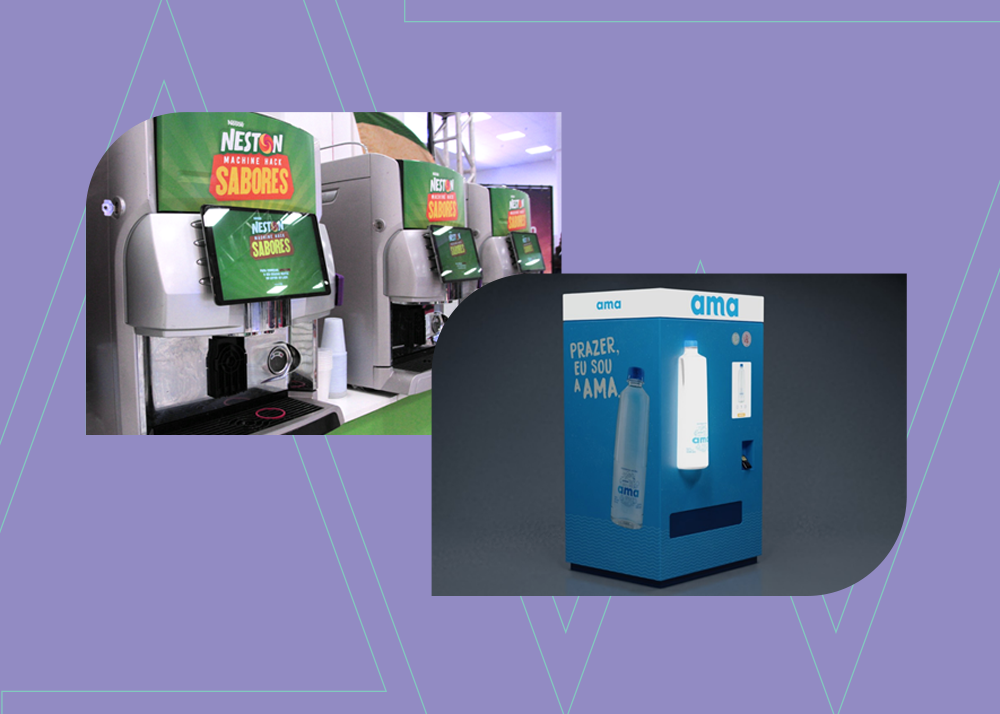
There are many categories of vending machines, offering everything from all kinds of food and beverages to books and even electronics. Coffee machines, for example, can serve a range of flavors. We recently developed technology for automated coffee machines that serve cold drinks. Our machines feature an interactive panel where users can rate the drinks, leaving a score (from 1 to 5 stars) for data analysis.

Hacked Machine / Vending Machine
Hacked cold drink machines for Nestlé, by Alice Wonders.

Business opportunity

Vending machines are installed in strategic, high-traffic locations. They can be found in subway stations and business settings such as offices, hospitals, and clinics, and they’re also great for events. Another advantage is that they don’t require any mass marketing campaign to promote them. They can be an opportunity for extra sales, complementing the services and products within your business.

Great cost-effectiveness

Consider that you won’t have expenses for expensive commercial rent or hiring staff. A vending machine operates 24 hours a day and is fully automated.

It’s all about savings and peace of mind for you and for the consumer, who gets a greater variety of products and a quick, easy shopping experience.

Maintenance

There are two ways to acquire a vending machine: you can buy it or rent it. The advantage of renting is that you’ll have all maintenance services available whenever you need them, hassle-free. All technical support is the responsibility of the contracted company, which provides a specialized team, and you can also count on new equipment from time to time. Your only concern will be stocking the machine and pricing the products.

Find your market

If you don’t yet know where to place a vending machine or which products to invest in, start by doing market research to find out which segment is most profitable. Machines for canned drinks and snacks, such as bags of chips, cookies, and chocolate, are the most popular.

Technology and design

For large companies, vending machines are also a great way to deliver technology and innovation in retail. That was the case with AMBEV, which relied on our expertise to give shape and life to the AMA project. We developed the Interactive Vending Machine not only to make the brand stand out, but to create an emotional connection at the moment of purchase. The machine invites reflection on the theme of social business, demonstrating its positive impact in practice with every sale while entertaining the consumer.

AMA AMBEV, Interactive Vending Machine, by Alice Wonders
Interactive Vending Machine for AMBEV, by Alice Wonders.

Vending machines are a great retail technology solution, offering excellent cost-effectiveness, low investment, and projected market growth. Contact us for a quote. We can help your company bring amazing projects to life!


Inscreva-se em nossa Newsletter

Receba no seu email todas as novidades do nosso blog sobre tecnologia e varejo, além de ficar por dentro do novos projetos Alice Wonders.

Thank you for subscribing.

Something went wrong.

#WonderNews: Sensory Experiences; Using Data in Retail (and More!) Comments Off on #WonderNews: Sensory Experiences; Using Data in Retail (and More!) 1701

sensoriais

Welcome to #WonderNews: the Alice Wonders newsletter that connects you to the top trends in technology, design, architecture and customer-focused sensory experiences that strengthen brands in physical stores, in Brazil and around the world.

In an increasingly dynamic consumer market, these areas play an essential role in building spaces and interactions that delight customers and create emotional connections with them.

With that in mind, follow along for valuable insights, innovations and ideas that inspire transformation and drive brand success. Grab your coffee and enjoy the read. ☕️

Pop-ups as sensory and social experiences

CASETiFY teamed up with Butter Bear to create a pop-up as sweet as it is strategic: the Spring Dessert Shop, which took over the Ground Plaza at MixC Phase II in Hangzhou. With a pastel aesthetic, a playful vibe and a carefully crafted kawaii universe, the activation taps into the power of enchantment to attract, engage and generate content.

At the heart of the experience: a limited-edition gift box — available only at the pop-up — and surprise giveaways that encourage spontaneous sharing and in-person visits to the space.

The activation reinforces a trend: retail has been betting on temporary spaces as platforms to test new collections, tell brand stories and spark desire in real time, with a strong focus on sensory experiences.

By combining Butter Bear’s visual appeal with CASETiFY’s trendy tech accessories, the collaboration shows how narrative, collection and experience can coexist to create something memorable that goes far beyond the point of sale.

How Metic Lounge turns design into sensory immersion

In the middle of bustling Shanghai, Metic Lounge, designed by All Design Studio (ADS), is an excellent example of how retail — and entertainment — can harness architecture, technology and emotion to create memorable, sensory experiences.

With a quarter-sphere layout, the space was designed to work as a “magnetic field.” Far from being merely poetic, this metaphor translates into an immersive environment with intentional control of light, sound and spatiality. Upon entering, visitors are guided through a tall, arched corridor that shuts out outside noise and heightens the sense of depth.

Beyond being visually striking, the project uses sensory strategies as an experience tool. Dynamic lighting, reflective materials and the arrangement of furniture lead the user journey through different atmospheres, from the central bar to private KTV rooms and a cigar room.

For brands and businesses, Metic Lounge is a case study showing how spaces can go beyond aesthetics and become immersive environments designed for emotional, social and strategic connection.

In practice, it’s the kind of activation that delivers more than a physical location: it offers context, memory and meaning — exactly what today’s consumers are looking for when they leave home.

Amouage reopens in Oman and embraces emotioneering to evoke emotion

High-end perfume house AMOUAGE has just reopened its flagship in Oman with a design that doesn’t just impress — it moves. And it does so with a strategy that’s increasingly common in global retail: emotioneering.

With a giant frankincense tree rising through two floors, the boutique turns architecture into narrative, design into symbol and space into feeling. Everything in the store communicates the brand’s territory, from its origins in the Omani desert to window displays conceived as true works of art.

Nothing there is generic. From light tones reminiscent of the dunes to organic shapes that connect customers to the local landscape, the experience is sensory, symbolic and deeply emotional.

More than a store, the AMOUAGE flagship is a manifesto. It’s an example of how the point of sale can become a point of fascination — when it brings together storytelling, visual identity and emotional intent.

This is the kind of project that doesn’t just sell a luxury product: it sells belonging, culture and memory. For brands looking to stand out in the premium market, the lesson is clear: visual impact isn’t enough — you need emotional impact.

Glossier turns its fragrance launch into a multisensory experience

To launch the Glossier You Fleur fragrance, the brand transformed Galerie Joseph in Paris into an immersive field where technology and emotion came together poetically.

Created in collaboration with Random Studio, the activation took sensory storytelling to a new level: digital flowers that reacted to visitors’ movements, fragrances represented by pavilions of light, sound and color, and artificial intelligence that analyzed facial expressions and posture to generate personalized poetry in real time.

Yes, the technology read your face and gave you back a feeling. A brand experience where digital isn’t a tool, but an active part of the emotional narrative.

This fusion of spatial AI, emotion recognition and interactive design shows how the retail of the future is already being written — and felt. Instead of explaining a product, Glossier chose to make consumers feel it.

And that’s where the project’s strength lies: a smart use of technology in service of sensitivity, turning the point of sale into a point of deep connection with the audience.

Data that connects people and products

Old Navy has just taken an important step in its digital transformation: it partnered with Radar, a solution that combines RFID, computer vision, and AI to track products with almost surgical precision — in real time and at the point of sale.

The goal? To give store associates item-level inventory location data, optimizing replenishment, customer service, and the omnichannel experience.

But what stood out most about this project went beyond the technology itself: a clear bet on the power of data as the engine of the experience. Old Navy wants to run its physical stores with the same precision as an e-commerce operation. And that’s only possible with smart, real-time data.

This kind of initiative ties directly into what we’ve created here at Alice Wonders: Granometrics — our sensor built into our technologies that analyzes consumer flow, behavior, and interaction in the physical space. Which area gets the most traffic? Which product draws the most attention? Where do customers spend the most time?

This is data that, when used well, helps brands personalize their physical environments based on what truly matters to their audience.

Because, in the end, technology alone doesn’t transform anything. But technology with purpose and data intelligence… now that’s a game changer.
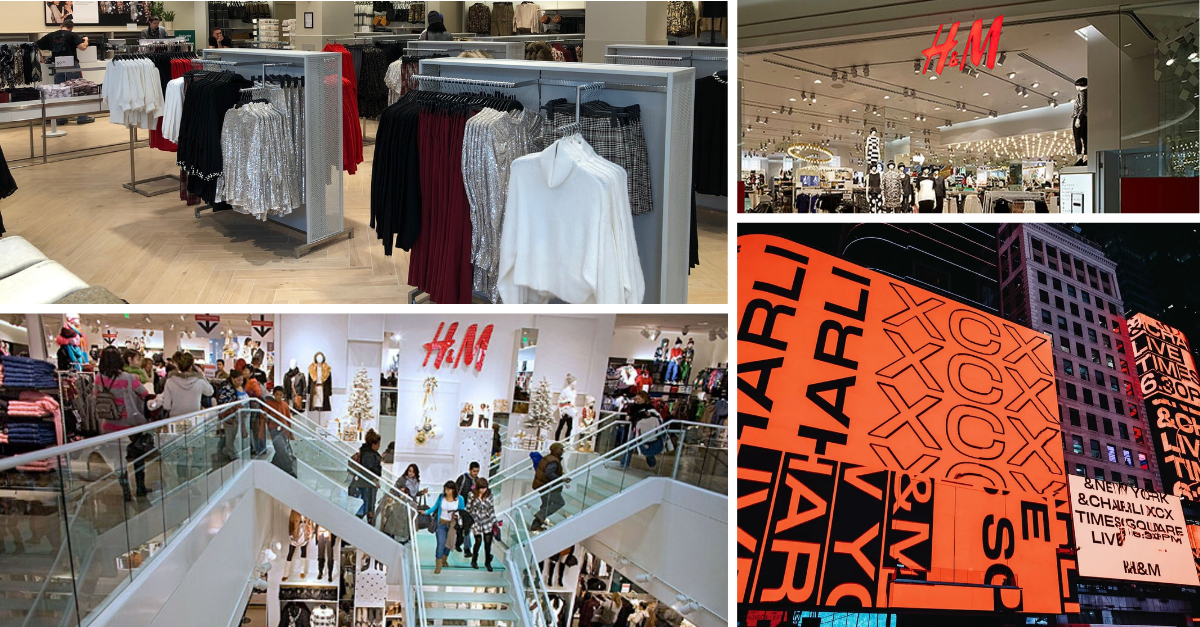
The store became a stage at H&M

H&M wiped its entire Instagram feed. It threw a surprise Charli XCX show in Times Square. It turned its website into a big shoppable showcase of experiences.

The holiday collection became just the backdrop. What the brand really did was reposition the point of sale as a place for cultural experiences, connecting with the lifestyle of Gen Z and Gen Alpha.

Beyond its revamped digital content, H&M invested in physical events, influencer campaigns, and integrated activations across multiple channels — all to make the brand more present in young consumers’ everyday lives (and feeds).

The strategy shows how brick-and-mortar retail can — and should — stop being just a place to shop. And become a space for connection, engagement, and entertainment. The new generation wants more than products: they want to be part of something.


Stay on top of the latest physical retail trends from around the world! Follow us on Instagram, LinkedIn and Blog: The Future of Retail so you never miss an update.


Inscreva-se em nossa Newsletter

Receba no seu email todas as novidades do nosso blog sobre tecnologia e varejo, além de ficar por dentro do novos projetos Alice Wonders.

Thank you for subscribing.

Something went wrong.

Most Popular Topics

Editor Picks

Send this to a friend