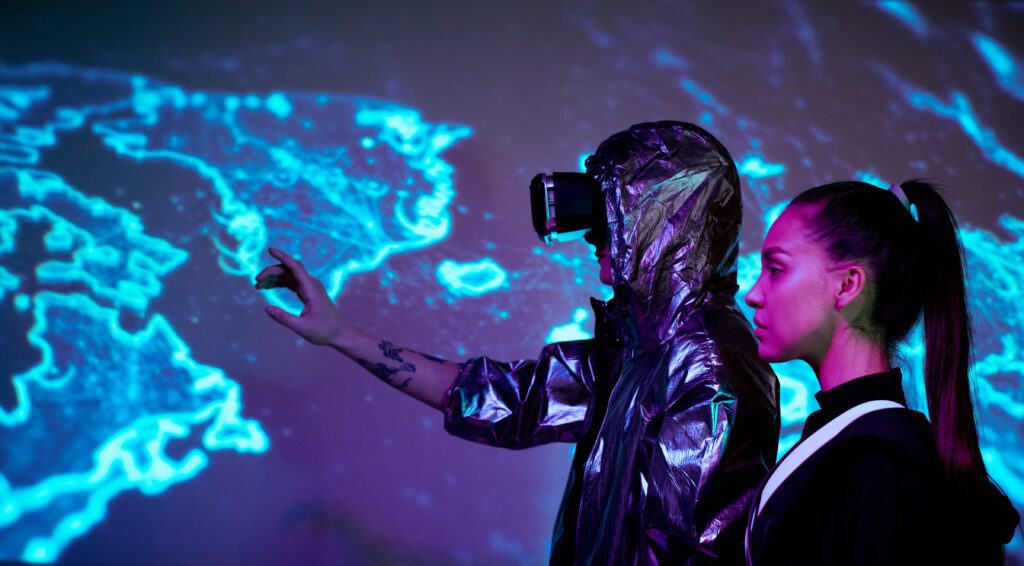
In recent years, the consumer shopping journey has undergone a significant transformation. In the past, the process was linear and often passive, boiling down to this: the consumer walked into a store, picked a product, and made the purchase.
However, as technology has advanced, this model has been changing, and today the shopping experience is increasingly interactive. Today’s consumers aren’t content to simply watch from the sidelines; they want to be at the center of the experience, taking an active, personalized part in every stage of the journey.
Interactive experiences are precisely this new landscape, where consumers have the opportunity to engage more deeply with the brand. Either way, new technologies allow consumers to play an active role in choosing and buying products, creating a far more engaging and unique journey.
At the POS (point of sale), for example, the impact of these technologies is increasingly visible. In-store POS systems are evolving to integrate new tools that enable direct interaction, such as self-service kiosks or interactive displays that deliver a more immersive and personalized experience.
In addition, many of these POS systems now incorporate consumer data collection, optimizing the shopping experience with personalized recommendations and promotions based on customer preferences.
This revolution in shopping experiences is redefining not only how consumers relate to brands, but also how points of sale are adapting to meet these new demands.
This new model of interaction not only improves the shopping experience, but also gives brands an effective way to build customer loyalty and stand out in a highly competitive market.
With that in mind, today we’ll explore how the interactive experiences on the market are redefining the contemporary consumer journey, and how they can be crucial for your business.
Changes in consumer behavior and the consumer journey
First and foremost, it’s essential to understand that the evolution of consumer behavior has driven significant changes in the shopping journey, especially at the physical point of sale (POS).
The customer experience is directly tied to the purchase decision. Proof of this is the 2023 survey conducted by Opinion Box in partnership with Octadesk, which revealed that 87% of consumers surveyed prefer brands that offer a good experience.
Consumers are looking for more immersive and personalized experiences that go beyond the simple act of buying, creating a more engaging and dynamic shopping journey. Within this context, technology plays an essential role, enabling brands to connect more effectively with their customers.
At the POS, technological interactions such as digital screens, augmented reality, and personalized recommendation systems have revolutionized the way consumers make their purchase decisions.
These interactive experiences not only make the process more appealing, but also help consumers make more informed decisions, creating an environment where they feel more connected to the brand and its products.
Furthermore, collecting and analyzing large volumes of consumer behavior data makes it possible to predict buying trends, personalize offers in real time, and optimize store layouts, delivering a smoother and more efficient shopping experience.
When we talk about these advances in retail, adopting such technologies becomes even more crucial to automate processes, improve the customer experience, and increase operational efficiency. They make it easier to track key metrics, such as:
- Sales;
- Peak traffic hours;
- Best-selling products;
- And more.
Integrating these tools with companies’ internal systems also ensures that every transaction is recorded efficiently, which is reflected in inventory and financial control and contributes to a more agile and effective operation.
All of this shows us that technological advances, especially those focused on delivering interactive and personalized experiences, are fundamental for retailers looking to enhance the shopping journey, increase customer satisfaction, and stand out in an increasingly competitive market.
Interactive experiences standing out in the market
To help you better understand these interactive experiences, we’ve selected four of the most widely used ones on the market, all of which contribute to a far more dynamic and personalized journey for the end consumer. Take a look:
1 – Augmented Reality (AR) at the POS
Augmented reality lets consumers visualize products interactively, such as furniture or clothing, right at the POS. This technology offers a more engaging experience and supports the purchase decision, reducing hesitation and boosting conversion rates.
2 – Gamification at the point of sale
Gamification uses games and challenges to engage consumers, offering rewards such as discounts and promotions. This approach personalizes the consumer’s shopping journey and improves loyalty, encouraging more interactions and purchases at the point of sale.
3 – Self-service kiosks with personalization
Self-service kiosks give consumers the ability to customize products, such as footwear and clothing, in real time. These devices make the buying process faster and more convenient, while collecting valuable data on consumer preferences.
4 – Interaction through chatbots and virtual assistants
Chatbots and virtual assistants at the POS give consumers immediate interaction to get answers to their questions and make purchases. These assistants make the shopping journey smoother and more personalized, offering recommendations based on customer preferences.
These are just a few of the many experiences on the market that contribute directly to the consumer journey, helping customers form a unique and valuable perception of the service or product the brand offers, and that may inspire you to implement something innovative in your business.
The power of personalization and the customer experience
It’s no secret that personalization has become one of the biggest differentiators in the market, profoundly shaping the consumer journey, the experience shoppers have with a brand, and their final purchase decision.
With consumers becoming increasingly demanding and seeking unique experiences, brands need to adapt their strategies to meet these expectations in order to stay relevant in the market and keep delivering value to everyone who discovers their work.
Personalizing the shopping experience isn’t just about offering products that meet customers’ needs. It’s also about creating a POS journey that is unique, engaging, and aligned with each consumer’s interests.
Interactive experiences such as augmented reality (AR), interactive mirrors, gamification, and self-service kiosks are excellent examples of how personalization and interaction transform the shopping journey.
When brands manage to create these immersive experiences tailored to each customer’s profile, they not only increase their chances of conversion but also secure greater consumer loyalty.
Virtual assistants and chatbots, for example, enable instant, personalized communication, answering questions and offering real-time support, which improves the consumer experience and removes barriers in the purchasing process.
In short, personalization, when combined with interactive POS experiences, has the power to transform the consumer’s shopping journey, turning them into not just a loyal customer but an advocate for your brand.
Trends and opportunities to redefine the consumer journey
As we all know, the world is changing and new advances happen every day. That’s why trends and opportunities to redefine the consumer journey keep emerging, increasingly centered on immersive experiences that make the shopping process more engaging and personalized.
Technologies like the ones covered in this article are just the beginning of a growing movement in which consumers are looking for more than products or services: they want experiences that connect with them emotionally and are tailored to their needs.
For companies, the key lies in integrating these solutions at the POS and using smart systems to deliver real-time data and personalize the customer journey. But of course, to put this into practice, you can and should get some help.
Alice Wonders stands out as a strategic partner in this transformation process. With its expertise in creating immersive and interactive experiences, it can help companies implement solutions that elevate the consumer experience at the in-store POS.
By integrating innovative technologies such as AR and customized POS systems, Alice Wonders gives retailers an effective way to connect with their customers in a more engaging and personalized way, ensuring a smoother, more memorable shopping journey.
Inscreva-se em nossa Newsletter
Receba no seu email todas as novidades do nosso blog sobre tecnologia e varejo, além de ficar por dentro do novos projetos Alice Wonders.
Thank you for subscribing.
Something went wrong.
Respeitamos sua privacidade e levamos a sério a sua proteção