



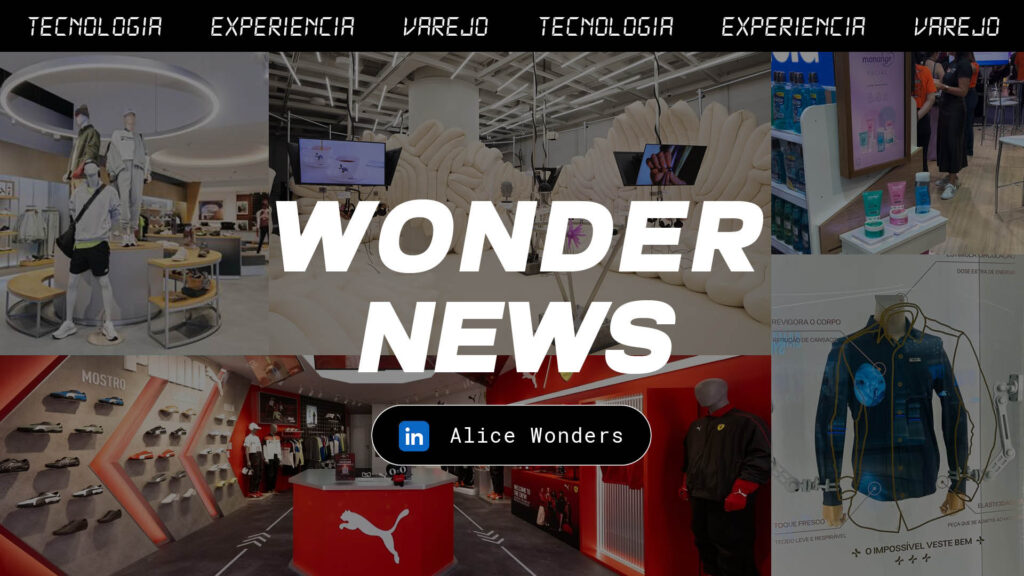
#WonderNews: Customer Experience in Focus; Slow Retail (and More!) Comments Off on #WonderNews: Customer Experience in Focus; Slow Retail (and More!) 1260

cliente

Welcome to #WonderNews: the Alice Wonders newsletter that connects you to the top trends in technology, design, architecture, and customer-focused, brand-building experiences for physical stores, in Brazil and around the world.

In an increasingly dynamic consumer market, these areas play an essential role in building spaces and interactions that delight customers and create emotional connections with them.

With that in mind, check out valuable insights, innovations, and ideas that inspire transformation and drive brand success. Grab your coffee and enjoy the read. ☕️

Urban opens its first flagship at Morumbi Shopping and bets on customer experience

Urban, a brand of Aramis Inc., has just opened its flagship at Morumbi Shopping. The space’s big differentiator is the central fitting room, designed to encourage customers to try on the brand’s innovative pieces, which blend technology and minimalist design.

Choosing this mall was a strategic move, given its heavy foot traffic and Urban’s strong sales within Aramis. And, of course, expectations for this project couldn’t be higher. Ghiselle Abreu, Brand Experience Manager at Aramis, tells us more:

With the opening of Urban’s first store in São Paulo, we expect to build recognition and accelerate the expansion of this innovative concept. We believe the combination of technology, sophistication, and practicality will increasingly win over the modern man. Our goal is to exceed our customers’ expectations from the very first try-on. The brand’s future is bright!

Camila Salek, CEO and Founding Partner of Vimer Retail Experience, the company responsible for the design that brought the space to life, shares more about the core idea behind the project and how it was developed:

The fitting room is the heart of the store, the center of an experience that connects technology, usability, and interaction. We created a space where trying something on isn’t the end of the journey, but the beginning of a new relationship with the brand. At Urban, if you try it, you take it — which is why customers are never more than two steps away from this try-on hub.
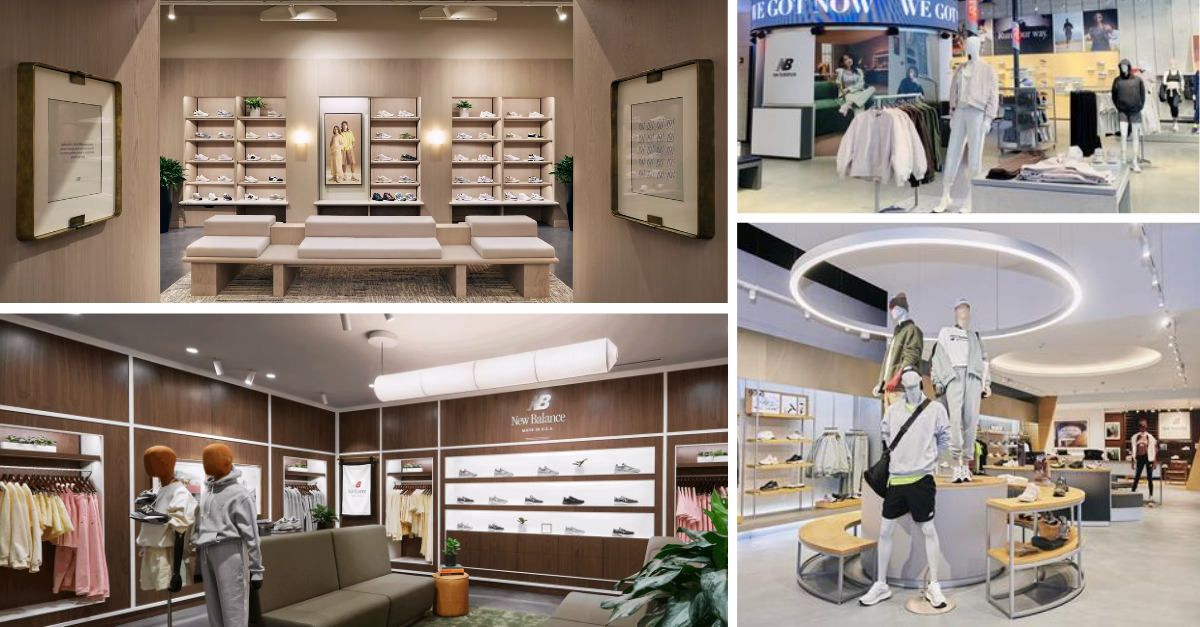
Slow Retail at New Balance

Word on the street is that brick-and-mortar retail is in decline, but the truth is different: it’s reinventing itself. Brands that understand this are turning their spaces into much more than stores — they’re living platforms for connection, where every detail tells a story.

New Balance took this concept to another level with its renovated headquarters at Boston Landing. The space is an immersive experience that captures the brand’s essence. Industrial elements blend with warm materials, striking a balance between performance and lifestyle. Every corner of the headquarters invites discovery: from its tradition of craftsmanship to the brand’s impact on sports and culture.

Boston Landing has become a living manifesto for New Balance. Proof that physical retail is still going strong, evolving to build deeper, more authentic bonds with its audience.
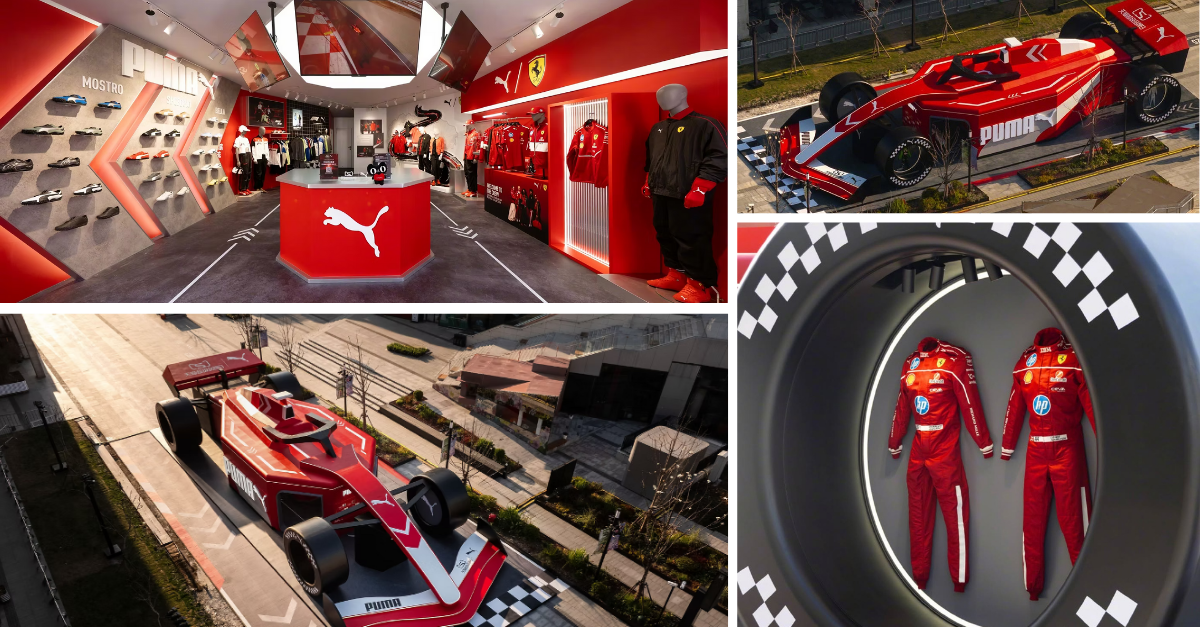
Puma x F1: adrenaline, streetwear, and the future of immersive retail

If there’s one thing Puma does well, it’s turning shopping into an experience. After the success of the Speedcat Pop-Up, the brand is hitting the gas even harder with “Beyond the Roar,” its new installation at the West Bund Dream Center in Shanghai.

This time, the world of Formula 1 comes to life in a realistic race car replica, where every detail takes visitors behind the scenes of motorsport. A few things make the immersion even more complete, such as:

  • Legendary items;
  • New racing suits for the 2025 season;
  • Exclusive collaborations with Ferrari;
  • And more.

The fusion of performance and streetwear is still going strong, with pieces that reinterpret track aesthetics for the streets.

The space isn’t just a product showcase – it’s a portal into motorsport culture. With interactive activations and designs created exclusively for Chinese audiences, Puma reinforces that the future of retail goes far beyond the transaction: it lies in emotion, experience, and connection.

More technology at the new Bath & Body Works

Bath & Body Works is giving its stores a fresh look with the Gingham+ concept, an updated design that combines sensory experience and technology. The new format includes wider aisles, intuitive navigation, and dedicated zones for specific product categories.

In some locations, customers can test fragrances at interactive scent bars, while explainer videos help them discover new products. The focus? Winning over Gen Z, an audience that values immersive experiences before making a purchase.

To that end, the brand invested in softer color palettes and a more relaxing atmosphere. The change is part of a bigger strategy: making the brand even more youthful and strengthening its presence outside malls, where it already operates around 60% of its stores.

The ASMR trend in Hong Kong: when will it reach retail?

The exhibition “WEIRD SENSATION FEELS GOOD: The World of ASMR,” curated by James Taylor-Foster, has just made its Asian debut, bringing a unique multisensory experience to Hong Kong. Created in partnership with ArkDes (Sweden’s National Center for Architecture and Design) and London’s Design Museum, the show explores the impact of ASMR on contemporary culture.

A global phenomenon, ASMR (Autonomous Sensory Meridian Response) is known for evoking a sense of calm and well-being. At the new exhibition at AIRSIDE, Hong Kong, visitors can explore never-before-seen works by local artists, experience the soundscape of the city, and even create their own ASMR pieces using everyday objects.

Other highlights include the ASMR Arena, a cozy space lined with soft fabrics, and a room dedicated to Bob Ross, the iconic TV artist. The exhibition invites reflection on loneliness and the new forms of connection made possible through ASMR.

As ASMR gains ground in museums and galleries, its influence on retail is only a matter of time. Brands are already tapping into the sensory potential of ASMR to create immersive experiences that boost customer engagement, from ad campaigns featuring relaxing sounds to physical spaces that stimulate touch and hearing.
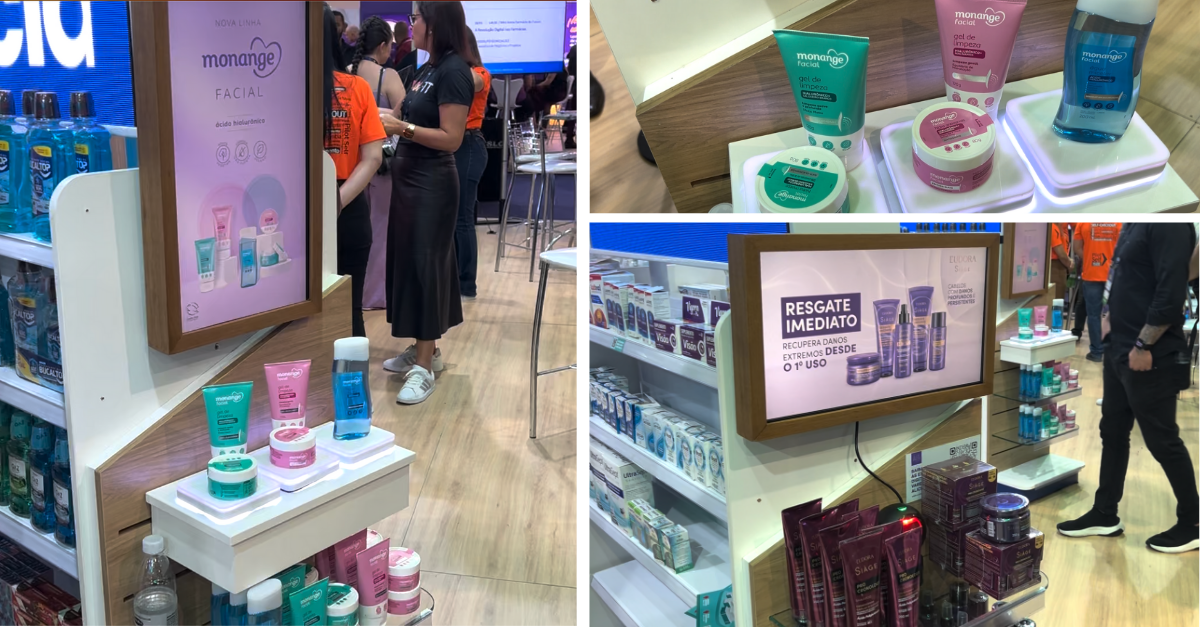
Alice Wonders brings digital innovation to the Pharmacy of the Future

From March 18 to 20, Alice Wonders took part in the Farmácia do Futuro (Pharmacy of the Future), one of the highlights of Abradilan Conexão Farma 2025, held at Expo Center Norte in São Paulo. The startup, a leader in digital experiences for retail, showcased its LIFT+ and SCAN+ solutions, which combine interactivity and data intelligence to enhance the shopper journey at the point of sale.

With LIFT+, when customers pick up a product from the shelf, they automatically see explanatory video content, making the experience more intuitive and informative. SCAN+, in turn, turns the barcode into an engagement trigger, offering discounts, detailed information, and loyalty programs.

Beyond improving the customer experience, these technologies generate strategic data for pharmacies, helping them make decisions based on actual consumer behavior.


Stay on top of the latest brick-and-mortar retail trends from around the world! Follow us on Instagram, LinkedIn, and Blog: The Future of Retail so you never miss an update.

Inscreva-se em nossa Newsletter

Receba no seu email todas as novidades do nosso blog sobre tecnologia e varejo, além de ficar por dentro do novos projetos Alice Wonders.
Thank you for subscribing.

Something went wrong.

Previous ArticleNext Article

How Interactive Experiences Are Redefining the Customer Journey Comments Off on How Interactive Experiences Are Redefining the Customer Journey 1440

consumidor

In recent years, the consumer shopping journey has undergone a significant transformation. In the past, the process was linear and often passive, boiling down to this: the consumer walked into a store, picked a product, and made the purchase.

However, as technology has advanced, this model has been changing, and today the shopping experience is increasingly interactive. Today’s consumers aren’t content to simply watch from the sidelines; they want to be at the center of the experience, taking an active, personalized part in every stage of the journey.

Interactive experiences are precisely this new landscape, where consumers have the opportunity to engage more deeply with the brand. Either way, new technologies allow consumers to play an active role in choosing and buying products, creating a far more engaging and unique journey.

At the POS (point of sale), for example, the impact of these technologies is increasingly visible. In-store POS systems are evolving to integrate new tools that enable direct interaction, such as self-service kiosks or interactive displays that deliver a more immersive and personalized experience.

In addition, many of these POS systems now incorporate consumer data collection, optimizing the shopping experience with personalized recommendations and promotions based on customer preferences.

This revolution in shopping experiences is redefining not only how consumers relate to brands, but also how points of sale are adapting to meet these new demands.

This new model of interaction not only improves the shopping experience, but also gives brands an effective way to build customer loyalty and stand out in a highly competitive market.

With that in mind, today we’ll explore how the interactive experiences on the market are redefining the contemporary consumer journey, and how they can be crucial for your business.

Changes in consumer behavior and the consumer journey

First and foremost, it’s essential to understand that the evolution of consumer behavior has driven significant changes in the shopping journey, especially at the physical point of sale (POS).

The customer experience is directly tied to the purchase decision. Proof of this is the 2023 survey conducted by Opinion Box in partnership with Octadesk, which revealed that 87% of consumers surveyed prefer brands that offer a good experience.

Consumers are looking for more immersive and personalized experiences that go beyond the simple act of buying, creating a more engaging and dynamic shopping journey. Within this context, technology plays an essential role, enabling brands to connect more effectively with their customers.

At the POS, technological interactions such as digital screens, augmented reality, and personalized recommendation systems have revolutionized the way consumers make their purchase decisions.

These interactive experiences not only make the process more appealing, but also help consumers make more informed decisions, creating an environment where they feel more connected to the brand and its products.

Furthermore, collecting and analyzing large volumes of consumer behavior data makes it possible to predict buying trends, personalize offers in real time, and optimize store layouts, delivering a smoother and more efficient shopping experience.

When we talk about these advances in retail, adopting such technologies becomes even more crucial to automate processes, improve the customer experience, and increase operational efficiency. They make it easier to track key metrics, such as:

  • Sales;
  • Peak traffic hours;
  • Best-selling products;
  • And more.

Integrating these tools with companies’ internal systems also ensures that every transaction is recorded efficiently, which is reflected in inventory and financial control and contributes to a more agile and effective operation.

All of this shows us that technological advances, especially those focused on delivering interactive and personalized experiences, are fundamental for retailers looking to enhance the shopping journey, increase customer satisfaction, and stand out in an increasingly competitive market.

Interactive experiences standing out in the market

To help you better understand these interactive experiences, we’ve selected four of the most widely used ones on the market, all of which contribute to a far more dynamic and personalized journey for the end consumer. Take a look:

1 – Augmented Reality (AR) at the POS

Augmented reality lets consumers visualize products interactively, such as furniture or clothing, right at the POS. This technology offers a more engaging experience and supports the purchase decision, reducing hesitation and boosting conversion rates.

2 – Gamification at the point of sale

Gamification uses games and challenges to engage consumers, offering rewards such as discounts and promotions. This approach personalizes the consumer’s shopping journey and improves loyalty, encouraging more interactions and purchases at the point of sale.

3 – Self-service kiosks with personalization

Self-service kiosks give consumers the ability to customize products, such as footwear and clothing, in real time. These devices make the buying process faster and more convenient, while collecting valuable data on consumer preferences.

4 – Interaction through chatbots and virtual assistants

Chatbots and virtual assistants at the POS give consumers immediate interaction to get answers to their questions and make purchases. These assistants make the shopping journey smoother and more personalized, offering recommendations based on customer preferences.

These are just a few of the many experiences on the market that contribute directly to the consumer journey, helping customers form a unique and valuable perception of the service or product the brand offers, and that may inspire you to implement something innovative in your business.

The power of personalization and the customer experience

It’s no secret that personalization has become one of the biggest differentiators in the market, profoundly shaping the consumer journey, the experience shoppers have with a brand, and their final purchase decision.

With consumers becoming increasingly demanding and seeking unique experiences, brands need to adapt their strategies to meet these expectations in order to stay relevant in the market and keep delivering value to everyone who discovers their work.

Personalizing the shopping experience isn’t just about offering products that meet customers’ needs. It’s also about creating a POS journey that is unique, engaging, and aligned with each consumer’s interests.

Interactive experiences such as augmented reality (AR), interactive mirrors, gamification, and self-service kiosks are excellent examples of how personalization and interaction transform the shopping journey.

When brands manage to create these immersive experiences tailored to each customer’s profile, they not only increase their chances of conversion but also secure greater consumer loyalty.

Virtual assistants and chatbots, for example, enable instant, personalized communication, answering questions and offering real-time support, which improves the consumer experience and removes barriers in the purchasing process.

In short, personalization, when combined with interactive POS experiences, has the power to transform the consumer’s shopping journey, turning them into not just a loyal customer but an advocate for your brand.

Trends and opportunities to redefine the consumer journey

As we all know, the world is changing and new advances happen every day. That’s why trends and opportunities to redefine the consumer journey keep emerging, increasingly centered on immersive experiences that make the shopping process more engaging and personalized.

Technologies like the ones covered in this article are just the beginning of a growing movement in which consumers are looking for more than products or services: they want experiences that connect with them emotionally and are tailored to their needs.

For companies, the key lies in integrating these solutions at the POS and using smart systems to deliver real-time data and personalize the customer journey. But of course, to put this into practice, you can and should get some help.

Alice Wonders stands out as a strategic partner in this transformation process. With its expertise in creating immersive and interactive experiences, it can help companies implement solutions that elevate the consumer experience at the in-store POS.

By integrating innovative technologies such as AR and customized POS systems, Alice Wonders gives retailers an effective way to connect with their customers in a more engaging and personalized way, ensuring a smoother, more memorable shopping journey.

Inscreva-se em nossa Newsletter

Receba no seu email todas as novidades do nosso blog sobre tecnologia e varejo, além de ficar por dentro do novos projetos Alice Wonders.

Thank you for subscribing.

Something went wrong.

Emerging retail trends: what to expect for the future of physical stores Comments Off on Emerging retail trends: what to expect for the future of physical stores 2092

varejo

The retail sector has been undergoing a significant transformation in recent years, a transformation driven by new technologies and shifts in consumer behavior.

Today’s retail stores face constant challenges to stay competitive in an increasingly dynamic market, where the end consumer’s shopping experience goes far beyond a simple transaction.

With consumers becoming more and more demanding when buying a product or hiring a service, physical stores need to adapt to meet new expectations, combining convenience, personalization, and technological innovation.

Traditional retail management as we know it, focused mainly on manual processes and in-person service, is giving way to more agile and integrated solutions, using systems and tools that automate and optimize operations.

In addition, the concept of self-service retail has been gaining more and more momentum these days, offering consumers a faster and more efficient experience, which puts additional pressure on physical stores to innovate constantly.

This shows how the future of physical stores is closely tied to adopting technologies that improve both the consumer experience and operational efficiency, bringing benefits that will be enjoyed by customers as well as by your store’s staff and sales associates.

Against this backdrop, today we’ll explore the emerging trends shaping the future of brick-and-mortar retail, showing how stores can use these innovations to stay relevant and competitive in the years ahead.

The technological revolution in brick-and-mortar retail

Before we explore practical strategies, it’s essential to understand the current state of the market and of the retail sector itself, which is undergoing constant transformation driven by advances in technology.

Stores are adopting innovations that enhance the consumer experience and optimize retail management, ensuring greater operational efficiency and competitiveness against their rivals in the market.

In fact, according to CX Trends 2023, 87% of consumers prefer brands that offer a good experience, and, what’s more, 75% of respondents say they do so even if they have to pay more. This new behavior reinforces the need for significant changes in retail.

For example, self-service retail has been gaining ground in this conversation, allowing customers to shop on their own through interactive kiosks or apps, reducing lines and increasing convenience.

In addition, options such as buy online, pick up in store have also grown, highlighting the importance of omnichannel, which means delivering a high-quality experience to the end consumer both online and in person.

Artificial intelligence (AI) couldn’t be left out of this discussion, as it also plays a central role in the future of physical stores. With it, retail systems analyze consumer behavior in real time, enabling personalized recommendations that increase conversion rates by up to 30%, according to Salesforce.

At the same time, automation is revolutionizing retail management by optimizing inventory control, forecasting demand, and reducing waste. Amazon Go, for example, uses sensors and algorithms to offer a cashierless checkout experience, eliminating friction in the shopping journey.

IKEA, a Swedish multinational specializing in furniture, home decor, and household goods, uses its AR app to let customers visualize furniture in their own spaces before buying, resulting in higher sales conversion.

All of this shows us that the future of retail stores lies in the convergence of innovation and experience. Companies that invest in technology not only provide more dynamic service but also ensure faster, more efficient internal processes.

In an increasingly competitive, consumer-experience-driven market, adopting technology in brick-and-mortar retail is no longer a differentiator but a necessity for your brand’s survival and sustainable growth.

Technology trends in retail

Now that we have a better understanding of how trends in the retail sector relate to their importance for physical stores and end consumers, it’s time to see this world in practice.

To do that, we’ve selected some of the hottest technology trends on the market that can inspire you to bring innovation to your store and a unique experience to your end consumer. Check them out!

1 – Artificial intelligence for personalization and customer service

Starting with the most talked-about one lately, Artificial Intelligence (AI) is transforming the way retail stores interact with consumers, with systems that can offer a more personalized and efficient experience, as well as analyze customer behavior data in real time.

Many retail stores are using chatbots, which are AI programs, to provide instant customer service, along with personalized recommendation systems that help predict which products a customer might want, creating targeted promotions for each consumer profile.

2 – Augmented Reality (AR) and Virtual Reality (VR) for immersive experiences

Immersive technologies such as augmented reality (AR) and virtual reality (VR) couldn’t be left off this list, as they are revolutionizing the shopping experience in brick-and-mortar retail. Both allow consumers to interact with products in innovative ways without having to physically touch them, as in the case of IKEA, which we mentioned earlier.

Fashion stores, for example, are adopting AR so consumers can virtually “try on” clothing and accessories without physically putting them on. Furniture brands, meanwhile, use VR to let customers visualize how products will look in their homes, creating a more engaging and personalized shopping experience.

3 – Facial recognition and biometric payment technology

A very common and already widely used trend is biometrics, such as facial recognition and fingerprints, which continue to gain momentum in retail. This technology enables a faster, more secure, and more convenient payment process, which improves the shopping experience in brick-and-mortar retail stores.

The idea is to implement facial recognition systems to authorize payments so that customers can make purchases without needing credit cards or smartphones, providing a faster, hassle-free payment experience.

4 – Internet of Things (IoT) for smart stores

Last but far from least, the Internet of Things (IoT) is connecting everyday devices and objects to the internet, allowing them to communicate with one another and optimize retail store operations.

IoT sensors, for example, can monitor customer traffic inside the store and automatically adjust the environment, such as lighting and music, to create a more pleasant shopping experience. In addition, connected smart shelves can track inventory levels in real time and send alerts when products need to be restocked.

These technology trends are transforming brick-and-mortar retail, giving consumers a more personalized, interactive and convenient shopping experience, while enabling stores to improve retail management and become more efficient and competitive.

Adopting these innovations is essential for retail stores to adapt to consumers’ new expectations and stay relevant in an increasingly dynamic market.

Adapting to the future of brick-and-mortar retail

Brick-and-mortar retail is constantly evolving, driven by innovations such as artificial intelligence (AI), augmented reality (AR), facial recognition and the Internet of Things (IoT).

These technologies not only deliver more personalized and efficient experiences for consumers, but also revolutionize retail management, making processes more agile and strategic.

To stay competitive and stand out in the market, retail stores need to invest continuously in innovation, keeping pace with changes in consumer behavior and with what’s emerging across the market as a whole.

Adopting modern retail systems, combined with solutions such as self-service retail and data-driven personalization, is essential to meet new customer demands and ensure a seamless, engaging shopping experience.

In this dynamic landscape, we can’t fail to mention the work of Alice Wonders, a strategic partner for brands looking to transform their physical stores into interactive, connected spaces.

With innovative solutions that bring together technology and customer experience, Alice Wonders helps companies create immersive environments, making the shopping journey more engaging and efficient.

The future of retail is already here, and having the right tools and partners on this journey makes all the difference in standing out in an increasingly digital and competitive market.

Inscreva-se em nossa Newsletter

Receba no seu email todas as novidades do nosso blog sobre tecnologia e varejo, além de ficar por dentro do novos projetos Alice Wonders.

Thank you for subscribing.

Something went wrong.

Most Popular Topics

Editor Picks

Send this to a friend

