




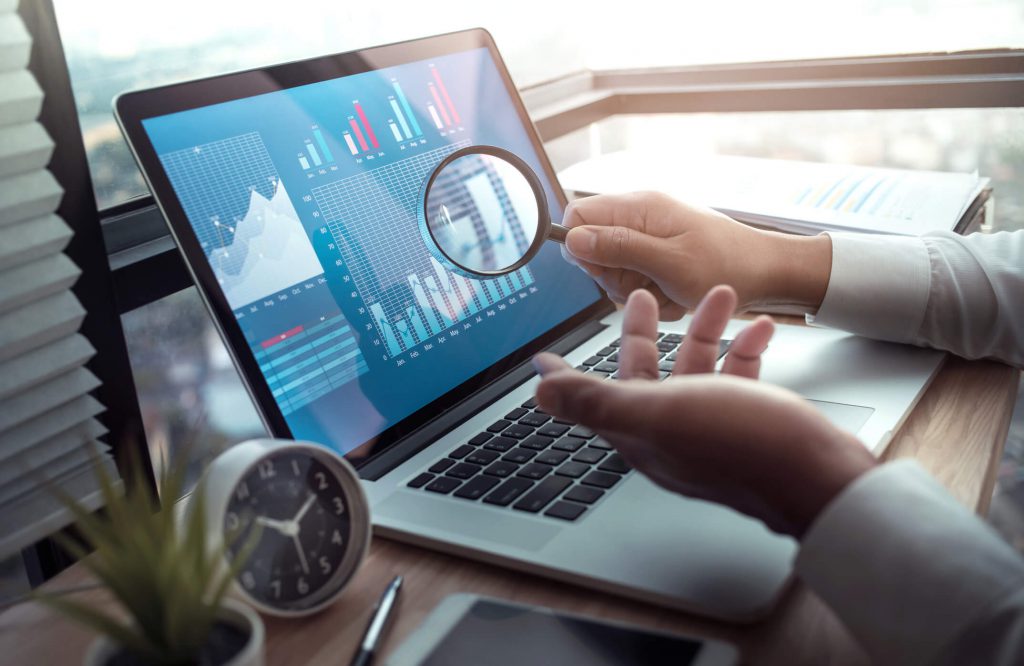
Data-driven marketing is a strategy that uses the data a company has about consumers to improve decision-making. Data-driven marketing is a great way for retailers to choose the media they’ll use to promote their business and to have something solid to rely on when making complex changes, such as those affecting the store layout or the shopping experience they deliver to customers.
Today you’ll learn more about the benefits of data-driven marketing, how your company can put them into practice, and which tools help gather relevant insights into the dynamics of the point of sale. Let’s get started!
Why use data-driven marketing?
We’re living in an important moment for data collection. Since the advent of cloud computing, we’ve never had so many resources to measure data or so much space to store it. Advances in the analysis of unstructured data (such as videos, audio, and images) have also been crucial in getting us to this point.
Since the beginning of the digital transformation, this has been the most significant change in the way organizations operate. Data-driven marketing has given us new opportunities to understand and serve customers.
How does insight generation work?
Big Data and Business Intelligence are the two main resources of data-driven marketing. They work by compiling and analyzing large data warehouses and processing the information they contain at high speed. With specialized software, a store can obtain as many insights as it wants, whether about how long consumers spend in the store or which products catch their attention the most. A few tools are used to carry out this analysis; check them out below.
Hadoop
Hadoop is open-source Java software that can access large amounts of information simultaneously and detect patterns in it. The system helps identify trends using data from every area of the business (marketing, sales, customer service, etc.).
NoSQL
While SQL data must always be structured (that is, readable by traditional software such as Excel), NoSQL databases are built for unstructured data. They can store and process information that doesn’t follow a similar schema. Audio, video, images, and motion sensors generate this type of data, which is now the most valuable for a business.
BI systems
There are many BI systems on the market, each with its own particularities, but they all have one thing in common: they can answer requests. Queries are questions the user asks the software, such as “What time of year do we sell the most electric shavers?”, which generate charts that can guide decision-making.
Qlik, Tableau, and Microsoft Power BI are some of the most popular programs for making this kind of forecast.
What are the benefits of data-driven marketing?
We can list at least five advantages of driving your marketing with data. Personalized targeting, optimized promotion channels, and an improved customer loyalty process are just a few of them. Read on.
Improved marketing strategy
With the information obtained from data, retailers have everything they need at their disposal to improve their content strategy. Knowing customers better helps marketing professionals speak their language and reduces acquisition costs.
Brand awareness
Brand awareness means putting your brand in customers’ minds so that, when they look for a certain product, they think of your business before any other. Big Data puts the market your business operates in into perspective and shows you which competitive advantages can strengthen brand awareness.
Channel optimization
Omnichannel marketing relies on multiple integrated communication channels to convey a message and provide good service. With Business Intelligence, you can pinpoint which of them deliver the best ROI for your company and should be prioritized.
Understanding which channels work best for your business will improve the service it provides, identifying how and when users seek assistance and which types of requests are most common.
Consumer experience
The better a company knows its target audience, the better it can meet that audience’s needs. An effective shopping experience is within reach for retailers who use data-driven strategies to track visitors’ movement through the store and identify their points of interest.
By understanding consumer behavior inside the store, it becomes easier to work on customer satisfaction and loyalty.
Personalized targeting
That same information about your target audience can be used to personalize your store’s advertising. Instead of aiming it at a generic audience, you can create a strategy focused on the niche and the segment of the population most interested in what your business sells.
What resources should you use?
It’s a mistake to think that the only data that can be analyzed at the point of sale is the data coming from the checkout. Although that information is important, your store can acquire many devices to capture consumers’ reactions and understand how they navigate the space. Check out a few of them.
Facial recognition
Cameras combined with facial recognition tools (Optical Character Recognition, or OCR) work very well for understanding customer reactions. But they also play an important role in detecting how many customers come back to do business at the POS. The software turns the information captured by the cameras into data that can be read by BI tools.
Motion sensors
Motion sensors can be installed throughout the store to analyze which products draw the most attention, which shelves customers spend the most time at, and how many people enter the store each day. This information will give you a perspective on the business that wouldn’t be possible without it. How much attention a window display attracts, for example, is the kind of data we can capture with sensors.
Thermal cameras
Cameras with thermal sensors are another efficient type of monitoring for mapping a POS layout. They reveal customers’ movement patterns and which items they touch most often, and they show how many people reach the checkout and how many leave the store without making a purchase.
Many companies get confused and believe that data-driven marketing can only be applied to online cases. Although many organizations do use it for that purpose, it’s possible to capture impressions about customers in other places as well.
With Internet of Things devices, you can bring data-driven marketing into your store and see how each change at the POS influences your retail results.
What did you think of learning about data-driven marketing? Let us know in the comments!
Inscreva-se em nossa Newsletter
Receba no seu email todas as novidades do nosso blog sobre tecnologia e varejo, além de ficar por dentro do novos projetos Alice Wonders.
Thank you for subscribing.
Something went wrong.
Respeitamos sua privacidade e levamos a sério a sua proteção






