




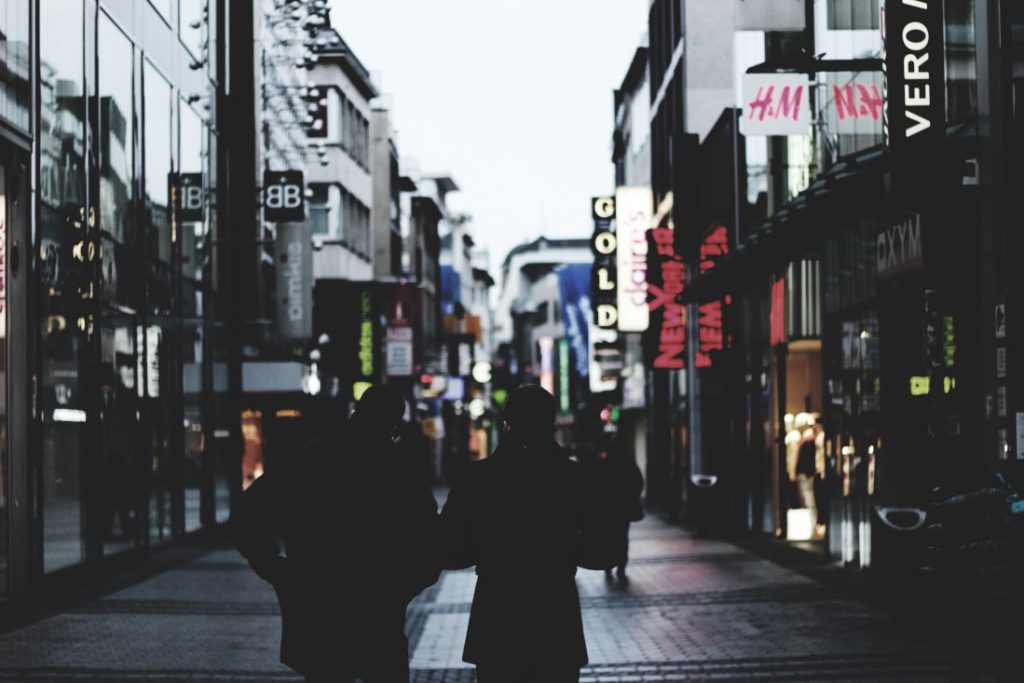
Brazilian retail has expanded considerably in recent years. If, until the early 1990s, we were used to seeing few products on the shelves and a limited variety of brands, everything changed with the stabilization of the currency and the opening up to imports.
Suddenly, manufacturers realized they needed to raise the quality of what they sold and also strengthen their brands. That brings us to the landscape you know today. With the economic crisis, Brazilian retail had to reinvent itself and, after a poor performance in 2016, it is starting to recover thanks to innovation and improvements.
With the advent of the internet, many small businesses saw their income shrink and their sales drop, due to competition from large retailers that ship nationwide. How local stores operate, the current situation of hypermarkets, and new models such as cash and carry are the focus of this article. Let’s look at the sector’s biggest challenges and understand what makes the difference for success in Brazilian retail.
Local stores and Brazilian retail
Small retailers are the first to suffer when a country’s economy is struggling. But that’s not the only challenge they face to keep their doors open. Without the capital to invest in their own brand, create a competitive edge for their customers, and add value to the business, local stores suffer as new solutions emerge.
In the introduction to this article, we mentioned e-commerce. Since it became popular, it has been responsible for lower revenues at many neighborhood stores. In response, small retailers went online and began trying to replicate the models of large retailers such as Ponto Frio.
But struggling with logistics and with driving traffic to their stores, most of them failed. In this niche, the retailers gaining ground are those that manage to offer their customers something unique, such as a product developed exclusively by their brand or outstanding customer service.
However, there’s no need to worry about small retailers going extinct. Even though they need to reinvent themselves frequently and find it hard to compete with the big players in the market, they still play a fundamental role in the Brazilian economy.
They are the ones who move basic goods and reach places these large companies can’t, since there isn’t enough profitability to justify building large stores and making a heavy investment. Local stores buy from small producers, sell on a smaller scale, and cover a wider area than the giants. They also employ a significant number of people, making them essential to the livelihood of thousands of Brazilians.
Hypermarkets vs. wholesalers
The future of hypermarkets is an equally complex topic. It’s not only in Brazil that these stores have been losing market share to wholesalers, which are advancing with models such as cash and carry, which we’ll discuss in more detail below.
Their big differentiator, offering low prices and a wide variety of products, is no longer enough to justify their relevance. Both can be found in other business models, which poses a major challenge.
Today, supermarkets, convenience stores, cash-and-carry stores, and minimarkets all compete in this space. That makes it hard for hypermarket owners to maintain profitability. There has also been a shift in consumer habits: people no longer do a big “monthly shopping trip” or bring the whole family along.
As a result, running stores of around 10,000 square meters doesn’t seem like as good an idea as it was in the 1990s. After all, one of today’s major trends is the shrinking of points of sale, which can be as small as our cell phone screens.
To survive, hypermarkets will need to invest in being more than just a point of sale. Turning them into a space where socializing and fun go hand in hand with shopping is what can secure their future.
Cash and carry
The term cash and carry may still be unfamiliar to you, so first of all, let’s explain the concept. This is the expression Americans use for self-service stores that blend wholesale and retail. In Brazil, the cash and carry model is often called “atacarejo,” and it’s one of our population’s favorites.
By eliminating delivery costs and selling in large or small quantities straight off the shelves, cash and carry isn’t exactly new. It was created in Germany back in 1940.
Carrefour (Atacadão), WalMart (Maxxi), and other stores of this kind are examples of the practice in Brazil, along with the pioneer Makro, which brought the concept to the country.
Cash and carry is a way to attract lower- and middle-income consumers (classes C, D, and E). With lower operating costs, these stores can offer more competitive prices to their customers. Their big challenge, however, lies in the shopping experience.
It’s not very common for cash-and-carry stores to stand out in how they interact with consumers. In general, building a strong brand and offering discounts is what drives their business.
Along with buying clubs, the cash and carry model has been on the rise in the country since the onset of the economic crisis. The trend is that, in 2018, it will continue to attract investors and be one of the foundations for improved results in the retail sector.
A lot is still going to change in retail and, if you want to stand out in the field, you need to keep an eye on trends. One of them is paying more attention to your own brand, investing in strengthening it and building an arsenal that will help it become synonymous with what you sell in the customer’s mind. Another can be seen, for example, in how transportation companies like Uber have already started entering goods delivery logistics.
All of this will drastically affect the way Brazilian retail works. Want to keep exploring the topic? Find out what the future of retail holds for your business in this other post!
Inscreva-se em nossa Newsletter
Receba no seu email todas as novidades do nosso blog sobre tecnologia e varejo, além de ficar por dentro do novos projetos Alice Wonders.
Thank you for subscribing.
Something went wrong.
Respeitamos sua privacidade e levamos a sério a sua proteção






