Retail Marketing: What Are Your Results Telling You? Comments Off on Retail Marketing: What Are Your Results Telling You? 6320

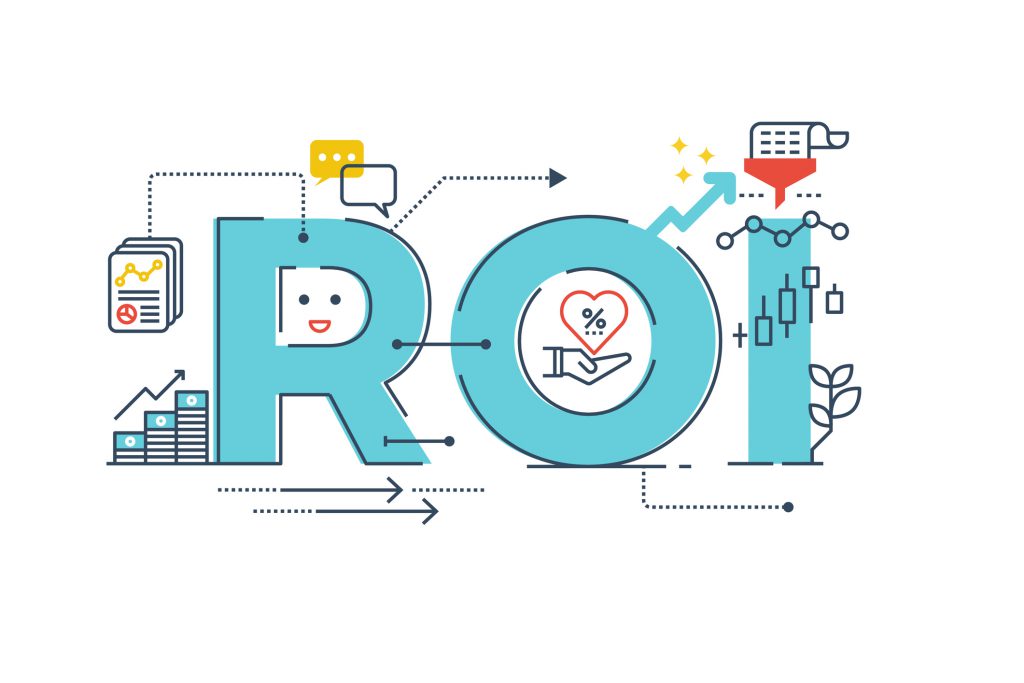
ROI : Return on investment word lettering typography design illustration with line icons and ornaments in blue theme

Growing sales and anticipating trends is a challenge for many marketing managers. To make matters more complicated, they also need to prove the success of their strategies to stakeholders.

However, if you run an effective analysis of your retail marketing numbers, it becomes much easier to innovate in the business and present the progress of these initiatives to the board. That’s exactly why, in this article, we’ll show you how to analyze results accurately.

We’ll also talk about the benefits that mapping these numbers can bring to your company. So, want to better understand what your retail marketing results are telling you? Keep reading to find out!

So, how do you analyze the results of your strategies?

The biggest retail chains on the market are constantly focused on increasing sales — or recovering from a drop caused by some specific factor. The big question is: which technique should you use to measure the data and make your strategies succeed?

The answer is quite simple: define metrics!

Metrics are measures used to track the performance of marketing initiatives, whether to quantify trends, business variables, consumer behavior, or other results that need to be analyzed.

Now that you’re up to speed on the subject, let’s look at some important metrics for your business!

What are the key metrics for retail marketing?

First of all, it’s worth pointing out that there’s a wide variety of metrics, and each one suits a particular type of business. In this post, since the topic is retail marketing, we’ll focus on metrics related to sales and customer relationships.

Here are the 4 we’ve selected:

1. ROI (return on investment)

Although ROI can be calculated in several ways, in retail marketing it helps you understand the return generated by each of your investments in your stores — in other words, whether the numbers add up at the POS.

To calculate ROI, divide revenue by total marketing investment. If you invested R$10,000.00 and generated R$100,000.00 in revenue, for example, your ROI was R$10.00.

That is, for every 1 real invested, the company earned R$10.00 — which means 10% of revenue went to marketing. And if we look at this result in the context of retail (which typically sets aside between 1% and 8% of revenue for marketing investments), we can see that the number needs to improve.

With that in mind, remember that ROI can be used to analyze your entire strategy or even each individual marketing initiative. That way, you’ll know exactly where to invest more and what needs to be cut to boost results.

2. CAC (customer acquisition cost)

In general terms, CAC is the metric used to find out how much the company spends to win each new customer. In the specific case of retail marketing, a few variables influence this figure. Among them:

  • seasonality;
  • the level of market competition;
  • brand equity.

In addition, it’s essential for marketing professionals to know how to analyze which factors help lower the acquisition cost per customer. This makes it much easier to prove that their initiatives are increasing sales and reducing costs for the business — in other words, that marketing is a source of revenue, not an expense.

3. Conversion Rate

Conversion rate is a metric widely used by e-commerce businesses. However, it can also be applied to retail marketing to analyze the relationship between the number of completed sales and the number of customers who visited the POS and showed interest in the products.

The main goal of this metric is to measure the efficiency of both the POS and the sales team, so you can define strategies to attract and retain potential customers who haven’t yet made a purchase from your company.

4. Revenue per POS

A benchmark analysis, combined with revenue per POS, helps you understand the effectiveness of each of the company’s brick-and-mortar stores compared to competing retail locations.

If the marketing professional finds that the metric is below the market average, for example, this indicates that they can take one of the following measures:

  • step up marketing strategies to make the business stand out — with proper planning, of course;
  • close the POS — which operates full-time — during off-peak hours (this measure may require laying off staff).

The second option may seem drastic, but if the metric shows that your POS is below the market average, it’s a sign that your competitors are being more effective than you. So something needs to be done to cut your losses.

Knowing how to analyze metrics is important, but it won’t do much good if you don’t know the benefits they can bring to your company, right? That’s why we’ll cover this topic in the next section.

What kinds of benefits can you get from this data?

All the metrics covered here help improve your marketing strategy and support your results presentations to stakeholders. Now, let’s see how they can benefit the marketing department and the company as a whole:

  • they help increase marketing revenue;
  • they help reduce the cost of attracting customers;
  • they strengthen the company against its competitors;
  • they increase customer conversion efficiency;
  • they help uncover insights to deliver relevant experiences to consumers;
  • they support customer retention.

With all this in mind, tap into the potential of each of these metrics and understand what they reveal about what’s working and what isn’t in your marketing management! By developing effective strategies, you can fix gaps in sales processes, brand positioning, and customer service at the POS.

So, did you enjoy this article? Do you now understand what your retail marketing results are telling you? Still have questions? Leave a comment on this post and tell us what your metrics have been showing!

Inscreva-se em nossa Newsletter

Receba no seu email todas as novidades do nosso blog sobre tecnologia e varejo, além de ficar por dentro do novos projetos Alice Wonders.

Thank you for subscribing.

Something went wrong.

Previous ArticleNext Article

Why Is Working with Data Important for Your Store? Comments Off on Why Is Working with Data Important for Your Store? 1188

dados

Did you know that by collecting data from your customers, you can transform your store and improve sales, making them increasingly targeted and qualified?

That’s because working with data is one of the biggest differentiators in retail: it provides valuable information that can help you build an efficient sales funnel and make strategic decisions.

Data collection at the POS (Point of Sale)

The moment a customer walks into your store, they leave behind a trail of valuable information. From purchasing behavior to interactions with specific products, every customer action can be turned into data that helps you better understand their preferences and needs.

When analyzed correctly, this data generates insights that go beyond surface-level observations, enabling more strategic actions.

How does data help the sales funnel?

By observing customer behavior, you can map each stage of the sales funnel — from attraction, through engagement, all the way to conversion. This lets you personalize the shopping experience, increasing your chances of closing the sale.

With data collection, you can, for example, understand which products draw the most attention, which areas of the store generate the most traffic, and even predict customer preferences, delivering personalized offers.

-> Meet Granometrics.io

Alice Wonders’ Granometrics.io is an innovative multisensor platform that turns the physical store into a powerful source of data for strategic decision-making. Using advanced technology, it maps the store’s physical space, analyzing and delivering insights so retailers can act with greater precision and efficiency.

On top of that, Granometrics.io lets you measure shopper interest, map behavior by zone, and analyze interest by category and SKU.

The platform offers a granular, strategic view that helps optimize operations, improve the customer experience, and maximize sales results in the physical environment. It’s an essential solution for anyone looking to combine innovation and performance in retail.

What are data and insights?

Although many people confuse the two terms, it’s important to understand that data is the raw information you collect. Insights, on the other hand, are the conclusions or actions that can be drawn from that data.

By embracing a Data-Driven culture, your store becomes more efficient, making decisions based on real information rather than assumptions. For example, data might show that a certain product is in high demand, while an insight reveals how to position it better in the store to maximize sales.

The importance of a Data-Driven approach

Adopting a Data-Driven approach means making informed, strategic choices. If you’re not collecting this data, you’re missing out on valuable opportunities to optimize your business. With the right analysis, you can identify trends, anticipate customer needs, and proactively adjust your product offering.

In addition, a well-structured POS, built on data and insights, helps improve the customer experience. By better understanding consumer behavior, you can create a more appealing environment, with products and offers that truly meet your audience’s expectations, fostering loyalty and boosting retention rates.

Conclusion

Investing in data and insights isn’t just about modernizing your store; it’s about building a solid sales strategy grounded in a deep understanding of your customers. By using this information correctly, you can optimize your sales funnel, increase conversion, and deliver richer, more satisfying experiences to your consumers.

Inscreva-se em nossa Newsletter

Receba no seu email todas as novidades do nosso blog sobre tecnologia e varejo, além de ficar por dentro do novos projetos Alice Wonders.

Thank you for subscribing.

Something went wrong.

2024 Retail Trends: Innovative, Experience-Focused Stores Comments Off on 2024 Retail Trends: Innovative, Experience-Focused Stores 3808

Have you noticed how retail is evolving? Let’s walk through the top retail trends for 2024: innovative, experience-driven stores.

Now more than ever, customer experience is at the heart of retail success. The way you, as a retailer, present your products and interact with your customers is shaping not only the future of your business, but the future of shopping as a whole.

At Alice Wonders, we recognize that today’s retail goes far beyond simply selling products. It’s about creating unforgettable, exciting experiences.

In this article, we’ll dive into the 2024 trends defining innovative, experience-driven stores, based on research and forecasts from WGSN. These insights give you, the modern retailer, creative ideas and strategies to stand out in a highly competitive market.

Get ready for a journey of innovation and discovery, where technology, creativity and emotion come together to redefine the shopping experience.

Welcome to the new era of retail! Happy reading ✌️

Retail trends 2024

Retail Trends for 2024 According to WGSN

  • Spaces Driven by Engagement and Inspiration: The search for superior experiences in physical stores is translating into spaces that foster engagement and inspiration. Community-focused concepts and the creation of inspiring environments are becoming increasingly important.

Example: Imagine a clothing store that, in addition to selling products, offers fashion and personal styling workshops. This space doesn’t just sell clothes; it becomes a place of learning and inspiration, strengthening the emotional connection with customers.

Benefits: These spaces build a community of loyal customers, increase dwell time in the store and drive greater brand engagement.

  • Technology and Omnichannel Performance: Integrating technology into the in-store experience is a growing priority. Technologies such as virtual reality, augmented reality, holograms and immersive projections are delivering immersive, interactive product experiences and strengthening brand engagement, while supporting efficient omnichannel operations.

Example: An electronics store that uses augmented reality to show customers how different devices work and fit into their homes.

Benefits: Improves the customer experience, provides detailed product information and integrates online and offline experiences, boosting sales and customer satisfaction.

  • The Evolution of Store KPIs: Retailers are adapting their KPIs to better reflect the role of stores in the omnichannel customer experience. Metrics such as “sales per minute of engagement” are being explored to assess the impact of customer engagement across different channels.

Example: A store that measures success not only by sales, but also by the time customers spend interacting with products and taking part in in-store events.

Benefits: Enables a more accurate assessment of how the in-store experience impacts consumer behavior and purchasing decisions.

-> Learn more about granometrics.io
Granometrics.io is a multi-sensor platform that maps the physical store and delivers insights for decision-making and immediate action.

With Granometrics.io, you can measure interest and map shopper behavior by zone, category and even by SKU.

  • Smaller Formats, Big Innovations: The trend toward smaller stores, such as pop-ups and location-focused approaches, is growing. These formats make it possible to test new concepts and cut operating costs while maximizing reach.

Example: A luxury brand that launches pop-up stores in strategic locations during fashion events, offering exclusive experiences and limited-edition products.

Benefits: Increases brand visibility, reduces operating costs and makes it possible to test new markets and products with lower risk.

  • Loss Prevention and Store Design: With theft on the rise, especially in high-value retail, loss prevention is becoming a crucial part of store design. Innovative technologies are being implemented to protect products and improve the shopping experience.

Example: A department store that integrates smart cameras and RFID tags to monitor products and prevent theft without compromising the store’s aesthetics.

Benefits: Reduces financial losses, keeps products secure and ensures a pleasant shopping experience for customers.

  • Store Designers as ‘Experience Designers’: Opening a new store now calls for an interdisciplinary approach. Store design teams are working closely with marketing, IT and business strategy to create impactful experiences aligned with each department’s goals.

Example: A coffee shop that combines interactive design elements, such as walls that change color with customers’ moods, with co-working areas, encouraging people to stay longer.

Benefits: Creates a unique, memorable environment that draws customers in, increases loyalty, and positions the brand as innovative and customer-experience driven.

Conclusion

The 2024 retail trends reveal an exciting and challenging transformation in the brick-and-mortar retail landscape. Stores that embrace these trends don’t just stand out; they also create memorable experiences that attract and retain customers. As a retailer, this is your chance to adapt, innovate, and thrive in the new era of retail.

Frequently Asked Questions

  • What does the trend of ‘spaces driven by engagement and inspiration’ mean in retail?

    The trend of ‘spaces driven by engagement and inspiration’ in retail refers to creating environments that go beyond selling products. These spaces are designed to engage customers in interactive, educational, or inspiring activities, such as workshops, art exhibits, and immersive experiences. The goal is to build a sense of community and strengthen the emotional connection with the brand, turning the store into a destination rather than just a place to shop.
  • How is technology shaping omnichannel performance in stores?

    Technology is revolutionizing omnichannel performance by integrating online and offline experiences. This includes using augmented reality for product try-ons, connected inventory management systems that make it easy to buy through any channel, and data-driven personalization to deliver targeted recommendations and promotions. These innovations help create a seamless shopping journey, boosting operational efficiency and improving customer satisfaction.
  • Why does the evolution of store KPIs matter in 2024?

    The evolution of store KPIs in 2024 is crucial to reflect the unique role stores play in the omnichannel customer experience. Instead of focusing solely on sales and foot traffic, modern KPIs take into account customer engagement, product interaction, and the store’s contribution to the overall shopping journey. These metrics help retailers better understand how in-store experiences influence purchase decisions and customer loyalty, allowing them to optimize their strategies accordingly.
  • How are smaller store formats driving big innovations?

    Smaller store formats, such as pop-ups and specialty boutiques, are driving major innovations by allowing retailers to test new concepts and strategies with flexibility and lower costs. These spaces are ideal for experimenting with store design, immersive technologies, and personalized approaches. They also offer the opportunity to connect with specific market niches and generate buzz around product launches and special events, fostering innovation and creativity across the retail sector.

Inscreva-se em nossa Newsletter

Receba no seu email todas as novidades do nosso blog sobre tecnologia e varejo, além de ficar por dentro do novos projetos Alice Wonders.

Thank you for subscribing.

Something went wrong.

Most Popular Topics

Editor Picks

Send this to a friend