How and Why to Use Innovation at the Point of Sale? Comments Off on How and Why to Use Innovation at the Point of Sale? 7058

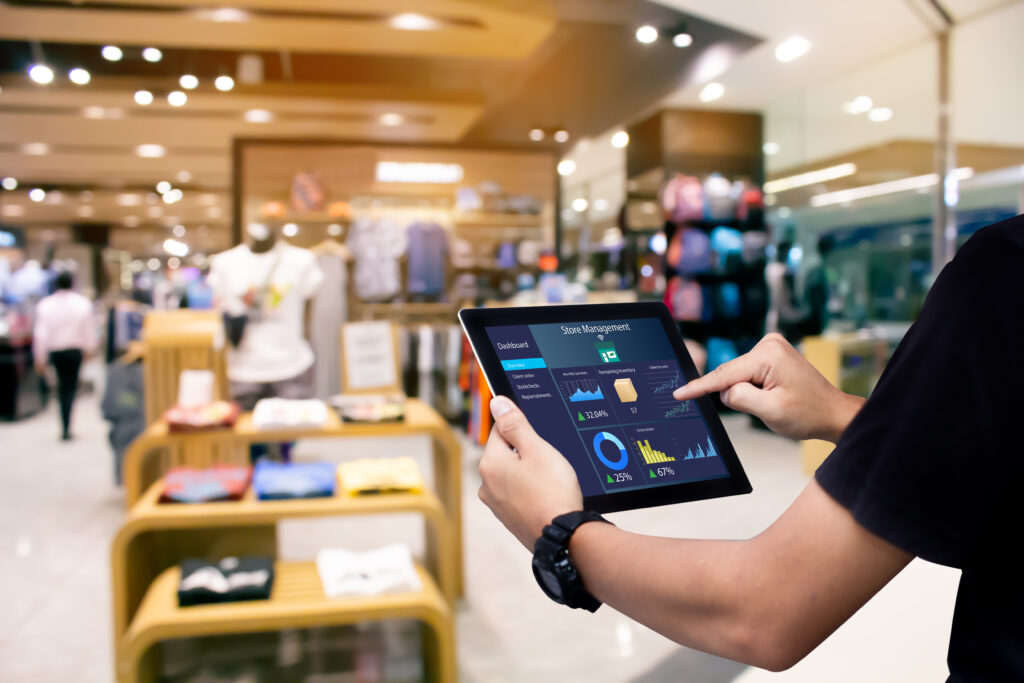
pessoa tocando tablet como inovação no ponto de venda

In the business world, we often hear people talk about the importance of innovation. But have you ever stopped to think about innovation at the point of sale (POS)? New technologies can be your greatest allies when you’re looking for a different way to view what’s already out there.

After all, even in times of economic crisis, consumers want to be delighted by brands. And to make that happen, it’s essential to understand how they behave and, above all, the role digital innovations play in their buying process.

The truth is, you can no longer label a customer as strictly brick-and-mortar or strictly online, because they’re present in every environment. Your goal is to create a great shopping experience no matter where it happens, right?

The growth of online sales doesn’t mean you should pay less attention to your stores. They can (and should) serve as spaces that boost sales across every channel, both in-store and online. Besides offering great service, how about installing digital stations so shoppers can explore your full product line? Encourage them to sign up so they receive exclusive information, and invest in a long-term relationship.

In today’s post, find out how and why to use innovation at the point of sale. Happy reading!

How to use innovation at the point of sale?

Most consumers love new technologies. Just look at how successful a newly launched smartphone or a cutting-edge TV screen can be. So why not use them at the POS to make your product more appealing and sell more? These innovations turn your store into a magnet in the race for customer satisfaction.

Below, see how to incorporate them into your retail marketing strategy:

  • interactive digital displays;
  • machine learning (algorithms that collect data and learn from it);
  • holograms (holographic assistants that interact with the public);
  • geolocation (maps that provide directions to the store);
  • virtual tours (virtual booths that customers can access from anywhere);
  • augmented reality (projected objects that blend with the real world and create an immersive experience);
  • software to help generate insights (analyzing metrics and delivering relevant data for decision-making).

Why do it?

Delight the customer

Every consumer wants great service, and the shopping experience should go beyond simply buying the product. And of course, this process takes on a whole new dimension when interactive solutions come into play, don’t you agree?

In fact, the goal is to turn the purchase into a personalized experience that can move the customer emotionally. That way, the shopper develops an affinity with the brand. Don’t forget that it’s very important to respect where they are in their buying journey and not push too hard for a premature conversion.

Set your company apart from the competition

Although technology can deliver new experiences, most companies still rely on conventional forms of promotion such as brochures and posters. That’s why those who invest in videos, interactive platforms and games get ahead of the competition and stand out in an increasingly professional market.

Strengthen your brand image

When used intelligently at the POS, technology makes an impact on people and strengthens brand image. Did you know that if the experience at the physical store is positive, consumers will visit it even when they aren’t looking for a specific product?

So the tip is to intrigue them so your initiatives are seen as remarkable. This certainly requires creativity, planning and attention to the execution of every step.

What does the customer gain?

Investing in improving your customer’s shopping experience ends up making your POS more flexible. As we mentioned, you’ll need to understand your audience’s behavior and specific needs in greater depth. To do so, you need access to reliable data, and that information should be segmented according to criteria such as profiles that look for low prices or for differentiated products.

What’s interesting is that, even though your business has prepared itself to serve groups of customers, well-executed work allows each one of them to identify with your brand and feel special. When people go through an immersive experience, the chances of them making a purchase increase, as do the chances of them becoming brand evangelists.

To keep up with the mass customization trend, it’s worth using Big Data and artificial intelligence systems at the POS in order to understand and respond to consumers in real time and in an automated way. This allows your company to map each consumer’s shopping habits and create targeted promotions.

Which success stories stand out?

One Alice Wonders case worth mentioning is the Museu Tecnológico Gafisa, which told the story of the city of São Paulo, the Ipiranga neighborhood and its iconic residents.

The interactive installation was set up in 2016 at the sales booth for the Square Ipiranga real estate development. In a dark 80-square-meter room, screens, sounds and images took visitors on a journey through time. The result: 80% of the development was sold in just five weeks.

Another interesting case is the holographic assistant at an interactive POS for the launch of a new Sensodyne toothpaste in 2012. A renowned dentist answered questions about tooth sensitivity at an interactive island inside a supermarket. The activation could be shared on Facebook via a QR Code. Sales rose 300% on the first day of the campaign. The following year, the strategy was repeated and the average growth held steady.

If you’ve read this far, you’re probably already convinced of the importance of innovation at the point of sale. So how about reinventing your POS through the smart use of new technologies? Invest in interactive spaces and data capture to turn your customer’s shopping experience into something memorable!

Did you enjoy this post on how and why to use innovation at the point of sale? Then make the most of your visit and get in touch with us to learn about our services!

Inscreva-se em nossa Newsletter

Receba no seu email todas as novidades do nosso blog sobre tecnologia e varejo, além de ficar por dentro do novos projetos Alice Wonders.

Thank you for subscribing.

Something went wrong.

Previous ArticleNext Article

Why Is Working with Data Important for Your Store? Comments Off on Why Is Working with Data Important for Your Store? 1188

dados

Did you know that by collecting data from your customers, you can transform your store and improve sales, making them increasingly targeted and qualified?

That’s because working with data is one of the biggest differentiators in retail: it provides valuable information that can help you build an efficient sales funnel and make strategic decisions.

Data collection at the POS (Point of Sale)

The moment a customer walks into your store, they leave behind a trail of valuable information. From purchasing behavior to interactions with specific products, every customer action can be turned into data that helps you better understand their preferences and needs.

When analyzed correctly, this data generates insights that go beyond surface-level observations, enabling more strategic actions.

How does data help the sales funnel?

By observing customer behavior, you can map each stage of the sales funnel — from attraction, through engagement, all the way to conversion. This lets you personalize the shopping experience, increasing your chances of closing the sale.

With data collection, you can, for example, understand which products draw the most attention, which areas of the store generate the most traffic, and even predict customer preferences, delivering personalized offers.

-> Meet Granometrics.io

Alice Wonders’ Granometrics.io is an innovative multisensor platform that turns the physical store into a powerful source of data for strategic decision-making. Using advanced technology, it maps the store’s physical space, analyzing and delivering insights so retailers can act with greater precision and efficiency.

On top of that, Granometrics.io lets you measure shopper interest, map behavior by zone, and analyze interest by category and SKU.

The platform offers a granular, strategic view that helps optimize operations, improve the customer experience, and maximize sales results in the physical environment. It’s an essential solution for anyone looking to combine innovation and performance in retail.

What are data and insights?

Although many people confuse the two terms, it’s important to understand that data is the raw information you collect. Insights, on the other hand, are the conclusions or actions that can be drawn from that data.

By embracing a Data-Driven culture, your store becomes more efficient, making decisions based on real information rather than assumptions. For example, data might show that a certain product is in high demand, while an insight reveals how to position it better in the store to maximize sales.

The importance of a Data-Driven approach

Adopting a Data-Driven approach means making informed, strategic choices. If you’re not collecting this data, you’re missing out on valuable opportunities to optimize your business. With the right analysis, you can identify trends, anticipate customer needs, and proactively adjust your product offering.

In addition, a well-structured POS, built on data and insights, helps improve the customer experience. By better understanding consumer behavior, you can create a more appealing environment, with products and offers that truly meet your audience’s expectations, fostering loyalty and boosting retention rates.

Conclusion

Investing in data and insights isn’t just about modernizing your store; it’s about building a solid sales strategy grounded in a deep understanding of your customers. By using this information correctly, you can optimize your sales funnel, increase conversion, and deliver richer, more satisfying experiences to your consumers.

Inscreva-se em nossa Newsletter

Receba no seu email todas as novidades do nosso blog sobre tecnologia e varejo, além de ficar por dentro do novos projetos Alice Wonders.

Thank you for subscribing.

Something went wrong.

2024 Retail Trends: Innovative, Experience-Focused Stores Comments Off on 2024 Retail Trends: Innovative, Experience-Focused Stores 3808

Have you noticed how retail is evolving? Let’s walk through the top retail trends for 2024: innovative, experience-driven stores.

Now more than ever, customer experience is at the heart of retail success. The way you, as a retailer, present your products and interact with your customers is shaping not only the future of your business, but the future of shopping as a whole.

At Alice Wonders, we recognize that today’s retail goes far beyond simply selling products. It’s about creating unforgettable, exciting experiences.

In this article, we’ll dive into the 2024 trends defining innovative, experience-driven stores, based on research and forecasts from WGSN. These insights give you, the modern retailer, creative ideas and strategies to stand out in a highly competitive market.

Get ready for a journey of innovation and discovery, where technology, creativity and emotion come together to redefine the shopping experience.

Welcome to the new era of retail! Happy reading ✌️

Retail trends 2024

Retail Trends for 2024 According to WGSN

  • Spaces Driven by Engagement and Inspiration: The search for superior experiences in physical stores is translating into spaces that foster engagement and inspiration. Community-focused concepts and the creation of inspiring environments are becoming increasingly important.

Example: Imagine a clothing store that, in addition to selling products, offers fashion and personal styling workshops. This space doesn’t just sell clothes; it becomes a place of learning and inspiration, strengthening the emotional connection with customers.

Benefits: These spaces build a community of loyal customers, increase dwell time in the store and drive greater brand engagement.

  • Technology and Omnichannel Performance: Integrating technology into the in-store experience is a growing priority. Technologies such as virtual reality, augmented reality, holograms and immersive projections are delivering immersive, interactive product experiences and strengthening brand engagement, while supporting efficient omnichannel operations.

Example: An electronics store that uses augmented reality to show customers how different devices work and fit into their homes.

Benefits: Improves the customer experience, provides detailed product information and integrates online and offline experiences, boosting sales and customer satisfaction.

  • The Evolution of Store KPIs: Retailers are adapting their KPIs to better reflect the role of stores in the omnichannel customer experience. Metrics such as “sales per minute of engagement” are being explored to assess the impact of customer engagement across different channels.

Example: A store that measures success not only by sales, but also by the time customers spend interacting with products and taking part in in-store events.

Benefits: Enables a more accurate assessment of how the in-store experience impacts consumer behavior and purchasing decisions.

-> Learn more about granometrics.io
Granometrics.io is a multi-sensor platform that maps the physical store and delivers insights for decision-making and immediate action.

With Granometrics.io, you can measure interest and map shopper behavior by zone, category and even by SKU.

  • Smaller Formats, Big Innovations: The trend toward smaller stores, such as pop-ups and location-focused approaches, is growing. These formats make it possible to test new concepts and cut operating costs while maximizing reach.

Example: A luxury brand that launches pop-up stores in strategic locations during fashion events, offering exclusive experiences and limited-edition products.

Benefits: Increases brand visibility, reduces operating costs and makes it possible to test new markets and products with lower risk.

  • Loss Prevention and Store Design: With theft on the rise, especially in high-value retail, loss prevention is becoming a crucial part of store design. Innovative technologies are being implemented to protect products and improve the shopping experience.

Example: A department store that integrates smart cameras and RFID tags to monitor products and prevent theft without compromising the store’s aesthetics.

Benefits: Reduces financial losses, keeps products secure and ensures a pleasant shopping experience for customers.

  • Store Designers as ‘Experience Designers’: Opening a new store now calls for an interdisciplinary approach. Store design teams are working closely with marketing, IT and business strategy to create impactful experiences aligned with each department’s goals.

Example: A coffee shop that combines interactive design elements, such as walls that change color with customers’ moods, with co-working areas, encouraging people to stay longer.

Benefits: Creates a unique, memorable environment that draws customers in, increases loyalty, and positions the brand as innovative and customer-experience driven.

Conclusion

The 2024 retail trends reveal an exciting and challenging transformation in the brick-and-mortar retail landscape. Stores that embrace these trends don’t just stand out; they also create memorable experiences that attract and retain customers. As a retailer, this is your chance to adapt, innovate, and thrive in the new era of retail.

Frequently Asked Questions

  • What does the trend of ‘spaces driven by engagement and inspiration’ mean in retail?

    The trend of ‘spaces driven by engagement and inspiration’ in retail refers to creating environments that go beyond selling products. These spaces are designed to engage customers in interactive, educational, or inspiring activities, such as workshops, art exhibits, and immersive experiences. The goal is to build a sense of community and strengthen the emotional connection with the brand, turning the store into a destination rather than just a place to shop.
  • How is technology shaping omnichannel performance in stores?

    Technology is revolutionizing omnichannel performance by integrating online and offline experiences. This includes using augmented reality for product try-ons, connected inventory management systems that make it easy to buy through any channel, and data-driven personalization to deliver targeted recommendations and promotions. These innovations help create a seamless shopping journey, boosting operational efficiency and improving customer satisfaction.
  • Why does the evolution of store KPIs matter in 2024?

    The evolution of store KPIs in 2024 is crucial to reflect the unique role stores play in the omnichannel customer experience. Instead of focusing solely on sales and foot traffic, modern KPIs take into account customer engagement, product interaction, and the store’s contribution to the overall shopping journey. These metrics help retailers better understand how in-store experiences influence purchase decisions and customer loyalty, allowing them to optimize their strategies accordingly.
  • How are smaller store formats driving big innovations?

    Smaller store formats, such as pop-ups and specialty boutiques, are driving major innovations by allowing retailers to test new concepts and strategies with flexibility and lower costs. These spaces are ideal for experimenting with store design, immersive technologies, and personalized approaches. They also offer the opportunity to connect with specific market niches and generate buzz around product launches and special events, fostering innovation and creativity across the retail sector.

Inscreva-se em nossa Newsletter

Receba no seu email todas as novidades do nosso blog sobre tecnologia e varejo, além de ficar por dentro do novos projetos Alice Wonders.

Thank you for subscribing.

Something went wrong.

Most Popular Topics

Editor Picks

Send this to a friend