




Japan as a Lens for an Introduction to Regenerative Economies Comments Off on Japan as a Lens for an Introduction to Regenerative Economies 1237

Retail makes visible the linear mindset of the current economy, grounded in the operational logic of the supply chains that govern it (extract, produce, and discard). As the engine that keeps the cycle between extracting natural resources and discarding what we produce with them spinning at full speed, retail feeds our obsession with the new: new products, new campaigns, new stores, new technologies, and so on.

This much acceleration fuels the adrenaline that attracts passionate, restless doers, but that same speed breeds demotivation when details aren’t cared for, reflecting a lack of purpose in the industry’s strategic direction. The way we look at technology is a classic example. Retail’s enthusiasm for novelty brings a certain dazzlement with digital technologies, and seeking them out, learning about them, and applying them have, in many cases, become innovation goals in themselves.

Digital technology is a principle intrinsic to every movement and behavior of an era we’ve labeled the “Digital Age,” and it may or may not be tied to a step toward innovation for a retailer. As a means to innovation, technology has purpose when it’s tied to the common goal of every person, professional, and business: the transition from the current economy to regenerative economies, which are about the survival and evolutionary sustainability of all our lives, as human beings who belong to and inhabit nature. Put literally: without life, what’s the point of technology?


ILLUSTRATION OF THE REGENERATION PROGRAM THROUGH THE LENS OF THE PASSION ECONOMY, BY PAULA COSTA: regeneration represents a new era [digital, governed by consciousness], which calls for a new production logic: we are moving from the LINEAR chain (extract, produce, and discard) to the SYSTEMIC chain (non-linear, creative, and REGENERATIVE).

The regenerative economy mindset brings words like “transformation” and “reframing” onto the business agenda, reclaiming the core principle of innovation: the different, and not necessarily the new.

One step toward this movement is, for example, instead of creating a brand-new plan, focusing on evolutionary continuity: revisiting what already exists and questioning what can be improved, revised, dropped, or created from what has already been thought through – since we’re getting close to the big retail event in New York, NRF, how about thinking not only about the new cases and stores, but going back to the ones we’ve heard about in recent years to understand how they’ve been sustained and how they’ve evolved?

“Curiosity generates regeneration, moving us forward, reaching and even surpassing our goals, while a culture driven solely by goals leads to scarcity. The book ‘The Power of Moments’ cites research showing that companies focused on happy, satisfied customers (who represent abundance) achieve higher annual revenue growth than companies focused only on winning back unhappy customers (who represent scarcity)” – that was the insight from Ale Valdivia, co-CEO of Alice Wonders, after reading the introduction to “Japan & Regeneration,” a resource available at the end of this article.

Just as technology gets confused with innovation, many retailers still place sustainability solely within the scope of marketing.

We need to recognize that the change we started noticing through the “ESG” movement, including the transition from linear chains to regenerative chains, doesn’t only affect production or communication; in an integrated way, it also relates to how we consume, work, relate to one another, and more. It’s a change in the way we live and, therefore, in how the economy works.

As an inspiring starting point for this cultural transition, I’ve shared reflections from a recent trip to Japan, looking for references to the era of regenerative economies and to the application of the Passion Economy as an innovation methodology for helping organizations transition into this new era.

I invite you to access the full material here, covering all the topics below, whose titles alone already convey the values that underpin a culture of innovation through the lens of the Passion Economy and the mechanics of regenerative economies:

  1. EDUCATION & RESPECT

  • Community depends on belonging, and belonging nurtures and is nurtured by ownership
  • A Vision of Purpose
  1. COMMITMENT

  • Constant Learning
  • The importance of beauty in everyday life
  • Timelessness
  • Bonds with and honor for origins and traditions
  1. SILENCE

  • The ability to focus
  • The multiple dimensions of the senses
  1. ESCAPE VALVES

  • The art of celebrating
  • Playfulness and the unreal
  • Surprise, fun, and delight
  • Tolerance and acceptance of failure and mistakes
  1. AWARENESS OF ENDINGS

  • Past and future connected to the present
  • Vintage culture, resale, and upcycling
  1. IMMATERIALITY & SPIRITUALITY

  • Reverence for and connection to nature
  • Minimalism: less is more
  1. RITUALS

  • The logic of abundance
  • Portals
  1. CARE

  • Recognizing the role each part plays in the whole
  • Everything starts from the inside out
  • Hospitality
  1. BRAZIL [and our huge potential!]

  • We don’t need to travel to move forward!

Paula Costa is a communications professional with an undergraduate degree in Advertising and an MBA in Retail Management from ESPM, plus complementary specializations in market intelligence, research, anthropology, futurism and innovation, and has studied at global institutions such as Hyper Island and Tel Aviv University. Based in Europe, she travels across different countries and attends art, design, technology, innovation, business and retail events, curating behaviors, movements and trends that feed the insights she shares in global innovation groups, as a LinkedIn Creator and supporter of Fashion Revolution Brasil, as well as in graduate and MBA courses at institutions such as ESPM, talks, workshops, mentoring and consulting on trends, strategic intelligence and innovation. Her work is grounded in the vision of the Passion Economy, the subject of the book she co-authored and the focus of the project she co-created, Inquietesi: a Passion Economy lab for the transition to the Digital Age, guided by Consciousness.

Instagram and LinkedIn | @paulacoliv | Linktree: https://linktr.ee/paulacoliv

Inscreva-se em nossa Newsletter

Receba no seu email todas as novidades do nosso blog sobre tecnologia e varejo, além de ficar por dentro do novos projetos Alice Wonders.

Thank you for subscribing.

Something went wrong.

Previous ArticleNext Article

Sensory Rooms: Transforming Experiences at the Point of Sale (POS) Comments Off on Sensory Rooms: Transforming Experiences at the Point of Sale (POS) 1712

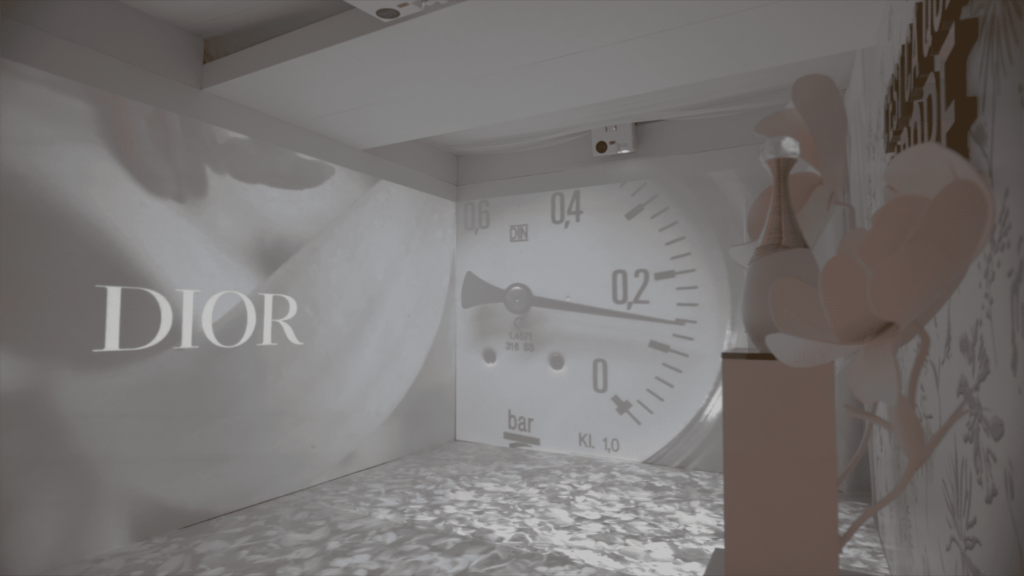
Sala imersiva Dior

Today we’re going to talk about an amazing tool that can completely transform your customers’ shopping experience: sensory rooms for points of sale.

A New Concept in Shopping Experience

You’re always looking for ways to stand out from the sea of competition in retail, right? One way to do that is by offering personalized, engaging experiences to your customers, and this is where sensory rooms come into play.

Sensory rooms are spaces designed to draw customers into an immersive experience, activating all of their senses: sight, hearing, touch, smell, and taste.

All five senses come into play, making the shopping experience truly memorable. Let’s look at some examples of how to use each sense:

Sight

You can use sensory rooms with lighting, colors, and visual effects to create a specific atmosphere.

Imagine, for example, that you own a furniture store. How about a sensory room that simulates different types of daytime and nighttime lighting? That way, your customers can see how the furniture looks under various lighting conditions.

  • Tok&Stok, a leading name in furniture and home decor, uses the visual experience in its stores so customers can picture themselves using the furniture in their own homes. Settings are put together with the store’s products, simulating living rooms, kitchens, bedrooms, offices, and more. The lighting is designed to highlight the products and create a welcoming atmosphere.

Hearing

Music or other sounds can be used to create a relaxing, welcoming environment.

For example, if you own a camping gear store, nature sounds, like birdsong or rain falling on a tent, can enhance your customers’ sensory experience and make them feel more connected to the camping environment.

Centro Nacional Store
Livraria Cultura is an example of a company that uses the auditory experience to create a more pleasant environment. Its stores usually have a soft soundtrack playing in the background, creating a relaxing environment that invites customers to spend more time in the store.

Touch

You can create sensory rooms that involve customers’ sense of touch.

If you own a clothing store, how about offering different fabrics and textures for customers to touch? It’s an amazing way for them to connect with your products.

  • Natura, the well-known cosmetics brand, lets customers try many of its products in its brick-and-mortar stores. They can feel the texture of creams, lotions, and makeup by applying them directly to their skin. This helps create a deeper connection with the products and allows customers to choose the items that best meet their needs and preferences.

Smell

Smell is a powerful sense, often underestimated when it comes to creating shopping experiences.

However, you can use it to create sensations and environments that match your products. For example:

  • Some stores, like coffee shops, already use the smell of coffee to create a more welcoming environment.
  • Imagine walking into a clothing store and smelling freshly washed fabrics. That would definitely improve the shopping experience.
  • Pão de Açúcar creates an olfactory experience through the aroma of breads and cakes baking in its in-store bakery. When customers walk into the store, they’re enveloped by these delicious smells, which creates a welcoming atmosphere and encourages purchases from the bakery.

A perfect example of a Sensory Room is the Dior activation at Hotel Sephora, developed by Alice Wonders. For a captivating, multisensory immersion in the brand’s exclusive space, we created projection mapping that brought to life the launch of J’adore Eau de Parfum, the brand’s newest fragrance. Check it out:

Taste

Last, but certainly not least, we have taste.

In some stores, especially those that sell food or beverages, you can offer tastings to customers.

  • Pão de Açúcar combines the sensory experience of smell with taste, also offering tastings of wines, cheeses, breads, and other products in its stores. This not only lets customers try before they buy, but also creates a more engaging and enjoyable shopping experience.
  • Another company that embraces this practice is Cacau Show, a chain of chocolate stores, which often offers samples of its products, letting customers enjoy the flavor before deciding to buy.

The Impact of Sensory Rooms at the POS

Now that we’ve talked about how to engage and stimulate each of your customers’ 5 senses at the POS, how about we look at the benefits of bringing it all together in Sensory Rooms for your brand?

The main goal of a sensory room at a point of sale is to create a unique and memorable experience for the customer.

On top of that, you not only set your store apart from the competition, but also encourage customers to come back. It’s a win-win strategy!

Here are some of the many benefits of creating sensory experiences in your store:

Benefits of the sensory experience for brands

The sensory experience helps brands stand out from the competition, increase the perceived value of their products, and create an emotional connection with customers.

Creating an Emotional Connection

When we engage all five senses in a shopping experience, we’re going beyond the simple act of selling a product. We’re creating an emotional connection with the customer.

We know that strong emotions are tied to our most lasting memories, so by providing a memorable, emotionally charged experience, we’re fostering customer loyalty and making sure they remember our brand in the future.

Market Differentiation

In today’s competitive retail world, it’s vital for your brand to stand out.

Sensory rooms can provide a unique advantage, setting your brand apart from competitors. Offering an immersive, multisensory experience is a powerful way to stand out and create a unique identity for your brand.

Added Value

The sensory experience adds value to the customer’s purchase, making it more than a simple transaction.

The customer isn’t just taking a product home, but a complete experience that engaged all of their senses. This can justify a higher price and increase profit margins for your brand.

Longer Dwell Time in the Store

When you provide an engaging sensory experience, customers tend to stay in the store longer. That’s because they’re immersed in an environment that stimulates their senses.

As a result, a longer visit increases the chances that customers will discover more products they like, which in turn raises the likelihood of generating more sales.

It Drives Word of Mouth

Creating a unique, unforgettable shopping experience makes customers want to share it with friends and family.

That’s where valuable word-of-mouth marketing comes into play, amplifying your brand’s visibility in a genuine, personal way.

Conclusion

Investing in sensory experiences at the point of sale is a strategy for transforming the way your customers interact with your brand.

By creating a shopping environment that engages all the senses, you deliver a richer, more appealing, and more memorable retail experience.

This not only boosts your sales opportunities and dwell time in the store, but also drives valuable word-of-mouth marketing, helping expand your brand’s visibility.

However, it’s important to conduct research to truly understand your audience and offer experiences that align with their expectations and desires. And you can count on us to help.

Get in touch with us and learn how you can create unique experiences for your customers and unlock your business’s full potential.

FAQ – People Also Ask:

  • What are sensory rooms for points of sale? Sensory rooms are spaces specially designed to engage the customer’s senses, delivering an immersive, delightful, and unique experience. This involves using techniques and technologies to stimulate customers’ sight, hearing, touch, smell, and taste.
  • Why should I consider the sensory experience in retail? The sensory experience can significantly improve the customer experience and increase sales. When their senses are engaged, customers tend to spend more time in the store, increasing the chances that they’ll make a purchase. In addition, a unique and memorable experience can lead customers to share it with others, driving word-of-mouth marketing.
  • What types of retail sectors can benefit from sensory experiences? Any retail sector can benefit from sensory experiences. Whether it’s a furniture store that uses different lighting scenarios to showcase its products or a bakery that uses the aroma of fresh bread to draw in customers, the possibilities are nearly endless.
  • How can I implement a sensory experience in my store? There are several strategies for introducing a sensory experience into your store, and they can be adapted to the nature of your business and the profile of your target audience. For example, you can use lighting and décor to create an environment that highlights your products’ attributes and encourages customer interaction. You can include themed spaces and strategic lighting to spotlight specific products, and choose colors and materials that evoke certain emotions or sensations.

Inscreva-se em nossa Newsletter

Receba no seu email todas as novidades do nosso blog sobre tecnologia e varejo, além de ficar por dentro do novos projetos Alice Wonders.

Thank you for subscribing.

Something went wrong.

White Box: The Realistic, Interactive Hologram for O Boticário LAB Comments Off on White Box: The Realistic, Interactive Hologram for O Boticário LAB 2364

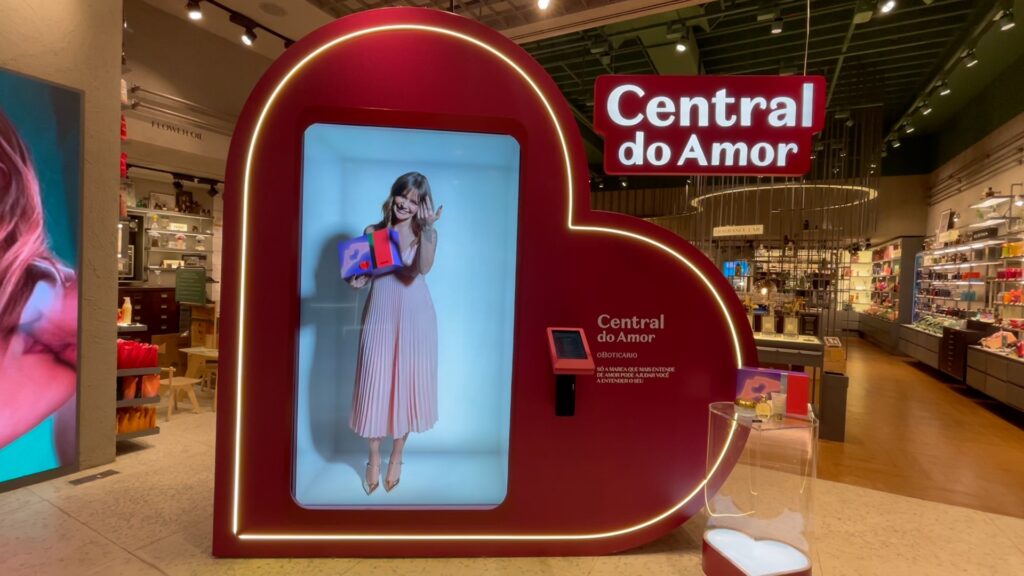
To celebrate Brazilian Valentine’s Day, O Boticário launched the “Love Hotline” (“Central do Amor”), an interactive campaign featuring a lifelike hologram at the O Boticário LAB in Morumbi Shopping, starring Marcela Mc Gowan, a physician, influencer, and former BBB contestant.

The influencer took on the role of “love guru” inside a White Box, a hyper-realistic holographic technology developed by Alice Wonders in partnership with Estúdio Like, offering relationship advice and helping shoppers choose the perfect gifts.

In practice, the service took place through a digital, interactive interface with different relationship status options and gift tips to celebrate the Day of Love.

👇🏻 Watch below:

The experience became even more complete on June 10, when shoppers at the flagship store were able to interact with the influencer via hologram – in real time! And believe it or not, there was even a marriage proposal!

⏯ See how it went:

The 4K hologram, ideal for delivering interactive experiences in stores, store windows, and events, works by projecting onto transparent glass, creating the illusion that objects are three-dimensional and floating in midair.

This holographic solution can also be built from pre-recorded or real-time footage of people, making it ideal for mannequins or even virtual meetings.

The technology, which was named one of the top trends at the world’s largest retail trade shows – such as NRF Retail’s Big Show and EuroShop Trade Fair – is now arriving to make an impact on Brazilian retail as well.

Inscreva-se em nossa Newsletter

Receba no seu email todas as novidades do nosso blog sobre tecnologia e varejo, além de ficar por dentro do novos projetos Alice Wonders.
Thank you for subscribing.

Something went wrong.

Most Popular Topics

Editor Picks

Send this to a friend



