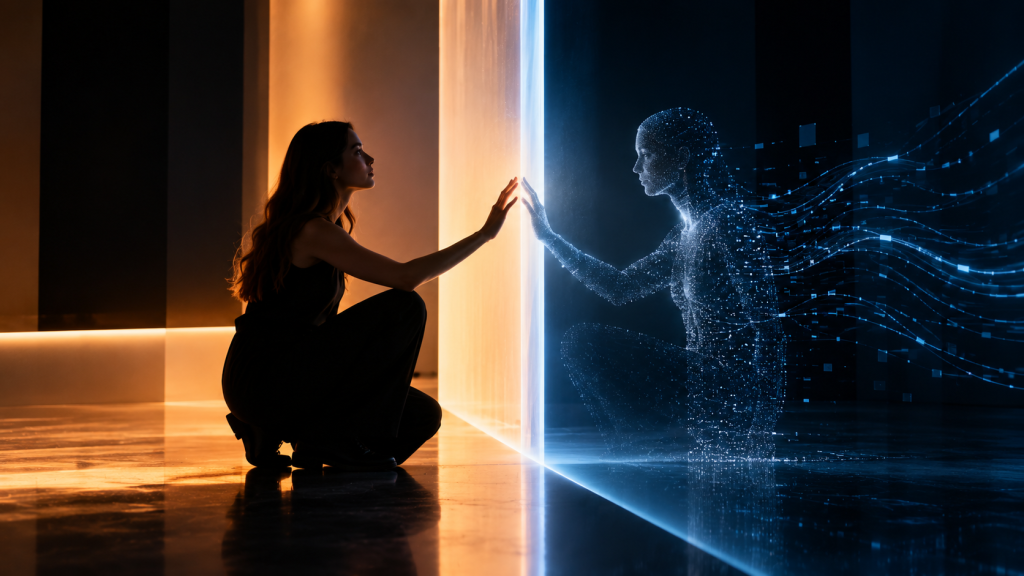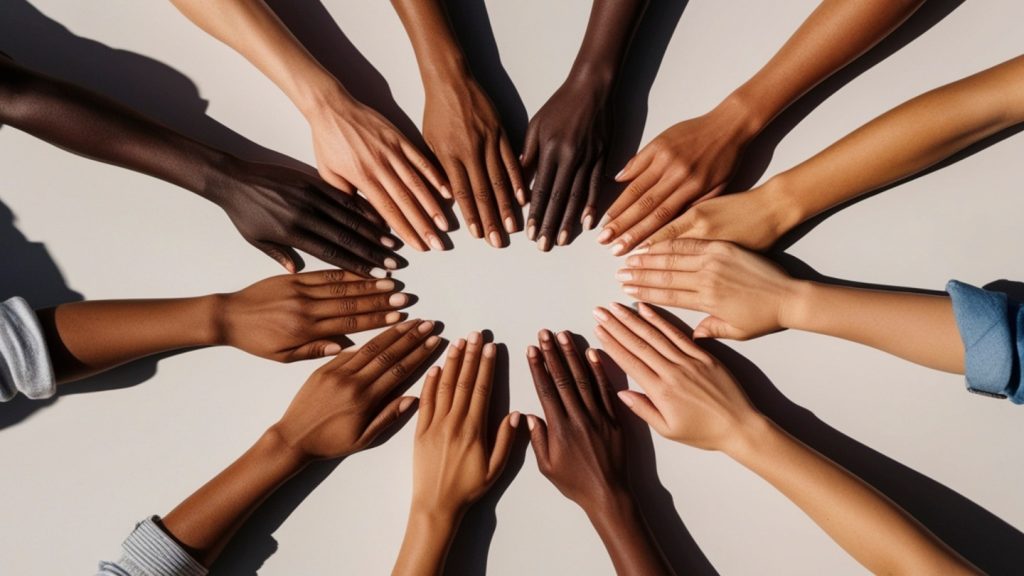
Building a community has never been more important for brands. In a hyperconnected landscape, experiential marketing starts on social media, digital platforms, messaging apps, and algorithms, creating an environment where people, content, and brands are constantly in motion. At the same time, this flood of connections raises an important question: how do you build an authentic community without creating a bubble?
At the same time, this hyperconnectivity has given rise to a seemingly contradictory phenomenon: the formation of increasingly segmented groups made up of individuals who share similar interests, behaviors, and worldviews.
This trend directly shapes how companies relate to their audiences. Instead of speaking to broad, homogeneous audiences, brands have started investing in building a brand community, creating spaces — both physical and digital — where consumers can share common values, experiences, and interests.
In this context, experiential marketing in retail has taken center stage. More than selling products, brands are looking to create emotional connections that strengthen bonds and foster a sense of belonging. Meanwhile, the growth of experiential retail shows that consumers increasingly value memorable, meaningful experiences throughout the retail customer journey.
However, an important question arises: does every brand community strengthen a company? Or do some initiatives end up creating closed ecosystems, limiting diversity of perspectives and turning communities into bubbles?
The answer lies in understanding how experiences are designed, how physical spaces are planned, and how the relationship between brands and people is built. After all, there is an important difference between creating belonging and creating isolation.
Brand community and why it has become so valuable
For a long time, the relationship between brands and consumers was centered on transactional logic. Today, that has changed. People don’t choose products based on price or functionality alone. They also look for identification, purpose, shared values, and experiences that fit their lifestyle.
This is where the power of brand community comes in. More than a group of customers, it represents a set of people who find in the brand a point of emotional and cultural connection. This transformation reflects a profound shift in consumer behavior: people want to participate, interact, and feel part of something bigger.
Neuroscience itself helps explain this phenomenon, since the human brain is strongly driven by the need to belong. When we feel accepted by a group, areas related to reward and well-being are activated, strengthening emotional bonds and increasing engagement. That’s why brands that manage to create an authentic brand community tend to build longer-lasting relationships.
In this process, experiential marketing in retail becomes a strategic tool. By creating relevant, emotionally meaningful moments, companies strengthen bonds that go far beyond the purchase. The same is true of experiential retail, which transforms commercial environments into spaces that generate connection, discovery, and interaction.
But of course, not every community is built the same way. For a brand community to be truly relevant, it needs to rest on solid pillars. They are:
- Shared purpose: consumers connect with brands that reflect their values, causes, and interests;
- Active participation: strong communities are made up of people who interact, contribute, and influence the experience, not just spectators;
- Exchange among members: the value of a community also lies in the connections created among the participants themselves, beyond their relationship with the brand;
- Sense of belonging: frequent, meaningful interactions strengthen the emotional bond and increase the community’s relevance over time;
- Experiential marketing in retail: creates opportunities for gatherings, collaboration, and shared experiences, strengthening the ties between consumers and brands;
- Experiential retail: develops environments that encourage spontaneous interactions and make the customer journey more participatory and engaging.
One of the strongest indicators of a brand community’s success is its ability to turn consumers into spontaneous advocates for the company. When there is genuine identification, people start recommending products, sharing experiences, and defending the brand naturally.
This phenomenon is especially relevant in a market where peer-to-peer trust carries growing weight in purchasing decisions. Recommendations, reviews, and accounts of experiences strongly influence people’s perceptions.
That’s why investing in experiential marketing in retail doesn’t just mean creating one-off events. It means designing a consistent experience across every touchpoint of the retail customer journey. The more positive that journey is, the more likely it is to strengthen the brand community and generate spontaneous engagement.
The role of experiential marketing in building communities
We know that technology has significantly expanded the possibilities for interaction between brands and consumers. However, it hasn’t eliminated a fundamental human need: connection.
Although the digital environment is important for expanding reach and convenience, many of the most memorable experiences still happen in person. Experiential marketing in retail is gaining ground precisely because of its ability to create memorable moments that spark emotions and strengthen bonds.
From a neuroscience perspective, positive experiences activate brain mechanisms related to memory and reward. This helps explain why certain brands stay in consumers’ minds for years, while others are quickly forgotten.
In this context, experiential retail represents an important evolution. Instead of using spaces solely to display products, companies create immersive environments that enrich the retail customer journey and strengthen the brand community.
Belonging is one of the foundations for building lasting relationships. That’s why experiential marketing in retail acts as a facilitator in this process. When people share experiences, attend events, or spend time in spaces designed for interaction, they build collective memories.
These memories strengthen the brand community’s identity and contribute to deeper bonds. Experiential retail reinforces this logic by turning consumption into a social experience. More than buying products, consumers begin to share moments, stories, and connections.
How physical spaces influence the sense of belonging
Have you ever walked into a place and felt like it was your place in the world, or that the space had been built with you in mind, down to the smallest detail? Well, that kind of experience reinforces a sense of belonging, which is essential when it comes to building communities. Below, check out some of the details that shape how physical spaces influence the way consumers feel:
The store as a relationship platform
In recent years, the physical store has undergone a significant transformation. Once seen merely as a sales channel, it is increasingly becoming a relationship platform.
The growth of experiential marketing in retail shows that consumers value spaces capable of creating connection and meaning. In this landscape, experiential retail turns the point of sale into a place for gathering and discovery.
As a result, the retail customer journey is no longer linear and now incorporates experiences, services, content, and relationships. The store is no longer just a shopping destination; it becomes a meeting place.
Experience design and community building
The physical environment directly influences how people perceive a brand. That’s why store design has become a strategic element for companies looking to strengthen a brand community.
Today, the role of store design goes far beyond aesthetics. It must create environments that encourage interaction, longer visits, and engagement. Every detail, from lighting to layout, can influence emotions and behaviors.
Experiential marketing in retail uses these principles to transform commercial spaces into environments that foster human connections. Experiential retail, in turn, expands this potential by incorporating interactive elements that enrich the retail customer journey.
The Fourth Place, Store Living, and the evolution of spaces of belonging
More than a physical place for socializing, the Fourth Place represents hybrid environments where experiences, technology, community, and purpose come together to create deeper, more meaningful connections.
In this context, consumers aren’t just looking for a place to be, but for a place where they can participate, learn, share experiences, and build relationships that go beyond the purchase. The Fourth Place emerges as a response to shifts in contemporary behavior, in which the boundaries between physical and digital are becoming increasingly fluid.
If you’d like to take a deep dive into what the Fourth Place is all about and how it can be applied to physical spaces, click here and check out the article the Alice Wonders team wrote on the topic.
This view of the Fourth Place connects directly to the concept of Store Living, which proposes turning the store into a living, hybrid, multifunctional space. In this model, the brand offers much more than products: it creates experiences, brings people together, provides services, generates content, and fosters lasting relationships.
In this scenario, store design takes on an even more strategic role. Spaces are designed to encourage interaction, collaboration, and longer stays, creating experiences that connect people with one another and with the brand. More than attracting consumers, the goal is to create spaces where they feel part of something bigger: a community built on values, shared experiences, and genuine connections.
The future belongs to brands that connect, not those that isolate
The difference between a genuine brand community and a bubble lies in the ability to foster exchange, encourage participation, and embrace different perspectives. While bubbles tend to restrict dialogue, communities create connections that generate value for everyone involved.
In an increasingly fragmented market, experiential marketing in retail emerges as a powerful tool for building these relationships. By creating memorable experiences, strengthening connections, and enriching the retail customer journey, brands can turn interactions into lasting bonds.
The rise of experiential retail, combined with store design strategies, technology, and concepts such as Store Living and Story Listening, shows that the future of retail depends on building spaces that are more human, participatory, and relevant.
In the end, the strongest brands won’t necessarily be the ones that build the most closed ecosystems. They’ll be the ones capable of building an authentic brand community based on listening, collaboration, and belonging. After all, in times of insularity, the real competitive edge isn’t in putting up barriers, but in building bridges.
Inscreva-se em nossa Newsletter
Receba no seu email todas as novidades do nosso blog sobre tecnologia e varejo, além de ficar por dentro do novos projetos Alice Wonders.
Thank you for subscribing.
Something went wrong.
Respeitamos sua privacidade e levamos a sério a sua proteção