Co-Creation in Brick-and-Mortar Retail: Benefits and How to Apply It Comments Off on Co-Creation in Brick-and-Mortar Retail: Benefits and How to Apply It 365

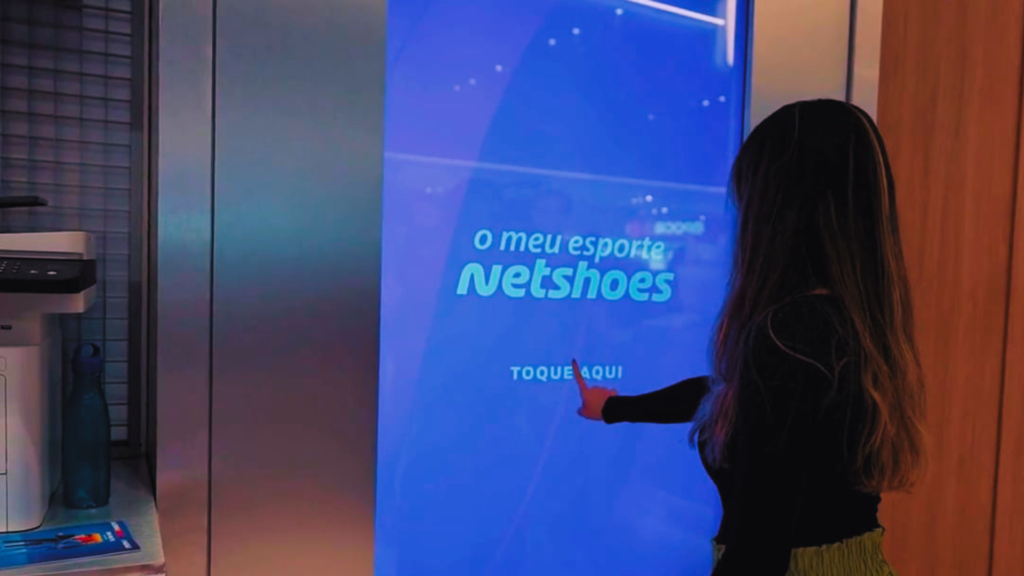
co-criação no varejo físico com cliente interagindo em tela digital no ponto de venda

Brick-and-mortar retail is going through one of the most challenging — and, at the same time, most interesting — moments in its history. In this context, co-creation in physical retail is emerging as an essential strategy for engaging consumers and turning the customer experience into a competitive advantage.

The consumer has changed, too. They are no longer a passive agent who simply chooses among the available options; they have become an active participant in shaping the brands they engage with. Today, they want to weigh in, interact, personalize and, above all, feel that they are part of something bigger.

This is the backdrop against which co-creation in physical retail is gaining relevance. More than a trend, it is a strategy that involves customers in the development of products, services and experiences, turning the shopping journey into something collaborative.

And the results aren’t just conceptual: brands that invest in customer engagement at the point of sale and in collaborative processes are able to deepen emotional connection, strengthen a sense of belonging and drive customer loyalty in physical retail.

Co-creation in retail: why this strategy is growing

The concept of co-creation has carved out a significant and impactful place in the market in a short time, so it’s natural for many people to wonder what makes this strategy so special that it has gained so much ground and relevance.

One of the main reasons is the shift in the behavior of today’s consumers, who are looking for more than convenience — they are looking for meaning. Instead of simply buying a product, they want to live an experience that makes sense for their identity and lifestyle.

This shift is directly tied to a desire to take center stage. Taking part in building something, whether by choosing a product’s features or influencing a brand’s decisions, creates a much greater perception of value.

Moreover, while the product used to be at the center of the purchase decision, today it shares the spotlight — or even takes a back seat — to the experience. Investing in pleasant environments, personalized service and memorable interactions are decisive factors in this journey.

Co-creation fits perfectly into this scenario because it turns the act of shopping into something more immersive. When customers take part in building what they consume, the experience stops being linear and becomes unique — which contributes directly to customer loyalty in physical retail.

And of course, we can’t overlook the rise of social media, which has shaped consumers who are used to interacting constantly. Liking, commenting, voting in polls, rating products and sharing opinions are part of their everyday behavior.

This culture of participation isn’t confined to the digital world — it spills over into the physical one. Customers expect to have a voice inside stores as well, so brands that manage to translate this logic to the physical space, encouraging active participation, can significantly boost customer engagement at the point of sale.

In this sense, co-creation in physical retail works as a bridge between digital and in-person, creating experiences that are more connected to consumers’ current reality and helping them find a sense of community and belonging in the brand.

Co-creation in physical retail: how to put it into practice

The idea of co-creation may seem daunting — after all, the thought of opening up your brand, product or service development process to your audience can raise a lot of questions and/or concerns. However, it can be done in a simple, practical and accessible way. Check out some co-creation initiatives you can apply to your business:

Interactive spaces inside the store

We know just how important interactive spaces are in brick-and-mortar retail, which is why investing in environments that encourage this kind of interaction is one of the most direct ways to implement co-creation simply and accessibly.

Areas for trying out, personalizing and assembling products allow customers to actively take part in building their own experience. Whether customizing an item or testing different combinations, they go from being just a consumer to becoming a co-author.

This type of initiative strengthens the customer experience in retail and increases dwell time in the store — a factor directly linked to higher conversion and customer engagement at the point of sale.

Involving customers in product development

Another powerful strategy is to include customers in the product creation process. Testing new items, holding votes to choose upcoming launches or offering limited editions co-created with the public are effective ways to generate interest and anticipation.

Today, it’s common to see many brands using social media to run polls and surveys that listen to their customers and get them directly involved in developing new products.

In addition to boosting engagement, this approach reduces risk, since decisions are based on actual consumer demand. As a result, there is a positive impact on customer loyalty in physical retail, as customers come to see value in taking part.

Using technology to expand participation

In today’s world, technology is advancing at an enormous pace, and making it an ally in co-creation is also a great strategy. Tools such as interactive kiosks, QR codes and apps make it possible to collect opinions, suggestions and preferences in real time.

These resources help scale customer participation, encouraging customers to interact and engage even more with the in-store experience, making co-creation in physical retail more structured and measurable.

These resources also integrate the physical and digital environments, enhancing the customer experience in retail and creating more seamless, connected journeys, building a consistent narrative across all of the brand’s channels.

Co-creation based on real-time feedback

Listening to customers is essential — we’ve been hearing a lot about the concept of store listening and the power of truly listening to your audience. However, listening alone isn’t enough; acting on that feedback is what really makes the difference.

Quick in-store surveys, interactions with sales associates and direct communication channels are simple, practical actions that don’t take up much of the customer’s time, yet they make it possible to capture valuable insights right in the moment of the experience.

When customers realize that their opinion has a real impact, consumer engagement at the point of sale rises significantly, as does the perceived value of the brand, helping them understand the power of their voice in that space.

Collaborative events and activations

Last but far from least, you can also invest in workshops, in-person experiences, and interactive events for your customers. These are excellent opportunities to foster co-creation.

These initiatives create moments of deeper connection in which the customer takes an active part — whether by learning something new, contributing ideas, or co-creating products — so that both sides grow and learn throughout the process.

Beyond strengthening the customer experience in retail, these initiatives create positive memories, which are essential for customer loyalty in brick-and-mortar retail. Customers become part of the process and find in the brand a space of belonging and momentum.

Co-creation in retail: examples of brands putting it into practice

The concept of co-creation may be new to some people, but it is more present than we might imagine, both in the market and in our daily lives. Many brands have already recognized the potential of co-creation and have been applying this strategy consistently.

Havaianas, for example, lets customers customize their sandals in the physical store at the time of purchase. Shoppers have countless options of charms, pins, and other accessories at their disposal to create their product however they like.

Another example is Natura, a brand known for its work in sustainability and social responsibility. The company developed the “Criando Natura” program, an initiative that invites consumers to take an active part in developing new products.

Through innovation challenges, the brand makes room for its audience to contribute ideas, using forums and collaborative discussions that directly influence its portfolio. The outcome shows how active customer participation not only strengthens the bond with the brand but also expands and enhances its product offering.

In all of these cases, the result is similar: greater customer engagement at the point of sale, a stronger emotional bond, and increased customer loyalty in brick-and-mortar retail.

Building together is what creates value

Co-creation is no longer a concept limited to the digital world. It is now part of brick-and-mortar retail, not merely as a one-off strategy, but as a direct response to shifts in consumer behavior and new market demands.

By involving customers in shaping experiences and products, brands can go beyond the transaction and build deeper relationships based on engagement, belonging, and trust.

The benefits are clear: a better customer experience in retail, greater customer engagement at the point of sale, and stronger customer loyalty in brick-and-mortar retail.

In the end, the question it leaves us with is simple: in a landscape where consumers want to participate, brands that don’t make room for this collaboration risk becoming irrelevant and easily replaceable.

Inscreva-se em nossa Newsletter

Receba no seu email todas as novidades do nosso blog sobre tecnologia e varejo, além de ficar por dentro do novos projetos Alice Wonders.

Thank you for subscribing.

Something went wrong.

Previous ArticleNext Article

The Briefing That Kills a Great Experience 0 89

Briefing estratégico para desenvolvimento de experiências de marca

“We need a campaign.” “Let’s do an event.” “We need an activation.” “How about building an app?” Almost all of these requests share the same first step: the brief.

In day-to-day marketing, phrases like these tend to show up as the starting point for new projects. The problem is that, more often than not, they don’t present the challenge. They already present the answer.

And when the solution comes before the problem, creativity starts out with less room to explore.

That doesn’t mean a campaign, an event or an activation is a bad choice. The real question is whether it is, in fact, the best answer to what the company needs to transform. After all, it’s entirely possible to execute a solution perfectly and still solve the wrong problem.

Before the “what,” comes the “why”

An effective brief shouldn’t start with the deliverable. It should start with the context.

  • What’s happening?;
  • Why does it matter to the business?; 
  • Who is affected?;
  • What is that person going through?;
  • Is there a behavior or perception that needs to change?;
  • What has already been tried?;
  • And what don’t we know yet about this challenge?

These questions help turn a request into an opportunity for investigation.

“We need to create an activation to increase store traffic,” for example, already defines a big part of the path. But realizing that a significant number of people move through the space without engaging with a particular category opens up a far more interesting discussion: how can we make this journey more relevant?

An activation may still be the answer. But now it’s one possibility among many — not a decision made before the problem was understood.

A good brief opens up possibilities

There’s an important difference between giving direction and dictating the solution. A good brief needs to be clear about the challenge, the audience, the objectives, the context and the constraints. At the same time, it should leave room for the team to question assumptions and explore different paths.

It’s precisely this combination that can make the creative process more powerful.

When the brief says “do X to achieve Y,” the discussion tends to focus on how to do X as well as possible. When it says “we need to achieve Y because this is the scenario we’re facing,” the question becomes “what’s the best way to get there?”

It may seem like a small difference, but it can completely change the outcome.

The solution might lie in a physical experience, in content, technology, service, communication, environment, journey or a combination of different possibilities. The format stops being the starting point and becomes a consequence of the strategy.

So where does experience come in?

With whoever is on the other side.

A good experience doesn’t come only from what the brand wants to communicate or offer. It needs to take into account the context of the people who will live it. What do they expect? What could create friction? What’s relevant at that moment? What role does the brand play in that journey?

When these questions make it into the brief, the project stops being just about a deliverable and becomes about a transformation.

This perspective also helps avoid one of the most common mistakes in experience projects: creating something interesting for the company but not very relevant to people.

An idea can be beautiful, innovative and technically flawless. But if it doesn’t respond to a real need or doesn’t make sense in that context, it’s unlikely to be a good experience.

The brief doesn’t need to come with a ready-made idea

Perhaps this is the main shift in perspective: the brief isn’t there to say exactly what should be created. It’s there to create the conditions for the best idea to emerge.

That means spending more time understanding the problem before rushing to the solution. It means questioning requests, investigating behaviors, acknowledging constraints and leaving room for possibilities that weren’t on the radar yet.

In the end, the more clarity there is about the problem, the more freedom there is to think about the solution.

This is the mindset Alice Wonders brings to turning business challenges into experiences. Combining strategy, creativity and a people-centered approach, we help brands break away from ready-made solutions and find more relevant paths for what truly needs to be transformed.

Because a good experience may start with an idea. But a relevant experience starts with a good question.

Want to uncover new possibilities for one of your brand’s challenges? Talk to Alice Wonders.

Inscreva-se em nossa Newsletter

Receba no seu email todas as novidades do nosso blog sobre tecnologia e varejo, além de ficar por dentro do novos projetos Alice Wonders.

Thank you for subscribing.

Something went wrong.

In the Age of AI, What Still Needs to Be Human? 0 93

Experiência imersiva que representa a conexão entre inteligência artificial e fator humano.

You know when you chat with an AI chatbot, get exactly the information you needed, and still feel like something was missing? Or when an AI-generated image is technically perfect but doesn’t stir any emotion at all?

These examples point to one of the biggest challenges of the AI era: the more technology we have at our disposal, the more valuable the traits that are still essentially human become.

Artificial intelligence already writes, creates images, analyzes data, personalizes content and automates processes. But with so many possibilities, a question arises: if technology can do more and more for us, what still needs to be done by people?

With that in mind, today we’ll look at what still needs to be human, even in the AI era, and how to get there without competing with technology, but by using it as a business ally. Enjoy the read!

AI has changed the game

To start, we need to understand that artificial intelligence has brought speed, scale and efficiency to companies in virtually every industry. Today, brands can analyze behavior, personalize journeys, generate content and automate interactions in a matter of seconds.

The problem is that when the same tools are available to everyone, technology alone stops being a differentiator. If any brand can use AI to personalize a message, generate an image or automate customer service, what will make one of them memorable?

That’s where the human factor comes in. AI can identify patterns, but interpreting context is another story. It can recognize emotions, but not experience them. It can generate possibilities, but it can’t decide on its own which of them actually makes sense for a brand. It can personalize an interaction, but it doesn’t necessarily create a connection.

In the end, memorable experiences are built on something that goes beyond technology: feeling, meaning and identification.

What still needs to be human?

Now that we understand how AI operates and how it can support a business, the question remains: what still needs to be human? So we’ve put together a few areas below where AI can’t perform as well as a human. Take a look:  

  • Feeling: an AI can identify that a certain experience has the potential to move people. But it’s the person who feels surprise, nostalgia, belonging or delight. And it’s these emotions that turn an interaction into a memory;
  • Interpreting: data shows what people do. But understanding why they do it takes context, background and sensitivity;
  • Creating meaning: artificial intelligence can generate thousands of ideas. But an experience doesn’t become relevant just because it’s new. It needs purpose, it needs to align with the brand and it needs to make sense for whoever is living that moment.
  • Building connections: an unexpected detail, service that shows genuine care or an experience that feels designed especially for someone can create bonds that go far beyond the transaction. And the more automated our relationships become, the more value there may be in precisely these genuinely human moments.

What if AI made experiences more human?

Is there an ideal world where technology and human experiences support each other in perfect harmony? Well, in brick-and-mortar retail, this discussion becomes even more relevant. Instead of using artificial intelligence just to automate processes, brands can use it to enhance experiences.

Imagine spaces that adapt content to each visitor, experiences that personalize journeys in real time or environments that respond to people’s behavior.

Technology is there, but it doesn’t have to be the star. The star is the person living the experience. That’s why the question shouldn’t just be “where can we add AI?” but rather: “How can AI make this experience more relevant for the people who are here?”

Like other technologies, artificial intelligence is likely to become increasingly accessible. The differentiator, then, won’t be who uses AI, but who knows how to use it with purpose. That means starting with the consumer, understanding their behavior, defining what the brand wants to spark and only then choosing the technology that can make that experience possible.

Because AI can expand possibilities. But it’s the human perspective that turns possibilities into meaning.

AW: technology to create more human experiences

At Alice Wonders, we believe technology only makes sense when there’s a purpose behind it.

That’s why we combine technology, creativity and strategy to transform physical spaces into experiences that bring brands and people closer together.

Want to discover how to use technology to create more human and memorable experiences for your brand?

Click here to learn more about Alice Wonders’ work.

Inscreva-se em nossa Newsletter

Receba no seu email todas as novidades do nosso blog sobre tecnologia e varejo, além de ficar por dentro do novos projetos Alice Wonders.

Thank you for subscribing.

Something went wrong.

Most Popular Topics

Editor Picks

Send this to a friend