Celebrating identity and innovation: Pattern Beauty’s journey at NRF 2025Comments Off on Celebrating identity and innovation: Pattern Beauty’s journey at NRF 2025 851
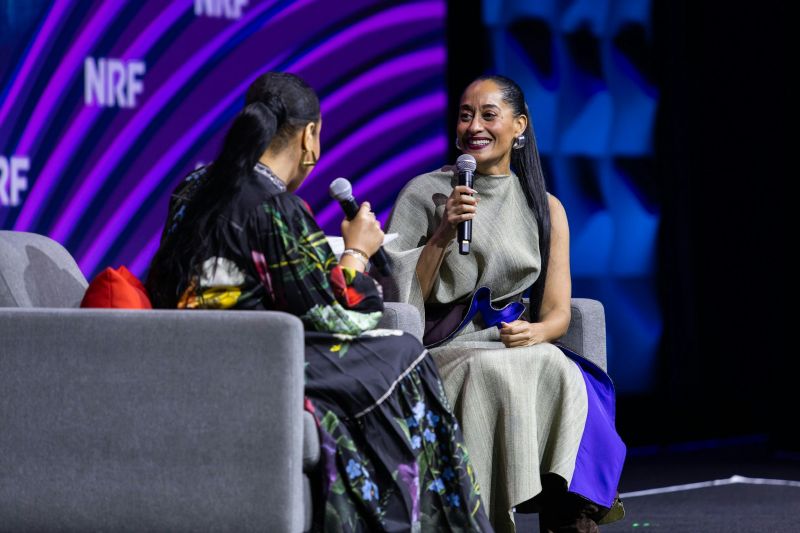
In a world where beauty standards have often been narrowly defined, Tracy Ellis Ross has stood out as a pioneer, challenging the status quo with her brand, Pattern Beauty. Her journey isn’t just about creating products; it’s about celebrating identity, driving innovation, and empowering communities.
And of course, during NRF 2025, these and many other topics were discussed, offering important lessons drawn from an inspiring story:
1. Embracing authenticity and identity
Tracy Ellis Ross’s journey began with her personal struggle to find products that worked for her curly, coily, and densely textured hair. This challenge wasn’t hers alone. It resonated with many people who felt overlooked by the beauty industry.
Her mission was clear: create products that celebrate natural hair textures instead of treating them as problems to be fixed. This approach not only filled a gap in the market but also empowered people to embrace their authentic identities.
2. From vision to reality
Without a traditional pitch deck, Ross started with a treatment, a concept similar to the script for a TV show. Her determination and creativity were crucial in turning that vision into a tangible brand.
Despite facing countless rejections, she persisted, learning from every “no” and refining her approach. Her story highlights the importance of resilience and adaptability in entrepreneurship.
3. Innovation with purpose
For Ross, innovation isn’t about adding unnecessary complexity. It’s about solving real problems efficiently. Pattern Beauty’s products, such as the hair dryer designed specifically for textured hair, exemplify this philosophy.
By focusing on her community’s needs, Ross has redefined innovation in the beauty industry, ensuring her products are both effective and easy to use.
4. Building a community-centered brand
Pattern Beauty is more than a brand; it’s a community. Ross emphasizes the importance of listening to and engaging with her customers. This dialogue guides product development and ensures the brand stays aligned with the needs and desires of its audience.
By centering Black beauty and prioritizing hydration and nourishment, Pattern Beauty has created a ripple effect, expanding its reach while staying true to its core mission.
5. Redefining celebrity brands
While many celebrity brands face skepticism, Pattern Beauty stands out. Ross is deeply involved in every aspect of her brand, from product development to company culture.
She challenges the notion that celebrities should stick to their core fields, advocating for recognition of their multifaceted talents and interests. Pattern Beauty isn’t just a celebrity brand; it’s also a testament to Ross’s business acumen and her commitment to a previously overlooked market.
6. A vision for the future
Looking ahead, Ross envisions Pattern Beauty expanding beyond hair care. The brand’s very name, Pattern Beauty, hints at broader possibilities in the beauty space. By staying true to its mission and purpose, the brand is poised to keep growing and innovating.
Ross’s journey is a powerful reminder that when businesses are built on purpose and community, they can achieve remarkable success.
Conclusion: transforming the beauty industry
In conclusion, Tracy Ellis Ross’s Pattern Beauty is a shining example of how authenticity, innovation, and community engagement can transform an industry. Her story inspires entrepreneurs and consumers alike to celebrate their identities and embrace the beauty of diversity.
As Pattern Beauty continues to evolve, it remains a beacon of empowerment and a testament to the power of purpose-driven business.
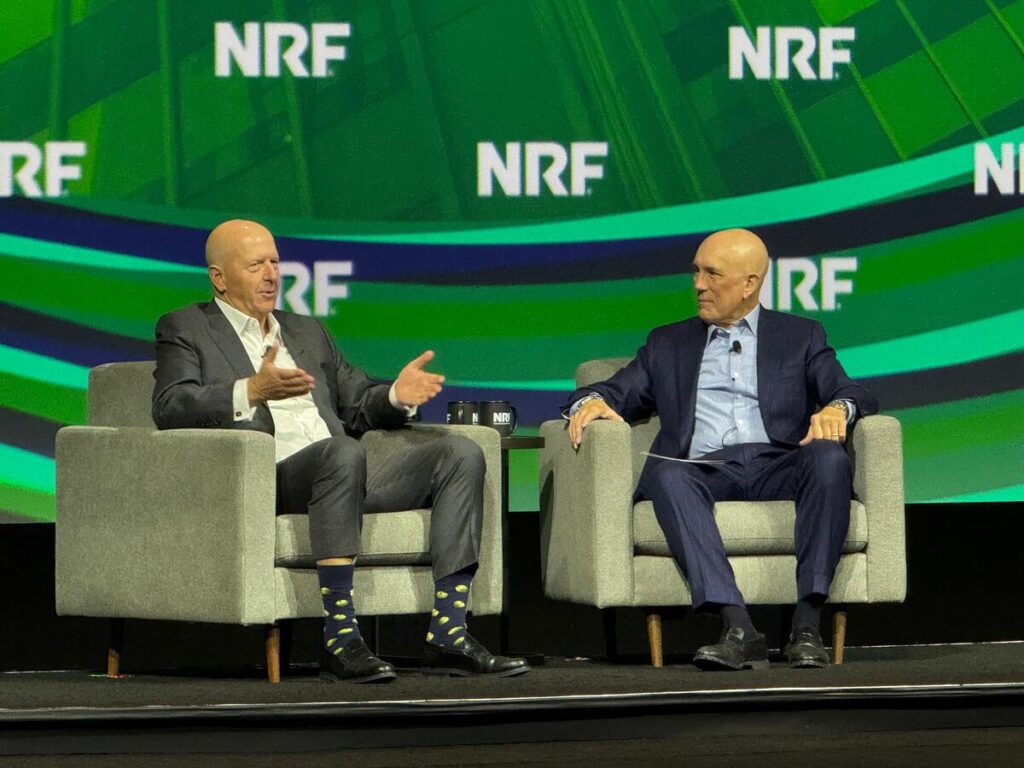
During NRF 2025, Matthew Shay, CEO of the National Retail Federation (NRF), interviewed David Solomon, Chairman and CEO of The Goldman Sachs Group Inc., in a revealing conversation about the global economy, technological innovation, and the challenges facing business leaders.
The conversation was a masterclass in how resilience, innovation, and strategic leadership can shape the future of retail and global business. Check out some of the topics covered during the session!
1. U.S. economic resilience as a global engine
David Solomon opened by highlighting the central role of the United States as the world’s leading economic power. He emphasized the country’s resilience in facing economic challenges and attracting investment.
“The United States remains a pillar of innovation and growth. There is extraordinary interest in being in the U.S., investing in the U.S., and living in the U.S.,”Solomon said.
Despite pressures such as inflation and a growing deficit, Solomon remains optimistic: “The U.S. economy has been incredibly resilient over time. Even with challenges, its foundation of innovation and productivity ensures a positive long-term outlook.”
2. Inflation and public debt challenges
Inflation, although more under control in some respects, remains a concern, especially with the federal deficit reaching historically high levels. Solomon warned:
“We need to better manage public spending and debt levels, because they directly affect investor confidence and economic growth.”
For retail, these challenges mean more cautious, value-focused consumers, which requires brands to be more strategic with their offerings and promotions.
3. The Artificial Intelligence revolution
Technology, especially artificial intelligence (AI), was singled out during this NRF session as one of the core drivers of the future of business. Solomon noted:
“We’re at the beginning of a cycle that will transform productivity across companies. AI tools are more accessible and have the power to improve people’s lives and optimize businesses.”
He also compared the AI adoption curve to previous technology cycles, predicting a profound impact over the next 5-10 years: “Although hardware costs are still high, advances in chips and infrastructure will bring those prices down, making the technology even more accessible to companies of all sizes.”
It’s also worth stressing that, for retail, AI opens up a wide range of opportunities for improvement and growth, for example:
Personalized shopping experiences, with more relevant interactions;
Operations automation: from inventory management to customer service;
Demand forecasting, improving planning accuracy and reducing waste.
And that’s not all: AI is expected to keep evolving and improving, bringing a variety of benefits to the most diverse industries.
4. Rebalancing supply chains
The pandemic and geopolitical tensions have forced companies to reassess their supply chains, with a greater focus on resilience and localization. Solomon explained further:
“We’re seeing a strategic restructuring in sectors such as chips, rare minerals, and healthcare. While these changes take time, they’re necessary to ensure resilience and security.”
In retail, this transformation means greater reliance on local suppliers, reconfigured inventories, and investment in logistics innovation, mainly to keep pace with changes in the value chain.
5. A more cautious, yet resilient, consumer
Solomon pointed out that the American consumer is still recovering, dealing with challenges such as inflation and economic uncertainty. “Inflation is extraordinarily punitive, especially for lower-income families,”he observed.
However, he also pointed to signs of resilience: “Despite the difficulties, consumers continue to sustain a large share of economic activity, seeking value and differentiated experiences.”
For retail, this reinforces the importance of offering: competitive, value-driven pricing; hybrid experiences that seamlessly integrate physical and digital; and relevant, personalized products, especially to meet consumers’ rising expectations.
6. Building organizational resilience
The conversation at NRF 2025 also addressed the importance of leadership and corporate culture in times of uncertainty. Solomon shared his view on how leaders should align their teams around clear values and goals.
“At Goldman Sachs, our values – integrity, partnership, and client service excellence – are the pillars that guide all of our decisions,” he explained.
He stressed that leaders must invest in talent and build strong organizational cultures capable of withstanding challenges and adapting quickly to change.
NRF 2025 takeaway: navigating the future of retail and business
The dialogue between Matthew Shay and David Solomon made it clear that resilience, innovation, and leadership are essential to facing the uncertainties of the global economic landscape. For retail, the future will be defined by how companies adopt emerging technologies, restructure their operations, and meet consumers’ evolving needs.
As Solomon concluded at NRF 2025: “Organizations that manage to align themselves with these strategic transformations will be well positioned to lead in the future.”
What about you? How are you tackling economic challenges and seizing innovation opportunities in retail? Share your ideas with us!
In a world increasingly saturated with offers, what truly wins consumers over are the experiences they have with a brand—experiences that go beyond good service or support when it’s needed.
Experiential Marketing creates deep emotional connections, turns everyday moments into memorable experiences, and transforms consumers into true fans.
It’s no coincidence that several areas of the market have started to evolve with a focus on user experience, such as UX (User Experience) design, an approach centered on creating positive and efficient experiences for users.
Within this context, we understand experiential marketing as a strategic approach whose main goal is to give consumers a unique, memorable, and emotionally engaging experience with a brand or product.
This marketing model has been gaining ground thanks to its effectiveness and innovation in building closer, longer-lasting relationships with consumers. That’s why today we’re going to explore how this innovative approach is changing the way companies relate to their audiences and build lasting bonds.
Experiential Marketing and Why It Matters in Today’s Market
First of all, we need to understand that experiential marketing is much more than just an idea: it’s a strategy that goes beyond product promotion, focusing on creating unforgettable experiences for consumers.
When we talk about experiential marketing, we’re talking about a type of communication that stands apart from the conventional approaches we’ve seen in the market, which usually focus solely on transactions or sales promotions.
Here, we’re talking about innovation—delivering a moment that isn’t confined to a phone or computer screen, but that creates and brings to life a customer’s shopping experience, so they’ll forever remember the brand that invested in it.
Considering the current state of the world and the market, consumers aren’t just looking for products or services; they want experiences that connect with their emotions, their routines, their personalities, and their lifestyles.
That’s because customer experience has become a key factor in purchasing decisions—comparable to, or even more important than, price itself. On a website, for example, UX design is an extremely important factor in the purchase decision, while in the offline world other aspects are valued, such as:
Innovation and Technology;
Authenticity and Transparency;
Sustainability and Social Responsibility;
Personalization;
Quality and Durability;
Recommendations and Reviews;
Among other factors.
By investing in experiential marketing, your company benefits in many ways, building emotional bonds with customers and, as a result, greater brand loyalty. Not to mention increased brand engagement, which leads to higher customer satisfaction.
It also amplifies the impact of good experiences and word-of-mouth marketing, which is essential for attracting new customers and improving the company’s reputation. All of this can make your brand stand out in a competitive market and make your business more memorable.
4 Reasons to Invest in Experiential Marketing for Your Company
Now that you understand the importance of experiential marketing, we’ve put together a few reasons why you can—and should—invest in this strategy if you want a brand that drives innovation and makes an impact in the market:
1. Creating Emotional Connections with Consumers
When a company manages to engage its customers emotionally, it not only fosters loyalty but also turns consumers into brand advocates.
Let’s see this in practice. At various points in its history, Coca-Cola has bet on personalizing bottles with popular names. And in 2019, the brand brought back personalized bottles and encouraged consumers to “share a Coke with a friend,” creating a direct, emotional interaction at the point of choice. Take a look:
Instead of focusing solely on digital campaigns or commercials, the brand offered an experience deeply rooted in the physical world, allowing consumers to buy and exchange bottles with personalized names.
The campaign was a global success, showing how a simple, personal experience at the point of choice can create a strong bond between brand and consumers, going beyond the need for an exclusive focus on digital.
This emotional connection results in greater audience loyalty and engagement with the brand, which is crucial in a market where consumers are increasingly demanding and selective when searching and shopping.
2. Standing Out in a Saturated Market
With so many products and services available, companies need to stand out to attract and retain customers. Experiential marketing offers a way to create a unique value proposition that goes beyond the product or service itself.
Through events, creative activations, personalization, and high-quality service, a brand can set itself apart from its competitors. A great example of this is Apple and its in-store campaigns whenever it launches something new.
On many occasions, Apple has transformed its stores around the world into experience centers, where consumers didn’t just buy products but also took part in workshops and training sessions, and tried out devices interactively.
Apple stores are designed to foster a welcoming, accessible environment, where consumers can touch the products, interact with brand specialists, and learn about features in a personalized way.
By creating a space where consumers can truly experience the brand through their senses and with expert assistance, Apple has shown that experiences beyond digital can be highly effective in building a lasting bond with customers, encouraging loyalty and satisfaction.
Innovative, positive experiences make a company unforgettable to consumers. This differentiation can be decisive when choosing a brand, especially in saturated markets where consumers have multiple alternatives.
3. Increasing the Brand’s Perceived Value
Investing in high-quality experiences raises the perceived value of a product or service. When a company offers more than just a product, it adds value in the customer’s eyes, and customers begin to associate the brand with something premium, exclusive, and innovative.
To put this into real-world terms, let’s revisit the case of National Geographic, which used augmented reality to create an immersive experience in London, transforming a shopping mall concourse into a magical setting where people could interact virtually with dolphins, cheetahs, and dinosaurs. Click HERE to check it out!
The activation surprised and delighted the public, linking the brand to feelings of innovation, fun, and discovery. It’s a powerful example of experiential marketing, because it creates memorable, engaging moments that strengthen the emotional bond with consumers.
Not to mention that this whole process also helps raise the brand’s perceived value, positioning it as creative, visionary, and in step with innovative technologies that deliver one-of-a-kind experiences in the market.
4. Generating word of mouth and viral marketing
One of the biggest advantages of experiential marketing is its potential for positive buzz and viral marketing. When consumers have an extraordinary experience, they share it with their friends, family, and social media followers.
A case that teaches us a lot about this is The North Face, which ran an experiential marketing campaign that started with a virtual reality simulation in which participants wore VR headsets to experience a dog sled ride.
Surprisingly, during the experience, the brand turned the simulation into reality: consumers were placed on a real sled, pulled by real dogs, delivering an authentic and unexpected experience. Take a look:
This strategy combined technology and real-world experience to create a deep emotional connection with participants, highlighting the brand’s adventurous spirit. And, of course, the stunt must have been the topic of many conversations among friends and family.
All of these examples and reasons prove that experiential marketing not only transforms the relationship with consumers, making it deeper and more meaningful, but also delivers lasting competitive advantages.
By creating impactful, memorable moments, companies can increase loyalty, drive differentiation, enhance perceived value, generate word-of-mouth marketing, and also collect essential data to continuously improve their offerings.
The future of Experiential Marketing
However uncertain the future may be for everyone, the discussion about future trends in experiential marketing, such as even deeper personalization, the omnichannel experience, and integration with innovative technologies, is a debate that grows every day.
That’s because, in a world where a simple transaction is no longer enough, experiential marketing stands out as the key to building real, lasting connections with the market’s most valuable asset: people.
By turning every interaction into a unique experience, brands not only win consumer loyalty but also engage consumers emotionally, creating an impact that goes beyond the product.
Today, experiential marketing is not just a trend but a necessity. The brands that invest in creating memorable experiences are the ones that win loyalty, stand out, and thrive.






 “We’re seeing a strategic restructuring in sectors such as chips, rare minerals, and healthcare. While these changes take time, they’re necessary to ensure resilience and security.”
 The dialogue between Matthew Shay and David Solomon made it clear that resilience, innovation, and leadership are essential to facing the uncertainties of the global economic landscape. For retail, the future will be defined by how companies adopt emerging technologies, restructure their operations, and meet consumers’ evolving needs.