Sustainability has become a crucial factor in the business world, and adopting sustainable technologies in retail is not just a trend but a necessity.
In this article, we’ll look at what sustainable technologies are, why you should adopt them at your point of sale, and four promising examples to make your brick-and-mortar store more sustainable.
What are sustainable technologies
Sustainable technologies are those that aim to reduce negative environmental impact, improve energy efficiency, and decrease the amount of natural resources used in the production and operation of products and services.
These technologies can be applied across many sectors, including retail, where they are increasingly necessary to ensure business survival and success.
Why adopt sustainable technologies in physical stores and points of sale
Adopting sustainable technologies in retail brings a number of benefits, such as:
- Lower energy and supply costs;
- An improved brand image, as the brand comes to be seen as committed to the environment;
- Attracting conscious consumers who care about sustainability;
- The ability to meet ESG (Environmental, Social and Governance) goals, which can attract investors and strengthen the company’s market position.
Examples of sustainable technologies in retail:
1. Reverse Vending Machines
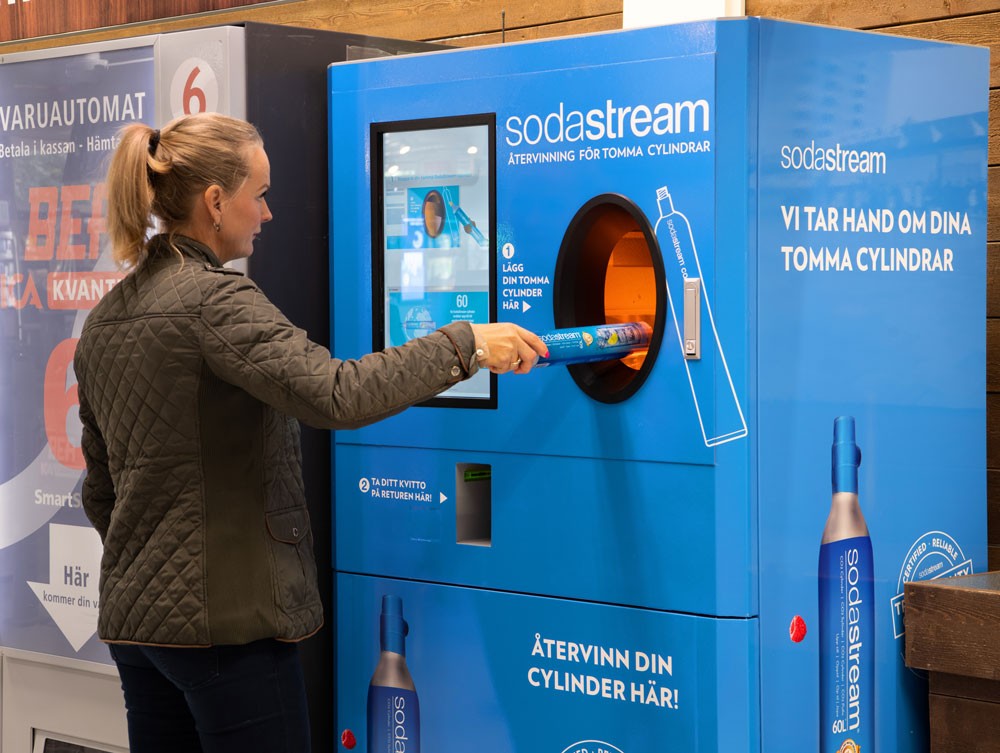
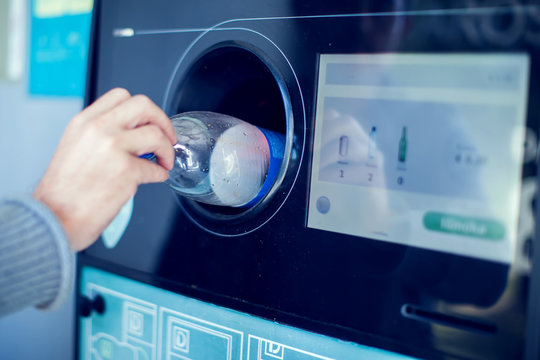
Reverse Vending Machines, also known as container return machines, are already used in several countries, such as Germany, Norway, and Sweden, to encourage recycling and sustainability in retail. In these countries, the technology has proven highly effective, delivering significant results in packaging recycling.
A practical example of Reverse Vending Machines in use is Germany’s Pfand system, which handles the recycling of PET bottles, aluminum cans, and glass. Under this system, consumers pay a deposit when they buy a beverage and get that amount back when they return the containers to the machines. Pfand has a return rate of around 98% for PET bottles and aluminum cans, which shows this technology’s potential to promote sustainability in retail.
Another example is the British supermarket chain Tesco, which ran a pilot project with Reverse Vending Machines in some of its stores in the UK.
The initiative offers consumers discount coupons in exchange for returned plastic packaging, encouraging recycling and reinforcing the brand’s image as environmentally responsible.
In Brazil, similar initiatives are starting to gain ground. One example is the company Triciclo, which created the Retorna Machine, a container return machine found at several locations in São Paulo. Users registered on the platform can deposit empty containers from products such as soft drinks, water, and beer, and earn points that can be redeemed for discounts on services and products or donated to social organizations.
These examples show how Reverse Vending Machines can be implemented in retail, helping reduce waste and pollution, improving the customer experience, and enabling companies to meet their ESG goals.
2. Digital Signage
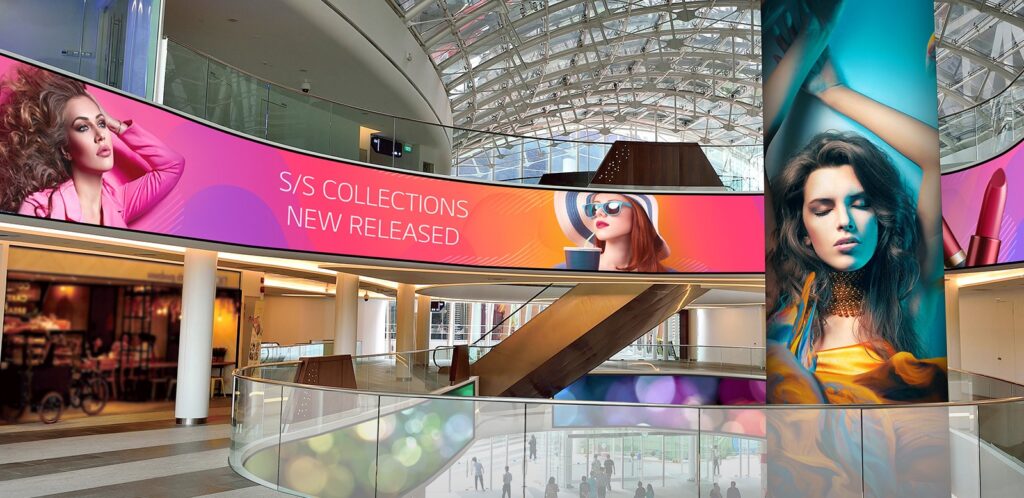
Digitizing visual communication through Digital Signage is a growing trend in retail, as it offers countless advantages over traditional printed communication. In addition to contributing to sustainability, Digital Signage delivers a better consumer experience and makes it easier to update and personalize the messages being displayed.
Digital Signage consists of digital screens, LED panels, or monitors that display information, promotions, videos, and other content relevant to the audience. The screens can be controlled remotely, allowing retailers to quickly update campaign, promotion, and pricing communications in real time. This avoids wasting paper and money on printing and disposing of physical materials.
A successful example of Digital Signage in retail is the fast food chain McDonald’s. The company adopted digital menu boards in its restaurants, replacing traditional paper or plastic panels.
With digital screens, McDonald’s can change menu content quickly and efficiently, adapting to consumer demand and market changes.
What’s more, the fast food chain uses Digital Signage to display promotional and informational messages, creating a more engaging and dynamic experience for customers.
McDonald’s rollout of Digital Signage demonstrates how digitizing visual communication can benefit both the retailer and the consumer.
So, adopting this technology helps reduce paper consumption and promote sustainability, while also optimizing communication and providing a more pleasant, modern experience for the public.
3. Touch LCD Strips
View this post on Instagram
Touch LCD shelf strips are an innovative technology solution that has been gaining ground in retail, delivering a more interactive and informative experience for customers while simplifying content management for retailers. These strips are touchscreens that can be installed on store shelves, displaying detailed product information, video tutorials, prices, promotions, and other relevant messages.
One successful example of touch LCD strips in retail is the French supermarket chain Carrefour. The company rolled out touch LCD strips in some of its stores as part of a pilot project to improve the customer experience and optimize content management at the point of sale.
With touch LCD strips, Carrefour customers can tap the screen to access detailed product information, such as origin, ingredients, nutrition facts, and usage tips.
The company also uses the screens to display promotions, generate discount coupons, and deliver personalized messages based on each customer’s profile.
For retailers, touch LCD strips make it easy to update prices and promotions in real time, eliminating the need to print and discard paper.
As a result, this helps cut costs and promote sustainability, while also providing a more enjoyable and modern shopping experience for consumers.
4. Projection mapping
Projection mapping on tables, store windows, or mannequins makes it possible to showcase different products and campaigns quickly and easily, reducing logistics, setup, and teardown costs.
One example is the brand ABYAT, which used Alice Wonders’ technology to present endless pattern combinations without taking up a lot of space or labor, while also saving time on product setup and teardown and other in-store logistics.
#BONUS TIP:
Use technology to promote your brand’s sustainability positioning
One example of how technology can be used to promote a brand’s sustainability positioning is Boutique Carapreta.
They created an Interactive Virtual Farm to showcase the meticulous process behind Carapreta beef, from genetic selection, nutrition planning, breeding, and slaughter of the animals to the processing and distribution of the products all the way to the end consumer.
At an in-store counter, visitors were invited to interact by turning the different faces of a cube, which displayed on screens, in an educational and playful way, each stage of the journey “From Farm To Table.”
A fun fact about the project is that all the bricks used in the wall cladding are made with clay from Brumadinho, a Brazilian municipality in Minas Gerais that was struck in 2019 by the collapse of a tailings dam, considered the second-largest industrial disaster of the century.
Conclusion
Adopting sustainable technologies in retail is essential to ensuring companies survive and succeed in a market that is increasingly competitive and aware of its environmental impact. Investing in solutions such as Reverse Vending Machines, Digital Signage, touch LCD strips, and projection mapping not only promotes sustainability but also delivers economic benefits and enhances brand image.
It is also essential to use technology to promote your brand’s sustainability positioning, as in the example of Boutique Carapreta, where the Interactive Virtual Farm showcased the brand’s sustainable beef production process in an interactive and educational way.
By aligning business strategy with sustainability, companies secure a more promising and responsible future.
Inscreva-se em nossa Newsletter
Receba no seu email todas as novidades do nosso blog sobre tecnologia e varejo, além de ficar por dentro do novos projetos Alice Wonders.