In today’s data-driven world, it is imperative for companies to collect strategic behavioral data at the Point of Sale (POS). To do this, we use what is known as Retail Analytics.
Understanding customers and their behavior is no longer a luxury, but a necessity.
With fierce competition in the market, understanding the nuances of customer behavior is what can set a successful company apart from one that fails to stand out.
Digital solutions at the POS
 An immersive 4D presentation, with wind, scent, and sound, where customers customize colors, styles, and even furniture for a virtual tour of the apartment. Beyond being a unique experience for the customer, it’s a powerful sales and data-generation tool for the real estate developer. See more by clicking here.
Thanks to the digital revolution, companies can now count on a range of solutions to help with data collection.
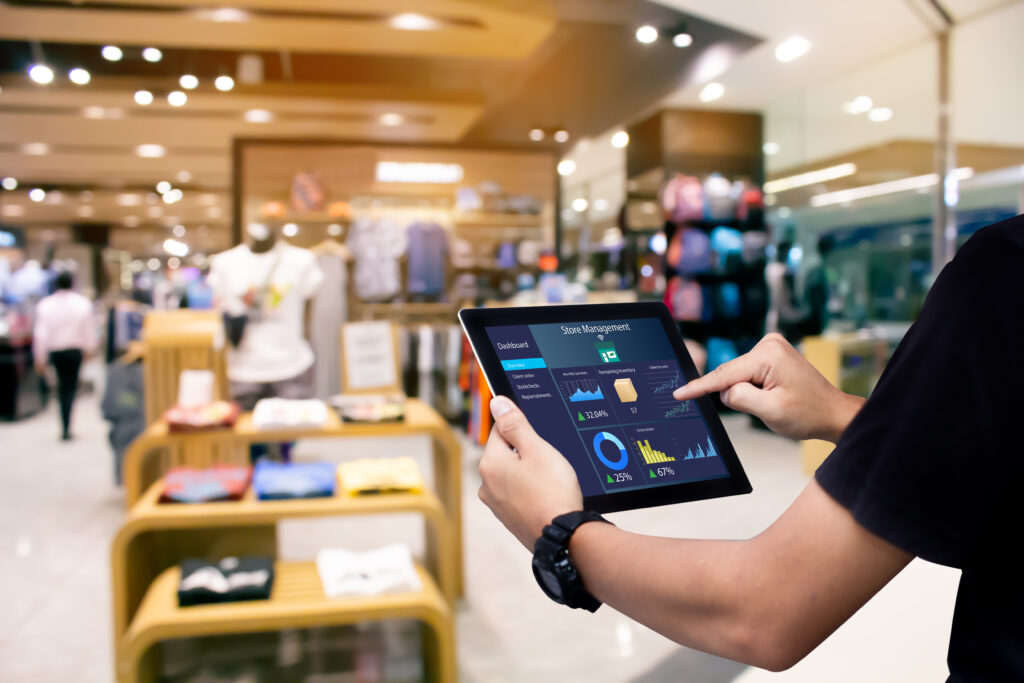
Sensors and tech-driven experiences, such as augmented and virtual reality, can be used to monitor and collect data on customer behavior at the POS.
6 Benefits of Retail Analytics at the POS
Let’s now explore some of the benefits that Retail Analytics brings to your business.
Understand consumer behavior
Collecting data at the POS allows retailers to better understand customers’ needs, preferences, and behaviors.
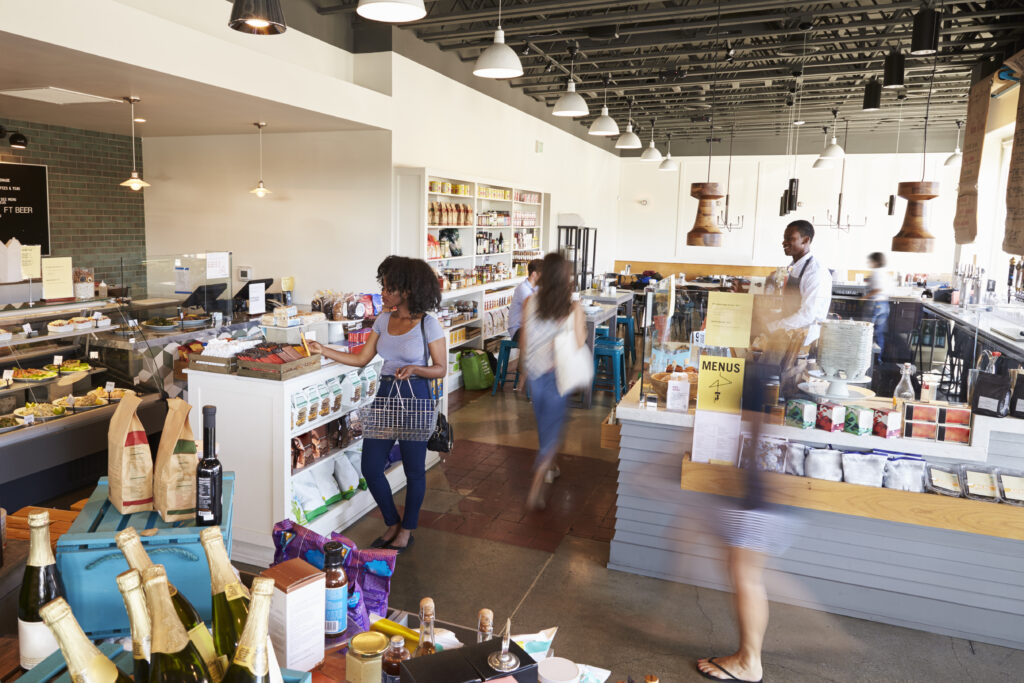
For example, a retailer can collect data on which products customers spend the most time examining, which sections of the store get the most visits, or even which days and times the store receives the most traffic.
This information can be extremely valuable.
If a particular product gets a lot of attention but isn’t converting into sales, that may point to a problem with the price or the way the product is being presented.
Or, if a section of the store is often overlooked, it may be necessary to rethink the store layout or the product mix offered in that area.
In addition, if customers visit the store more often on certain days and at certain times, you can adjust opening hours, staffing, and promotions for those peak periods.
So, by collecting and analyzing this behavioral data at the POS, retailers can create more effective marketing and sales strategies.
These are strategies that directly address customers’ needs and preferences. This, in turn, can lead to higher sales and greater customer satisfaction.
Identify market trends and opportunities

Data collected at the POS has the potential to provide a clear view of emerging trends and market opportunities.
For example, if a certain type of product is selling quickly, that may indicate a growing trend the company can capitalize on.
Imagine you’re a clothing retailer and you notice your high-waisted pants are flying off the shelves faster than you can restock them.
This may indicate a growing trend for this type of pants, suggesting that you should perhaps increase your inventory and maybe even expand the range of styles or colors available.
Or perhaps the data collected might show that a particular segment of your customers, say, women between 18 and 24, is growing. This could signal an opportunity to better align your product range and marketing to serve that market segment.
Likewise, behavioral data at the POS, which we call Retail Analytics, can also provide insights into which products or services aren’t doing well.
This information can allow retailers to reconsider their inventory, redirect marketing efforts, or even discontinue products that aren’t performing well.
So, retail analytics not only helps you better understand your customers, but also gives you the opportunity to identify emerging trends and opportunities.
This allows you to make strategic decisions that drive your business’s growth.
Personalize in-store experiences
With the data collected at the POS, shopping experiences can be personalized to each customer’s taste.
For example, a customer may frequently buy skincare products. By noticing this preference through the data, you can offer recommendations for complementary products, such as new moisturizers or serums that have just hit the market.
Another way to personalize is through tailored offers.
Let’s say the data shows that a specific customer tends to make larger purchases at the end of the month.
With this information, you can send this customer special offers or discount coupons during that specific period to encourage them to keep up this behavior.
In addition, this personalization can also extend to the brick-and-mortar store experience.
For example, Retail analytics may reveal that a customer prefers to buy neutral-colored clothing. Based on this, when they walk into the store, a sales associate could direct them to a section featuring a new collection of clothing in neutral tones.
So, by using the data collected at the POS to personalize the shopping experience, retailers can not only improve customer satisfaction, but also encourage loyalty and potentially increase sales.
Data-driven Visual Merchandising techniques
Understanding customer profiles and behavior allows retailers to create differentiated experiences through Visual Merchandising.
This involves how products are presented in the store, how the space is organized, and the visual communication used, all with the goal of attracting, engaging, and motivating customers to buy.
For example, data collected at the POS may indicate that customers tend to move to the right when they enter the store.
This information could be used to place top-performing products or new releases in that high-traffic area, increasing their visibility and the likelihood of a sale.
In addition, customer behavior data can reveal which types of product displays or shelf configurations are most appealing to customers.
For example, imagine the data shows that endcap displays drive more sales. You could choose to use those spaces to showcase special promotions or seasonal items.
Visual communication can also be tailored based on customer preferences.
If the data shows that a particular age group is more drawn to colorful, creative signage, you can implement that signage style to boost engagement and appeal for that demographic.
Improve operational efficiency
Retail Analytics can reveal important operational insights that can help increase store efficiency and productivity.
For example, store traffic data can show peak customer traffic times.
With this information in hand, you can make sure there’s enough staff available during those periods to meet demand and deliver excellent customer service.
Likewise, product sales data can help optimize inventory management.
If a specific item is selling quickly, the data can alert retailers to increase stock levels for that item, preventing lost sales due to stockouts.
In addition, POS data can also identify potential bottlenecks in the sales process.
For example, if the data shows that customers often abandon their purchases at checkout, this may point to a problem with the speed or efficiency of the payment process.
In that case, you can look for solutions to make checkout faster and easier, increasing customer satisfaction and reducing cart abandonment.
Smarter decision-making
Finally, having access to real-time information through POS data collection can be transformative for retailers’ decision-making process.
With data at hand, faster, more accurate, and better-informed decisions can be made, replacing uncertainty and guesswork with reliable strategies.
For example, real-time sales data may show that a certain product is selling quickly.
In response, a retailer could decide to restock that item immediately, avoiding a potential stockout that could lead to lost sales.
Similarly, if the data shows that a promotional campaign is underperforming, retailers can decide to adjust the campaign or even end it, avoiding wasting resources on a strategy that isn’t working.
In addition, real-time traffic information can help retailers quickly adjust staff allocation.
For example, if the data shows that the store is particularly busy, you can move more staff to the sales floor to ensure good customer service.
Meet Granometrics.io!
Alice Wonders’ Granometrics.io platform is a proprietary tool that uses multiple sensors to map the physical store and provide valuable insights for decision-making.
With it, you can get all the information you need to optimize your POS and improve your sales.
Granometrics.io Success Stories
 Intel store featuring an Alice Wonders project.
Intel uses Granometrics.io to assess:
- In-store traffic flow;
- Purchase intent by laptop model;
- Interaction time with each model;
- Peak hours, days of the week, and days of the month.
In a store serving a lower-income audience, we found that Gaming models were the most sought after.
At another chain, we identified an incredible 200% increase in traffic during Black Friday, which can serve as a benchmark to determine whether sales were proportional to purchase intent.
What about you, brand or retailer: do you really know your audience? And how is your store performing? Be sure to get in touch with us and schedule a Granometrics.io demo.
We’re here to help you enhance your POS and boost your sales.
Inscreva-se em nossa Newsletter
Receba no seu email todas as novidades do nosso blog sobre tecnologia e varejo, além de ficar por dentro do novos projetos Alice Wonders.