Brazilian stores are going through a transformation. Some say physical stores are dying, but in reality, they are breaking free from sameness. Today, consumers don’t leave home just to buy a product they could get with a single click. They are looking for experiences, connection, and reasons to be physically present with a brand.
Brands that still treat their stores merely as inventory spaces, packed with products on display and traditional purchasing processes, are losing ground. The secret of today’s retail lies in the combination of technology, design, and human connection.
With that in mind, we’ve rounded up 5 Brazilian stores from different segments that are reinventing the physical experience and creating new ways to connect with consumers. These examples show how innovation can turn the point of sale into a strategic differentiator for retail.
1. Amaro: a new store experience
Amaro revolutionized the logic of physical inventory by introducing the Guide Shop concept. Instead of focusing on product volume and clothing racks, its stores work as dynamic showrooms where consumers can touch the pieces, try on styles, and find the perfect fit with the help of style consultants.
Purchases are made digitally through kiosks or QR codes, while products are shipped directly from a distribution center to the customer’s home.
This strategy reduces the need for in-store storage, eliminates steps from the traditional shopping journey, and allows the brand to test new collections more quickly.
2. Nestlé: technology to transform the point of sale
In a project for Nestlé, the goal was to turn the consumer’s relationship with the products into an entertainment experience.
At the Chocotour Nestlé tourist attraction, Alice Wonders developed interactive digital experiences, custom self-service kiosks, and augmented reality filters.
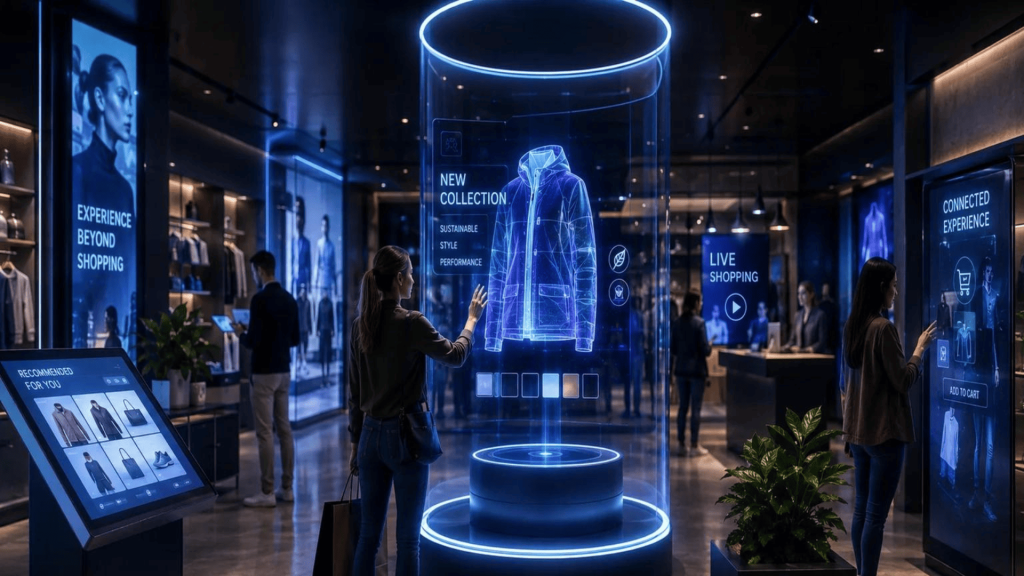
In traditional retail, innovation also reached the point of sale with screens and holographic displays installed on store shelves. The technology helps capture consumers’ attention right at the moment of purchase decision. Click here to learn more about the project!
3. Riachuelo: technology to streamline the journey
At its store in the heart of São Paulo, Riachuelo shows how technology can solve some of consumers’ biggest pain points inside a department store.
One of the major highlights is the smart fitting rooms. When customers step into the booth, interactive screens recognize the selected items through smart tags using RFID technology.
If customers need a different size or want to find an accessory to complete the look, they can request the item directly on the screen without leaving the fitting room.
The experience also features self-checkout stations and themed spaces with interactive elements, showing how technology can act as an enabler of the shopping journey.
4. Vans: when technology becomes invisible
For Vans, Alice Wonders’ approach was to show that technology applied to the point of sale can work as an “invisible finish,” enhancing the environment without stealing the spotlight from the product.
In the interactive showroom developed for the brand, screens and digital touchpoints were integrated into the fixtures and retail architecture.
Consumers can browse the full catalog, learn the story behind the sneaker models, and discover more about the collections in a seamless and intuitive way.
The experience combines Vans’ urban, authentic aesthetic with digital features that expand interaction inside the store. Click here to see the full case study!
5. O Boticário: immersive experiences in retail
O Boticário has also been exploring new possibilities to turn its stores into experiential spaces.
One of the highlights is the Immersive Tunnel at the O Boticário LAB flagship, a high-tech environment that envelops consumers with visual stimuli and lighting that responds to movement.
The brand also uses White Box technology, a realistic holography solution applied to the point of sale to bring campaigns to life and turn fragrance discovery into a three-dimensional experience.
The result is a more immersive, modern, and social media-shareable shopping journey. Click here to check out the details of this project!
What do these stores teach us about the future of retail?
These examples show that Brazilian stores don’t need to compete with digital. Quite the opposite: when technology, design, and strategy work together, the physical space can become a true destination for consumers.
The best experiences don’t use technology just to grab attention. They solve problems, streamline the journey, build connection, and make interactions with the brand more relevant.
It’s this combination that makes it possible to turn traditional stores into spaces that attract, engage, and convert.
More than selling products, these experiences show that the future of brick-and-mortar retail lies in the ability to create environments that offer something consumers can’t find on a screen.
Alice Wonders’ role in transforming retail
If the market’s biggest success stories teach one clear lesson, it’s this: the future of physical retail belongs to brands that know how to connect the best of the physical and digital worlds.
Alice Wonders brings together design, technology, and architecture to create interactive experiences that turn points of sale into destinations.
More than simply adding screens or tech features to a store, our goal is to use technology as a strategic tool to make every interaction more relevant.
Brazilian stores are changing — and brands that understand this transformation will have new opportunities to build connection, generate value, and transform the customer experience.
Want to reinvent the physical experience at your point of sale? Click here to schedule a conversation with our team!
Inscreva-se em nossa Newsletter
Receba no seu email todas as novidades do nosso blog sobre tecnologia e varejo, além de ficar por dentro do novos projetos Alice Wonders.
Thank you for subscribing.
Something went wrong.
Respeitamos sua privacidade e levamos a sério a sua proteção