It’s Time to Create a Sensory Experience for Your Brand! Comments Off on It’s Time to Create a Sensory Experience for Your Brand! 1492

experiência

Customer experience is on the rise, and technology has played a key role, especially in retail, real estate, and entertainment and event spaces.

This is mainly because the new generation is looking for much more than just buying a product or service: they want to live the full experience and, even more, they want to build a connection with the brand.

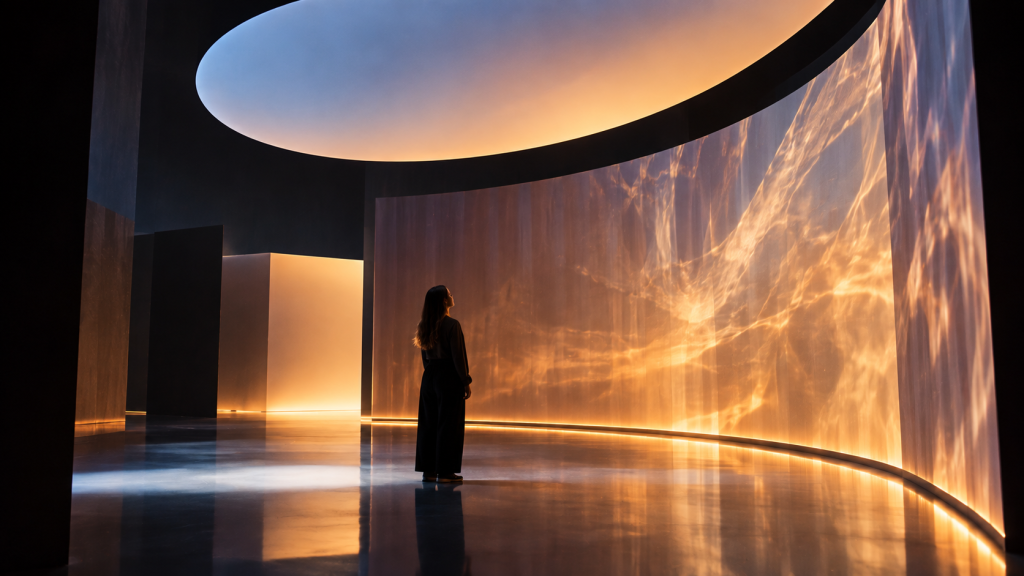
With that in mind, brands need to find new ways to delight consumers. And one great way to do that is through sensory experiences, which can deliver an immersion that often goes beyond a visual projection.

The power of sensory experiences

Neuroscience has shown that experiences involving multiple senses are more memorable and generate greater emotional engagement, which helps boost brand visibility and, as a result, purchase intent.

In fact, a survey by the consulting firm Mood Media reveals that 75% of consumers say they are more likely to stay in a place if they enjoy the music, the visuals, and the scent.

In physical spaces, where competition keeps growing, creating sensory immersion can be the key to attracting and retaining customers. And this can be done in a number of ways, such as:

  • 360° visual projections;
  • 3D sound;
  • A variety of scents;
  • Tactile effects;
  • Thermal effects.

This sensory approach can captivate audiences while also generating emotional engagement, which is essential to strengthening the bond between consumer and brand.

How to apply sensory experiences

As you can see, a sensory experience goes far beyond a well-designed visual setting. It involves a strategic combination of stimuli that engage the senses and create an emotional connection with the audience.

Lights, sounds, scents, textures, and even technological interactions are elements that can transform an ordinary space into an immersive and memorable environment. How about checking out a few success stories?

1. TeamLab Borderless: MORI Building DIGITAL ART MUSEUM

TeamLab Borderless, in Tokyo, is one of the greatest examples of how multisensory immersion can transform a physical space into a highly interactive environment.

The digital museum uses projections, synchronized music, and tactile elements to create a continuous flow of experiences, where visitors can interact with the environment in a unique way.

2. Disney’s Scent Marketing

Disney is a pioneer in applying sensory strategies to enrich the visitor experience.

In the company’s parks, the use of specific scents (such as the smell of popcorn and sweets along the main streets) is carefully planned to trigger fond memories and increase how long visitors stay.

The purpose of scent marketing is to create an environment where multisensory elements are designed to evoke specific emotions and create an unforgettable experience.

3. Lush – sensory store in Tokyo

Cosmetics brand Lush opened a concept store in Tokyo where products have no physical labels. Instead, customers use an augmented reality app to discover information about each item.

In addition, the store was designed to stimulate all the senses: dynamic lighting, enveloping scents, and ambient music create a uniquely immersive space.

4. Magic Room Senses

Alice Wonders developed the Magic Room Senses for AMY, which, in addition to showcasing a real estate development, creates complete immersion, evoking emotions and deep connections in visitors.

Through carefully planned sensory experiences, such as a gentle breeze, distinctive sounds, and immersive projections, customers feel and experience the lifestyle the development offers.

Conclusion

Sensory experiences are a natural evolution in the way brands and companies connect with their consumers. In a world saturated with information and visual stimuli, creating immersive experiences is an effective way to stand out, increase engagement, and strengthen the emotional bond with the audience.

Investing in sensory strategies not only improves brand perception but also directly influences purchase decisions and customer loyalty. For companies seeking innovation and differentiation, the question is no longer whether they should adopt immersive experiences, but how to start implementing them!

Inscreva-se em nossa Newsletter

Receba no seu email todas as novidades do nosso blog sobre tecnologia e varejo, além de ficar por dentro do novos projetos Alice Wonders.

Thank you for subscribing.

Something went wrong.

Previous ArticleNext Article

The Briefing That Kills a Great Experience 0 89

Briefing estratégico para desenvolvimento de experiências de marca

“We need a campaign.” “Let’s do an event.” “We need an activation.” “How about building an app?” Almost all of these requests share the same first step: the brief.

In day-to-day marketing, phrases like these tend to show up as the starting point for new projects. The problem is that, more often than not, they don’t present the challenge. They already present the answer.

And when the solution comes before the problem, creativity starts out with less room to explore.

That doesn’t mean a campaign, an event or an activation is a bad choice. The real question is whether it is, in fact, the best answer to what the company needs to transform. After all, it’s entirely possible to execute a solution perfectly and still solve the wrong problem.

Before the “what,” comes the “why”

An effective brief shouldn’t start with the deliverable. It should start with the context.

  • What’s happening?;
  • Why does it matter to the business?; 
  • Who is affected?;
  • What is that person going through?;
  • Is there a behavior or perception that needs to change?;
  • What has already been tried?;
  • And what don’t we know yet about this challenge?

These questions help turn a request into an opportunity for investigation.

“We need to create an activation to increase store traffic,” for example, already defines a big part of the path. But realizing that a significant number of people move through the space without engaging with a particular category opens up a far more interesting discussion: how can we make this journey more relevant?

An activation may still be the answer. But now it’s one possibility among many — not a decision made before the problem was understood.

A good brief opens up possibilities

There’s an important difference between giving direction and dictating the solution. A good brief needs to be clear about the challenge, the audience, the objectives, the context and the constraints. At the same time, it should leave room for the team to question assumptions and explore different paths.

It’s precisely this combination that can make the creative process more powerful.

When the brief says “do X to achieve Y,” the discussion tends to focus on how to do X as well as possible. When it says “we need to achieve Y because this is the scenario we’re facing,” the question becomes “what’s the best way to get there?”

It may seem like a small difference, but it can completely change the outcome.

The solution might lie in a physical experience, in content, technology, service, communication, environment, journey or a combination of different possibilities. The format stops being the starting point and becomes a consequence of the strategy.

So where does experience come in?

With whoever is on the other side.

A good experience doesn’t come only from what the brand wants to communicate or offer. It needs to take into account the context of the people who will live it. What do they expect? What could create friction? What’s relevant at that moment? What role does the brand play in that journey?

When these questions make it into the brief, the project stops being just about a deliverable and becomes about a transformation.

This perspective also helps avoid one of the most common mistakes in experience projects: creating something interesting for the company but not very relevant to people.

An idea can be beautiful, innovative and technically flawless. But if it doesn’t respond to a real need or doesn’t make sense in that context, it’s unlikely to be a good experience.

The brief doesn’t need to come with a ready-made idea

Perhaps this is the main shift in perspective: the brief isn’t there to say exactly what should be created. It’s there to create the conditions for the best idea to emerge.

That means spending more time understanding the problem before rushing to the solution. It means questioning requests, investigating behaviors, acknowledging constraints and leaving room for possibilities that weren’t on the radar yet.

In the end, the more clarity there is about the problem, the more freedom there is to think about the solution.

This is the mindset Alice Wonders brings to turning business challenges into experiences. Combining strategy, creativity and a people-centered approach, we help brands break away from ready-made solutions and find more relevant paths for what truly needs to be transformed.

Because a good experience may start with an idea. But a relevant experience starts with a good question.

Want to uncover new possibilities for one of your brand’s challenges? Talk to Alice Wonders.

Inscreva-se em nossa Newsletter

Receba no seu email todas as novidades do nosso blog sobre tecnologia e varejo, além de ficar por dentro do novos projetos Alice Wonders.

Thank you for subscribing.

Something went wrong.

Experience: The New Competitive Advantage 0 110

Experiência imersiva em espaço tecnológico como diferencial competitivo para marcas

For a long time, experience took a back seat when it came to competitive advantage. Many brands competed on what was easiest to measure: price, product, features, reach, and technology.

Today, those elements still matter. But they are less and less enough to guarantee differentiation.

The real battle is happening somewhere else: in the ability to create experiences that are relevant, Technology has become more accessible. Artificial intelligence has accelerated creation and personalization processes. Products, services, and features can be replicated faster than ever. And in a landscape of information overload, capturing someone’s attention is only the first challenge.

The real battle is happening somewhere else: in the ability to create experiences that are relevant, meaningful, and memorable.

When different brands can offer similar products, technologies, and features, the way a company makes people feel can become a competitive advantage that is hard to replicate.

That’s why, today, experience is no longer just an add-on. It now plays a strategic role in creating value for both brands and consumers.

The challenge of competitive advantage in retail

Consumers have never had so many options. They can compare prices in seconds, find alternatives for virtually any product, and access similar experiences across different brands.

Technology, which once served as a major competitive advantage, has also become more democratic.

An artificial intelligence tool, an interactive screen, or an immersive experience, for example, is no longer necessarily new in and of itself. The result is a landscape in which many brands can offer similar kinds of products, technology, or interaction.

Which raises an important question:

What makes a person choose, remember, and connect with a brand when so many others can offer something similar?

The answer lies in experience.

When we talk about brand experiences, it’s common to think of technology right away:

  • Projections;
  • Augmented reality;
  • Artificial intelligence;
  • Sensors;
  • Interactive screens;
  • Immersive environments.

All of these resources can transform the way a person interacts with a brand. But technology alone doesn’t create a relevant experience.

A screen can grab attention. A projection can surprise. An installation can generate shares.

But a truly powerful experience needs a purpose.

It must address a brand need and, above all, make sense to the people living that moment.

How do you turn experience into a competitive advantage?

Creating relevant experiences doesn’t simply mean adding more technology to touchpoints. It means starting with strategy.

That’s why we’ve put together some best practices for turning experience into a competitive advantage.

1. Understand what the brand wants to evoke

Before choosing a technology or designing an installation, you need to understand what perception the

Before choosing a technology or designing an installation, you need to understand what perception the brand wants to build.

Do you want to spark delight? Curiosity? Belonging? Discovery? Trust?

The desired emotion helps guide the entire experience and ensures that every element has a role within the journey.

2. Understand how people behave

An experience is only relevant when it speaks to the people on the other side.

That’s why understanding habits, expectations, needs, and behaviors is essential to creating interactions that make sense — rather than experiences that merely grab attention.

The better a brand knows its audience, the better it can build relevant, personalized experiences.

3. Use technology with purpose

Technology should solve a problem or amplify an idea.

It can make content more interactive, create new ways to participate, personalize a journey, or turn a space into a dynamic experience.

But there’s one key point: technology needs to serve a bigger narrative.

It’s this combination of strategy, creativity, and technology that turns a tech feature into a meaningful experience.

4. Create something people want to experience

The experience needs to invite participation.

The more the audience goes from being mere spectators to becoming part of the experience, the greater the potential for connecting with the brand.

The goal isn’t just to create something that’s seen, but something that’s lived, remembered, and shared.

5. Think beyond the moment

An experience doesn’t end when the person leaves the space.

It can live on in conversations, on social media, in photos, in memories, and in the way that person comes to see the brand.

That’s why experiences need to be designed as part of a journey — not as isolated activations.

This perspective expands the potential of experience as a competitive advantage, connecting the physical moment to the brand’s other touchpoints.

Experience as a competitive advantage

In an increasingly competitive market, simply offering something new may not be enough.

The real advantage lies in the ability to create something relevant for people.

Experience can turn a product into a story, a space into a point of connection, and an interaction into a memory.

And that takes more than technology. It takes understanding the audience, setting clear goals, and building a cohesive journey between brand, space, and people.

Recent research reinforces this shift. PwC points out that price and quality are increasingly becoming baseline requirements, while personalized, meaningful experiences are gaining importance in building value and loyalty.

That’s why thinking of experience as a competitive advantage doesn’t mean abandoning product, price, or technology. It means connecting those elements to something bigger: an experience with purpose.

Turn technology into experience with Alice Wonders

At Alice Wonders, we believe technology only makes sense when there’s a story to tell, a connection to create, and an experience to build.

That’s why we develop experiences that combine strategy, creativity, technology, and design to turn physical spaces into points of connection between brands and people.

From concept to execution, we create experiences designed to generate more than interaction: we want to create moments that spark emotions, build connections, and stay in people’s memories.

Because in a market where technology is becoming more and more accessible, the real competitive advantage lies in knowing what to do with it.

Is your brand ready to stop just being seen and start being experienced?

Get to know Alice Wonders and discover how to turn technology into experiences that make sense — and make people remember.

Inscreva-se em nossa Newsletter

Receba no seu email todas as novidades do nosso blog sobre tecnologia e varejo, além de ficar por dentro do novos projetos Alice Wonders.

Thank you for subscribing.

Something went wrong.

Most Popular Topics

Editor Picks

Send this to a friend