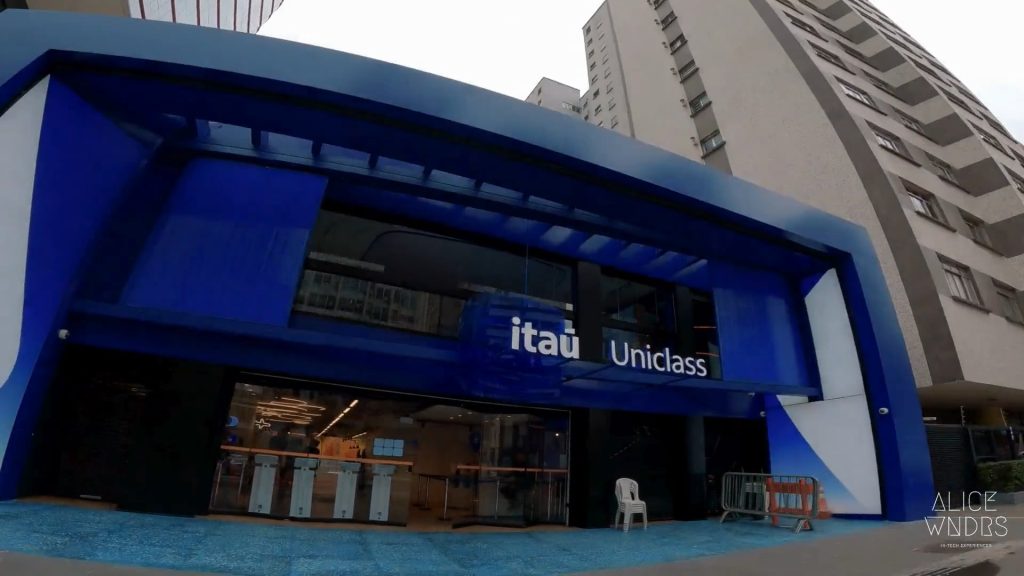
Have you heard of immersive experiences? The term might sound a little futuristic, but we promise it’s something you, as a retailer, will want to know about and will probably want to bring into your business.
What are immersive experiences, and why do they matter?
Imagine being able to offer your customers a shopping experience that goes beyond the ordinary. An experience that not only grabs their attention but is so unique and engaging that it inspires them to come back and share it with their friends.
That’s exactly what immersive experiences can do for your business. They have the power to turn a simple store visit into a memorable adventure.
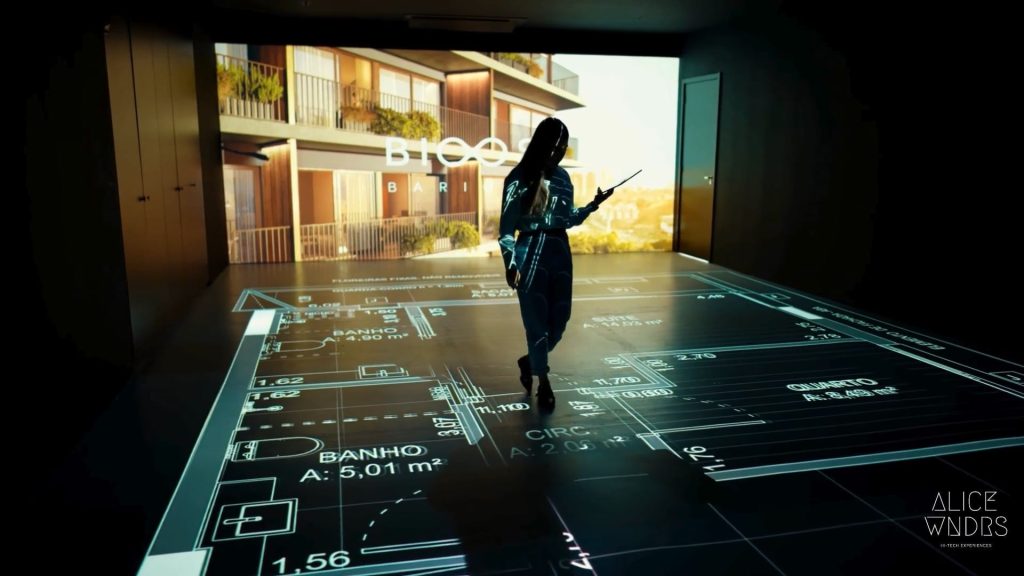
In real estate, for example, immersive experiences are revolutionizing the way properties are presented and sold. With the right technology, prospective buyers can “visit” multiple properties without going anywhere, saving time and resources.
See how powerful immersive experiences can be? They’re not just a passing trend; they’re a natural evolution of the way we interact with the world and do business.
So if you’re looking for innovative ways to boost your sales and delight your customers, don’t overlook the power of immersive experiences.
Let’s explore 4 ways to use Immersive Experiences with different technologies to promote your business:
1 – Projection Mapping in Immersive Rooms
One way is through projection mapping in immersive rooms. Let’s take a closer look.
Projection mapping, also known as video mapping, is a technology that can turn virtually any surface, no matter how irregular, into a dynamic video display.
This is done using specialized software that adjusts the projected image to fit the shape and texture of the surface perfectly. Amazing, right?
So how does Projection Mapping increase immersion?
Well, picture this: as you walk into a room with projection mapping, you’re suddenly transported to a completely transformed environment.
The room can morph into a forest, a futuristic city, or the bottom of the ocean. The only limit is your imagination! This level of transformation is impossible to achieve with traditional décor or even flat screens.
Projection mapping engages viewers on an emotional level, giving them the feeling of being transported to entirely different places. It’s like traveling without ever leaving the room.
What’s more, projection mapping isn’t just about physically transforming a space. It’s also a powerful tool for telling your brand’s story through storytelling.
You can project videos or images that tell your company’s story, highlight its values, or even showcase your products in an innovative and exciting way. This kind of immersive narrative builds a deeper connection between your customers and your brand, creating a lasting impact.
Success stories of Projection Mapping in Immersive Rooms
In the fashion industry, for example, major brands have been using projection mapping at runway shows to create stunning sets.
In the events industry, projection mapping has been used to transform conference rooms into engaging, inspiring environments.
Check out below our Immersive Room storytelling case that we built for Museu Ipiranga (for real estate developer Gafisa).
For the Ipiranga neighborhood in São Paulo, we created the feeling of having a museum to visit, building a high-tech, interactive museum inside the Square Ipiranga sales stand. It told the story of the neighborhood, its iconic residents, and the history of the city, culminating in the launch of the development that takes up an entire block on Avenida Nazaré. The result? 100% of the development sold in 3 months.
2 – Sensory Experiences in Immersive Rooms
Now that you know how incredibly well Projection Mapping can transport visitors somewhere else, let’s take it a step further. How about adding other senses to the journey? That’s where Sensory Rooms come in.
But what are Sensory Rooms?
Basically, they’re spaces designed to stimulate all of the audience’s senses. Beyond beautiful visuals, they can incorporate sounds, scents, and even tactile sensations to create a truly engaging experience.
The idea is to deliver a complete sensory experience and, in doing so, deepen the visitor’s immersion in the environment you’ve created. The potential for your business is huge. After all, how many places do you know that can offer an experience like that?
Benefits of using Sensory Rooms.
And the benefits of using Sensory Rooms go beyond the wow factor.
A customer immersed in a well-designed environment connects more with what you’re trying to communicate. That creates a lasting memory and drives loyalty.
Not to mention all the social media sharing that such an original space can generate!
Success stories using Sensory and Immersive Rooms.
There are plenty of success stories using Sensory Rooms. In the wine industry, for example, some wineries have been using sensory rooms to give visitors a complete experience. There, you can smell the earth, hear the sounds of the vineyard, and, of course, taste the wines. All in an environment that recreates the climate of the region where the wine is produced.
Here at Alice Wonders, we’ve picked out this video from our Sensory Immersive Room for Dior case.
For a captivating, multisensory immersion in the Dior space at Hotel Sephora, Alice Wonders developed projection mapping that brought to life the launch of J’adore Eau de Parfum, the brand’s newest fragrance. The Instagrammable space gained buzz and organic posts on the social media of celebrities such as Carolina Dieckmann, Preta Gil, Livia Aragão (and more!).
3 – Interactive Screens in Immersive Rooms
Moving further along our immersive journey, we come to Interactive Screens in immersive rooms. These tools are more than just a visual addition; they’re a form of communication, a bridge between you and your customer.
You may be wondering: what’s the point of Interactive Screens?
They let your visitors interact directly with the content in your immersive room. Not just looking, but also touching, moving, playing… The possibilities are endless!
Interactive Screens turn a passive experience into an active adventure, giving visitors the feeling that they’re part of what’s happening.
How Interactive and Immersive Screens can benefit your business.
Interactive Screens aren’t just a fun feature. They’re powerful tools for boosting customer engagement.
Interactivity keeps visitors in your immersive room longer, exploring the content and deepening their bond with your brand.
It also offers a unique opportunity to collect data on your customers’ preferences and tailor your offerings accordingly.
Success Stories with Interactive Screen Technology in Immersive Rooms.
But does it really work? The answer is yes! There are plenty of success stories with Interactive Screens.
One example is Coca-Cola’s “Touch the Music” campaign, where visitors could create their own music by interacting with a screen. Another is Nike’s pop-up store in New York, where customers could customize their sneakers on an interactive screen.
Below is a look at the interactive space we built for Vitacon, where we created a stock exchange trading desk to present their new business model: selling apartments through investment shares.
4 – 4D Environments and Immersive Rooms
Finally, we’ve reached the peak of the immersive experience: 4D Environments.
But what exactly are 4D Environments? Let’s think beyond traditional 3D — height, width, and depth. The fourth dimension here is time, and more specifically, the way we experience time through our senses.
In a 4D environment, we don’t just see and touch — we also smell scents and feel temperatures, all synchronized to create a completely holistic experience.
4D Environments have a profound impact on the customer experience. They take immersion to a whole new level, engaging every sense and creating intense sensory memories.
And since the human brain more easily remembers experiences that involve multiple senses, 4D Environments also help boost customer retention and loyalty.
Success Stories Using 4D Environment Technologies in Immersive Rooms.
Here’s our 4D Immersive Model Apartment case, which we created for MPD.
👉🏻 A 4D immersive presentation with wind, scent, and sound, where customers customize colors, styles, and even furniture for a virtual tour of the apartment.
👉🏻 The immersive room proved to be a valuable source of data and insights for the developer. With the 4D Model Apartment, MPD found that 75% of customers had a modern profile, compared to 25% with a classic profile. With that, the developer was able to restructure its marketing and business strategies.
Conclusion
Customers are always looking for something new, and they want more than just products or services — they’re looking for memorable experiences. That’s where immersive rooms stand out as a powerful tool for meeting those expectations.
Projection Mapping, Sensory Rooms, Interactive Screens, and 4D Environments are just a few of the ways you can use technology to completely transform your store or event space, engage your customers, and give them a truly unique and memorable experience.
So, are you ready to innovate, win over customers, build loyalty, and sell more with innovative, personalized physical experiences?
We at Alice Wonders are here to help you make it happen. Let’s create amazing experiences together that will leave your customers delighted and eager to buy and come back!
Frequently Asked Questions
What are immersive rooms? Immersive rooms are spaces that use a variety of technologies, such as projection mapping, interactive screens, and 4D environments, to create engaging and memorable experiences for customers.
What are the benefits of immersive rooms for my business? Immersive rooms help increase customer immersion and engagement, delivering a unique shopping experience that can boost customer retention and loyalty.
What are the different types of technologies used in immersive rooms? Some of the most common technologies include Projection Mapping, Sensory Rooms, Interactive Screens, and 4D Environments. Each one offers different ways to engage and delight customers.
How can I implement immersive rooms in my business? Implementing immersive rooms requires careful planning to choose the right technologies for your business and create experiences that align with your brand and goals. Alice Wonders can help you through the entire process, from planning to implementation.
Are immersive rooms a passing trend? No, immersive rooms are a growing trend, and with the constant advancement of technology, they’re only going to become more common and more sophisticated. Companies that adopt this technology are positioning themselves at the forefront of retail and customer experience.
Inscreva-se em nossa Newsletter
Receba no seu email todas as novidades do nosso blog sobre tecnologia e varejo, além de ficar por dentro do novos projetos Alice Wonders.
Thank you for subscribing.
Something went wrong.
Respeitamos sua privacidade e levamos a sério a sua proteção