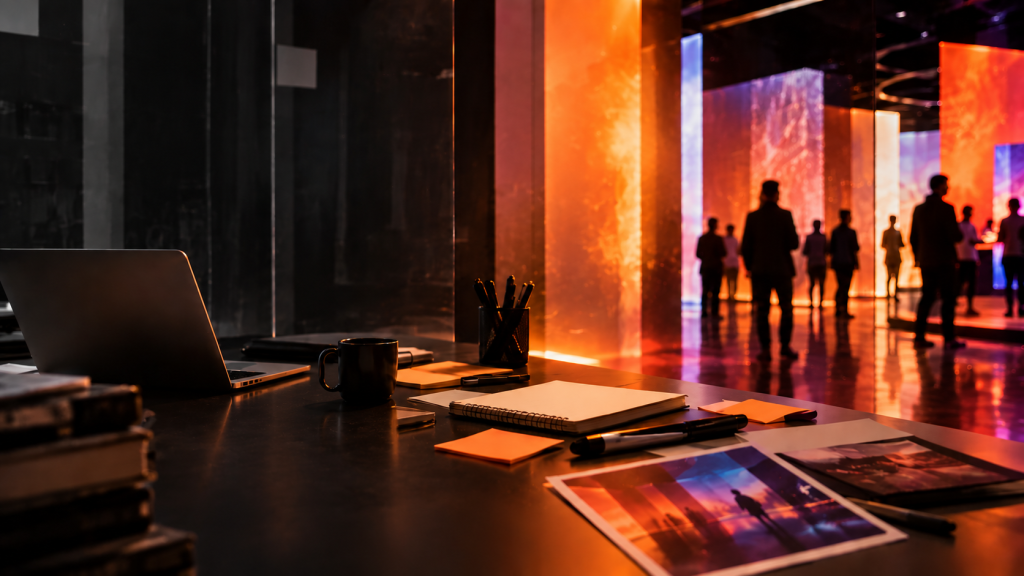
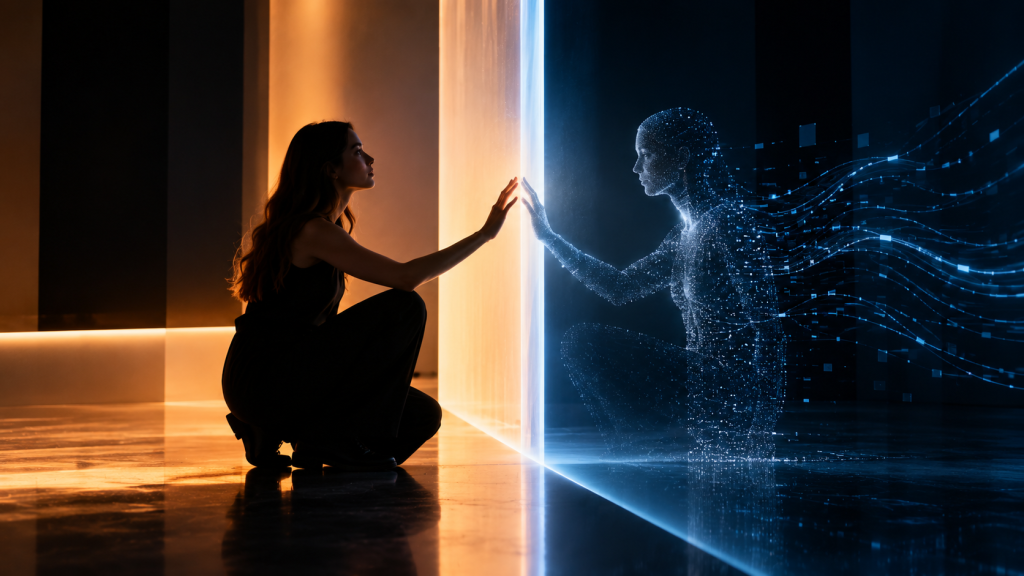
Brand communication has undergone a significant transformation over the past few decades. In this landscape, the concept of space as media emerges as an essential strategy for turning the physical environment into an active channel for communication and experience.
The overload of digital stimuli and the ease of comparing products have caused functional differentiators to lose their prominence. In this context, a new logic takes hold: communicating isn’t enough; you have to make the consumer feel.
It’s precisely within this shift that the concept of space as media gains momentum. The physical environment as a media space is no longer just a place for operations or sales. It becomes an active communication channel, capable of conveying narratives, values and experiences in an immersive way.
More than occupying a space, brands are beginning to communicate through it. Every detail, from architecture to customer service, becomes part of a larger message. And, often, that message is absorbed before any rational interaction even takes place.
With that in mind, today we’ll take a deep dive not only into the concept of space as media, but also into the operational and conceptual strategies you can put into practice to elevate your end customer’s experience and consumption.
Space as media: what it is and how it works in retail
Traditionally, physical spaces were designed with a functional focus: selling, serving and operating. However, when we talk about space as media, we’re referring to environments intentionally designed to communicate.
The difference between a functional space and a communicative space lies in intention. While the former meets a practical need, the latter conveys meaning. It expresses positioning, reinforces values and builds brand perception continuously and quietly.
In this sense, the environment also becomes a powerful communication channel, as relevant as social media or advertising campaigns, because it can directly shape how the brand is perceived.
This shift is the result of a convergence of different disciplines: branding, architecture, design and experience. The space is no longer just a physical project; it becomes a strategic extension of the brand.
This is where the concept of brand experience in the physical environment comes in: the space works as a sensory interface between brand and consumer. Before any verbal message, consumers are already interpreting signals that come from subtle details in the space, such as lighting, layout, sounds, materials and scents.
This is where sensory branding becomes essential. Communication doesn’t happen only through what is said, but through what is felt. And, often, this emotional perception precedes — and influences — any rational decision.
Space as media: why the physical environment has become a strategic channel
In a market and a world where everything happens in the digital realm, thinking of the physical environment as an influential channel in customer decision-making and consumption may seem somewhat old-fashioned. However, many factors support and prove the power and strong influence of this innovation. Take a look:
The attention crisis and digital fatigue
We live in an era of overexposure. Notifications, ads, content and stimuli all compete for the consumer’s attention at the same time. As a result, engagement is dropping and resistance to traditional communication formats is growing.
On the other hand, in-person experiences have been gaining more and more relevance. That’s because they offer something digital often can’t replicate: immersion, presence, meaningful exchanges and sensory memory.
In this scenario, the physical environment as a marketing strategy emerges as a way to win back consumer attention in a deeper, more meaningful way, letting people disconnect from the online world for a moment and live a real, physical, present experience.
The search for authenticity and real connection
Today’s consumers are more critical and more aware. They look for consistency between message and practice, between what a brand says and what it delivers. The physical space plays a fundamental role in this process precisely because it’s what materializes the brand.
In other words, the physical space is the medium that makes tangible everything that often exists only in the brand’s symbolic realm. It’s the channel through which ideas literally gain the space to come to life and present themselves to the public, moving off the page and out of the imagination.
An incoherent space and narrative can create noise and disconnection with your audience. A well-built environment, on the other hand, conveys credibility, proving to customers that what they see and consume online also exists in real life — and sometimes it’s even better.
The rise of the experience economy
Talking about experiences in physical spaces also means talking about numbers and, consequently, money. That’s because, like everything else in the world after the arrival of technology, the logic of consumption has changed too. Today, more than products, people are looking for experiences.
This transformation has fueled experience design in retail, which now considers not only the shopping journey but the customer’s entire time spent in the physical space, ensuring they find not just a good product, but a great experience.
Seen this way, the physical environment is no longer just a point of sale; it becomes a stage for experiences, where the brand comes to life in a complete, engaging and memorable way for those who discover it.
Space as media: how environments communicate brand value
There are many strategies and ways to create, or even adapt, a space as media. But contrary to what many might think, it doesn’t have to be slow or very expensive. On the contrary, there are highly accessible and practical ways to transform your physical space and offer customers a unique experience. Take a look:
Sensory elements as language
Every space communicates, whether physical or not, and even when there’s no clear intention behind it. The difference lies in using that communication strategically, understanding what you already have, what’s within your reach and what can serve the message you want to convey.
Elements that may be underestimated but contribute a great deal to this process include the lighting, sound, scent, texture and temperature of the physical environment, which act as codes for the human brain to read. All of these stimuli influence mood, perceived value and consumer behavior within the physical space.
Sensory branding organizes these elements to create an atmosphere consistent with the brand’s identity. A store can be welcoming, sophisticated, energetic or minimalist — and this is perceived before any direct interaction even happens.
Spatial narrative (physical storytelling)
Just as good content created and published in the digital space has a beginning, middle, and end, building an entire experiential narrative for the user, a physical space can also tell a story live and in full color.
Investing in a good store layout, a well-planned traffic flow, and an intentional arrangement of elements creates a well-guided journey for the customer. Each area can represent a chapter, for example, leading the visitor through a planned experience.
This kind of construction turns the space into a physical script, where consumers don’t just observe but take part in the narrative, stepping out from behind the screen as mere spectators and joining the journey as the main character of the story.
Design as positioning
And of course, we couldn’t leave out design, one of the most powerful forms of nonverbal communication. Even outside the online environment, it continues to wield enormous influence over the consumer journey and the creation of experiences.
Strategic choices of visual details such as colors, materials, textures, and shapes carry important meaning for the message and how it’s perceived. A minimalist environment can convey sophistication and focus, while a more vibrant space can communicate creativity and energy.
In the context of retail experience design, these decisions aren’t just aesthetic — they’re strategic. They help position the brand clearly and consistently, ensuring that the entire narrative and value proposition are coherent down to the smallest detail, including those that are never put into words.
Space as media: when the physical environment gains digital scale
One of the greatest strengths of space as media lies in its ability to go beyond the physical. Well-designed environments become naturally shareable — whether through photos, videos, or word-of-mouth accounts, the audience becomes a distribution channel.
This shift turns the user into media. Spontaneously generated content extends the reach of the experience and strengthens brand perception. That’s why spaces are increasingly designed to be “photogenic” or “Instagrammable” — not superficially, but as part of an integrated communication strategy.
Although physical space has geographic limitations, its impact doesn’t have to be confined to the location. When integrated with digital, it gains scale. In-person experiences can generate content, engagement, and buzz far beyond those who were physically there.
It’s in this context that traditional retail is evolving into more advanced models, such as so-called Brand Ship Stores. Unlike the traditional flagship, the Brand Ship Store isn’t just a showcase for the brand — it’s its most complete ecosystem. It works as a hub that brings together experience, content, services, community, and technology. Its main pillars include:
- Immersive experience: environments that translate the brand’s universe in a sensory way;
- Living content: ongoing programming, events, and activations;
- Value-added services: spaces that go beyond sales (consultations, personalization, workshops);
- Community: building an ongoing bond with the audience;
- Technology integration: a seamless connection between physical and digital.
This model expands the role of space as a key part of the whole machine, turning it into a strategic branding and relationship asset with the potential to build deep, lasting connections with the audience.
The future of communication runs through space
The trend is clear: the boundaries between physical and digital are becoming increasingly fluid. The communication of the future won’t be centered on a single channel, but on the integration of multiple touchpoints.
In this scenario, physical space takes on a new leading role — not as a substitute for digital, but as an essential complement. Environments are set to become more immersive, tech-driven, and personalized.
Tools such as augmented reality, interactivity, and data intelligence should further expand the potential of the physical environment as a marketing strategy. But above all, the differentiator will remain the ability to create connection.
The brands that matter in the future will be those that understand that every touchpoint communicates, whatever the channel, and that space is one of the most powerful ways to turn messaging into experience.
Inscreva-se em nossa Newsletter
Receba no seu email todas as novidades do nosso blog sobre tecnologia e varejo, além de ficar por dentro do novos projetos Alice Wonders.
Thank you for subscribing.
Something went wrong.
Respeitamos sua privacidade e levamos a sério a sua proteção