



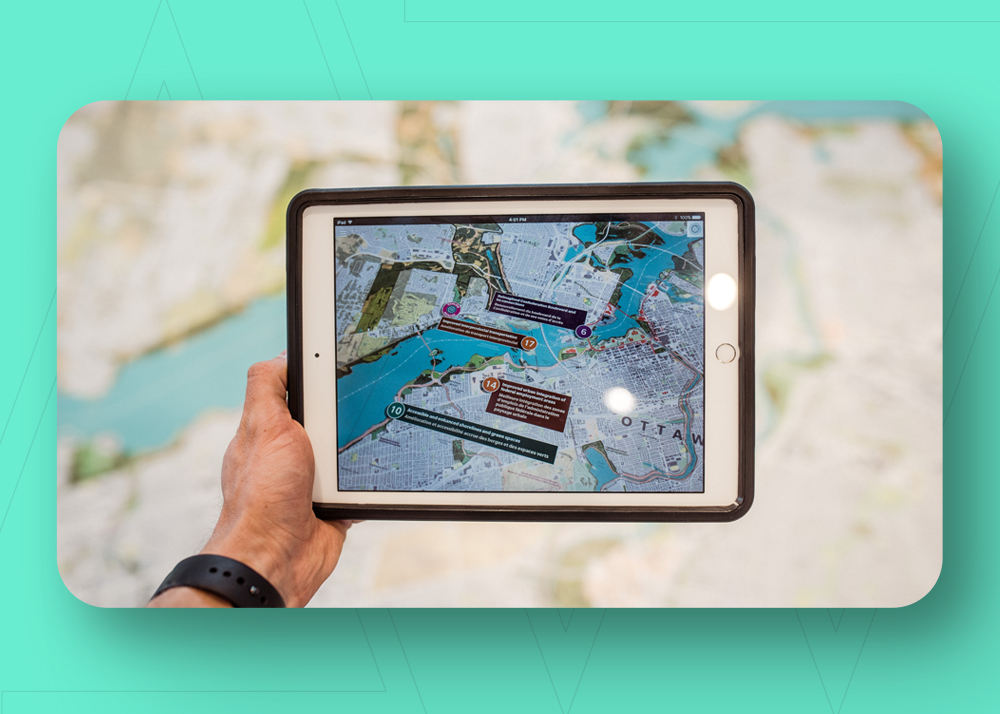
How Augmented Reality Can Solve Business Problems Comments Off on How Augmented Reality Can Solve Business Problems 5627

Realidade aumentada

As digital transformation advances in retail, the search for new technologies that bring people and brands closer together keeps growing. Augmented Reality is one of the tools that take the consumer experience to a whole new level.

How can you tell whether Augmented Reality can help your business and whether it’s the best solution for your challenges? We’ll show you different ways to use this technology, with examples of brands that have turned Augmented Reality into a great marketing strategy. Keep reading to learn more.

How Augmented Reality works and how it’s applied

Augmented Reality emerged to “merge” the real and the digital. Integrating these two spaces makes it possible to create interaction with users, allowing them to engage more closely with the product through screens (smartphones, tablets, TVs).

The technology works by processing data integrated through a network of software, cameras and other information conveyed through text, icons and even sounds. AR can be accessed through an app that uses the phone’s camera to generate specific content and displays the enhanced digital image on the device’s screen.

The difference between Augmented Reality and Virtual Reality

Many people confuse AR with Virtual Reality, but they’re different things. While Augmented Reality promotes interaction between the real and the digital through a screen, Virtual Reality is a 360º immersion into the digital world, which can be experienced through VR headsets or a smartphone.

Virtual Reality vs Augmented Reality
On the left, an example of Virtual Reality, with a person wearing a VR headset immersed in another reality. On the right, an example of Augmented Reality, with the game Pokémon Go, which became a worldwide craze.

With Virtual Reality, you’re transported to another universe, entirely digital, as if you weren’t present in your own surroundings. That’s different from what AR offers, which creates interaction between the two environments.

Examples of Augmented Reality in our everyday lives

Although it may seem like something new, or is even presented as a futuristic technology, Augmented Reality has been around for quite some time. For example, back in the ’90s, some fighter jet models displayed objects within the pilot’s field of view on a screen, identifying some of them as potential targets. Below, we’ve listed different examples of how Augmented Reality technology is used to create content. Check them out:

Gamification

The most classic example is the game Pokémon Go (as mentioned above). The smartphone game became a huge craze when it launched, scattering the cartoon’s creatures all over cities. People head out into the streets to hunt these creatures, pointing their phone cameras and interacting through the screen.

In a similar format, the Jurassic Park film franchise created the AR game Jurassic World: Alive to promote the release of the sixth movie, “Jurassic World: Fallen Kingdom.”

Lego® has an amazing line of Augmented Reality games, Hidden Side, so kids (and adults too, of course!) can have fun with the real and the digital at the same time.

Instagram Stories, Snapchat and TikTok filters

Who hasn’t had fun with social media filters? They’re nothing more than Augmented Reality used for pure entertainment. Brands that know how to take advantage of the filter boom and build engagement with their followers on social media get ahead in reach and brand awareness. A great branding opportunity!

Real Estate

Alice Wonders created the Augmented Reality app for the Athos Paraíso development by the builder Trisul. Through the app, people can virtually tour the rooms of the full-scale model apartment, as well as the building’s common areas, all without leaving the comfort of their homes. It’s a great opportunity and solution for the real estate market, especially now, in times of prevention and social distancing.

Home and Decor

Imagine you want to paint the walls of your home but can’t decide on the colors. The paint brand Coral has an app that uses Augmented Reality to test every color in its catalog in your home. Just choose the paint shade and point your phone’s camera at the wall, and the simulation appears on your smartphone screen.

Another example of AR for home decor is the Ikea Place app from the furniture and home accessories retailer. Created in partnership with Apple and launched in 2017, the app lets users point their phone’s camera at the desired space and virtually see how furniture would look inside their homes.

These are just a few examples of how to use Augmented Reality as a marketing solution: more sales opportunities, interaction with the right audience, greater promotional reach, product launches and much more!

Use the brand cases we’ve mentioned in this article to draw insights that can help your business. And count on the expertise of Alice Wonders to bring your projects to life! Get in touch with us and request a quote today!

Inscreva-se em nossa Newsletter

Receba no seu email todas as novidades do nosso blog sobre tecnologia e varejo, além de ficar por dentro do novos projetos Alice Wonders.

Thank you for subscribing.

Something went wrong.

Previous ArticleNext Article

Innovative Retail Experiences: Augmented Reality at the POS Comments Off on Innovative Retail Experiences: Augmented Reality at the POS 2891

Innovative Retail Experiences: Augmented Reality at the POS

If you’re a retailer looking for innovation, we’ve got good news for you: Augmented Reality at the POS is here to transform your business into a space of innovative experiences and efficiency.

Here’s what we’ll explore:

  • Benefits of Augmented Reality at the POS – Learn how AR can take the customer experience to a whole new level and, as a result, boost your sales.
  • Augmented Reality Use Cases in Retail – Discover practical examples of how to implement AR in your store.
  • Challenges and Solutions – Get to know the obstacles you may face and how to overcome them efficiently.

Get ready to transform your point of sale and captivate your customers like never before!

What Is Augmented Reality?

Have you ever seen those social media filters that add bunny ears or sunglasses to your photo in real time? That’s a simple but effective example of Augmented Reality.

Augmented Reality (AR) is a technology that overlays digital information — such as images, videos, and sounds — onto the real world through a device, whether it’s a smartphone, a tablet, or special glasses.

This means that with AR, your customers can use their own smartphones to view additional information about a product, see reviews from other shoppers, or even visualize how a piece of furniture or an appliance would look in their home. And all of this happens while they’re physically in your store.

The magic of Augmented Reality lies in its ability to create a hybrid shopping experience that combines the best of the online and offline worlds.

The result is a more interactive, informative, and engaging sales environment.

Augmented Reality at the POS

Augmented Reality in Retail

Bringing Augmented Reality into your store represents a significant leap forward, not only in the way you sell, but also in the way customers shop.

Product Try-Ons

With Augmented Reality, trying on products reaches a whole new level. If you run a clothing store, your customers can “try on” different styles and sizes without having to deal with the fitting room. The same goes for eyewear, jewelry, and even sneakers.

All the customer has to do is point their smartphone at the item they want and see it virtually projected onto their own image.

Personalized Shopping

Augmented Reality enables a highly personalized shopping experience. Based on the customer’s interactions and choices, you can provide product recommendations, show related items, or even create a unique virtual store environment for each visitor.

Wayfinding and Information

Let he who has never gotten lost in a big store cast the first stone! With Augmented Reality, your customers can easily find what they’re looking for.

By pointing their smartphone at an aisle, they can see digital cues about the products in front of them, saving time and boosting customer satisfaction

Engagement and Gamification

Augmented Reality technology offers a range of opportunities to make shopping more interactive and fun.

You can create digital treasure hunts, quizzes, or other games that encourage customers to explore more of the store and, as a result, discover more of your products.

Watch the video of an Augmented Reality activation Alice Wonders created — packed with technology, fun, and engagement — to showcase all the technology available in modern agriculture:

Customer Behavior Analytics

With Augmented Reality, you can collect valuable data on how customers interact with products and the store environment. This data can be used to improve layout, inventory, and even marketing strategies.

Benefits of Augmented Reality at the POS

  • Higher Sales and Average Order Value

When you offer a more engaging and informative shopping experience, customers are more likely to spend more. Augmented Reality lets shoppers visualize how a product will fit into their lives before they even make a purchase, building confidence and encouraging higher-value sales.

  • Fewer Returns

One of the biggest challenges in retail is the high rate of returns. With Augmented Reality, customers get a clearer, more accurate picture of what they’re buying, which minimizes the chances of dissatisfaction and, consequently, of returns.

  • Competitive Differentiation

In a saturated market, every edge counts. Implementing Augmented Reality at your POS not only improves the customer experience but also positions your brand as innovative and in tune with tech trends.

  • Better Customer Experience

Augmented Reality’s power to deliver detailed information and realistic visualizations makes the buying process much easier and more enjoyable for the customer. On top of that, this technology can eliminate many of the uncertainties customers have when shopping, resulting in a more positive overall experience.

  • Store Space Optimization

Augmented Reality lets you make the most of your store’s physical space. How? By using Augmented Reality features, you can display a virtually unlimited inventory, which is especially useful if your store is short on space.

  • Employee Training

That’s right, Augmented Reality doesn’t just benefit customers. It’s also a valuable tool for training your team. Customer service scenarios, for example, can be simulated to prepare your employees for a wide variety of situations.

Conclusion

There’s no doubt that Augmented Reality is more than just a trend; it’s the future of retail.

By leveraging Augmented Reality at your Point of Sale, you’re taking a significant step toward a world of interactive possibilities, more effective sales, and happier customers.

So, what are you waiting for? The time to act is now.

Frequently Asked Questions

What is Augmented Reality at the Point of Sale (POS)? Augmented Reality at the Point of Sale is a technology that overlays digital information, such as images and data, onto the real world through mobile devices or special glasses. It gives customers a more interactive and informative shopping experience.

What are the benefits of Augmented Reality at the POS? The benefits are numerous and include increased sales, competitive differentiation, a better customer experience, optimized store space, and the potential for more effective employee training.

How can I implement Augmented Reality in my store? Implementation can range from simple mobile apps to more complex systems that use Augmented Reality glasses. The first step is to understand your specific needs and goals, then consult with specialized professionals to choose the best approach for your business.

Is Augmented Reality expensive to implement? Costs can vary, but thanks to technological advances, there are options for businesses of all sizes and budgets. The key is to start with a pilot project and scale up as you see the benefits and return on investment.

Is Augmented Reality just a fad, or is it here to stay? With continuous improvements in the technology and clear proof of value across many industries, Augmented Reality is an innovation that’s here to stay. Its power to engage customers in new and meaningful ways makes it a valuable tool for any retailer striving for operational excellence.

Inscreva-se em nossa Newsletter

Receba no seu email todas as novidades do nosso blog sobre tecnologia e varejo, além de ficar por dentro do novos projetos Alice Wonders.

Thank you for subscribing.

Something went wrong.

Sensory Rooms: Transforming Experiences at the Point of Sale (POS) Comments Off on Sensory Rooms: Transforming Experiences at the Point of Sale (POS) 1711

Sala imersiva Dior

Today we’re going to talk about an amazing tool that can completely transform your customers’ shopping experience: sensory rooms for points of sale.

A New Concept in Shopping Experience

You’re always looking for ways to stand out from the sea of competition in retail, right? One way to do that is by offering personalized, engaging experiences to your customers, and this is where sensory rooms come into play.

Sensory rooms are spaces designed to draw customers into an immersive experience, activating all of their senses: sight, hearing, touch, smell, and taste.

All five senses come into play, making the shopping experience truly memorable. Let’s look at some examples of how to use each sense:

Sight

You can use sensory rooms with lighting, colors, and visual effects to create a specific atmosphere.

Imagine, for example, that you own a furniture store. How about a sensory room that simulates different types of daytime and nighttime lighting? That way, your customers can see how the furniture looks under various lighting conditions.

  • Tok&Stok, a leading name in furniture and home decor, uses the visual experience in its stores so customers can picture themselves using the furniture in their own homes. Settings are put together with the store’s products, simulating living rooms, kitchens, bedrooms, offices, and more. The lighting is designed to highlight the products and create a welcoming atmosphere.

Hearing

Music or other sounds can be used to create a relaxing, welcoming environment.

For example, if you own a camping gear store, nature sounds, like birdsong or rain falling on a tent, can enhance your customers’ sensory experience and make them feel more connected to the camping environment.

Centro Nacional Store
Livraria Cultura is an example of a company that uses the auditory experience to create a more pleasant environment. Its stores usually have a soft soundtrack playing in the background, creating a relaxing environment that invites customers to spend more time in the store.

Touch

You can create sensory rooms that involve customers’ sense of touch.

If you own a clothing store, how about offering different fabrics and textures for customers to touch? It’s an amazing way for them to connect with your products.

  • Natura, the well-known cosmetics brand, lets customers try many of its products in its brick-and-mortar stores. They can feel the texture of creams, lotions, and makeup by applying them directly to their skin. This helps create a deeper connection with the products and allows customers to choose the items that best meet their needs and preferences.

Smell

Smell is a powerful sense, often underestimated when it comes to creating shopping experiences.

However, you can use it to create sensations and environments that match your products. For example:

  • Some stores, like coffee shops, already use the smell of coffee to create a more welcoming environment.
  • Imagine walking into a clothing store and smelling freshly washed fabrics. That would definitely improve the shopping experience.
  • Pão de Açúcar creates an olfactory experience through the aroma of breads and cakes baking in its in-store bakery. When customers walk into the store, they’re enveloped by these delicious smells, which creates a welcoming atmosphere and encourages purchases from the bakery.

A perfect example of a Sensory Room is the Dior activation at Hotel Sephora, developed by Alice Wonders. For a captivating, multisensory immersion in the brand’s exclusive space, we created projection mapping that brought to life the launch of J’adore Eau de Parfum, the brand’s newest fragrance. Check it out:

Taste

Last, but certainly not least, we have taste.

In some stores, especially those that sell food or beverages, you can offer tastings to customers.

  • Pão de Açúcar combines the sensory experience of smell with taste, also offering tastings of wines, cheeses, breads, and other products in its stores. This not only lets customers try before they buy, but also creates a more engaging and enjoyable shopping experience.
  • Another company that embraces this practice is Cacau Show, a chain of chocolate stores, which often offers samples of its products, letting customers enjoy the flavor before deciding to buy.

The Impact of Sensory Rooms at the POS

Now that we’ve talked about how to engage and stimulate each of your customers’ 5 senses at the POS, how about we look at the benefits of bringing it all together in Sensory Rooms for your brand?

The main goal of a sensory room at a point of sale is to create a unique and memorable experience for the customer.

On top of that, you not only set your store apart from the competition, but also encourage customers to come back. It’s a win-win strategy!

Here are some of the many benefits of creating sensory experiences in your store:

Benefits of the sensory experience for brands

The sensory experience helps brands stand out from the competition, increase the perceived value of their products, and create an emotional connection with customers.

Creating an Emotional Connection

When we engage all five senses in a shopping experience, we’re going beyond the simple act of selling a product. We’re creating an emotional connection with the customer.

We know that strong emotions are tied to our most lasting memories, so by providing a memorable, emotionally charged experience, we’re fostering customer loyalty and making sure they remember our brand in the future.

Market Differentiation

In today’s competitive retail world, it’s vital for your brand to stand out.

Sensory rooms can provide a unique advantage, setting your brand apart from competitors. Offering an immersive, multisensory experience is a powerful way to stand out and create a unique identity for your brand.

Added Value

The sensory experience adds value to the customer’s purchase, making it more than a simple transaction.

The customer isn’t just taking a product home, but a complete experience that engaged all of their senses. This can justify a higher price and increase profit margins for your brand.

Longer Dwell Time in the Store

When you provide an engaging sensory experience, customers tend to stay in the store longer. That’s because they’re immersed in an environment that stimulates their senses.

As a result, a longer visit increases the chances that customers will discover more products they like, which in turn raises the likelihood of generating more sales.

It Drives Word of Mouth

Creating a unique, unforgettable shopping experience makes customers want to share it with friends and family.

That’s where valuable word-of-mouth marketing comes into play, amplifying your brand’s visibility in a genuine, personal way.

Conclusion

Investing in sensory experiences at the point of sale is a strategy for transforming the way your customers interact with your brand.

By creating a shopping environment that engages all the senses, you deliver a richer, more appealing, and more memorable retail experience.

This not only boosts your sales opportunities and dwell time in the store, but also drives valuable word-of-mouth marketing, helping expand your brand’s visibility.

However, it’s important to conduct research to truly understand your audience and offer experiences that align with their expectations and desires. And you can count on us to help.

Get in touch with us and learn how you can create unique experiences for your customers and unlock your business’s full potential.

FAQ – People Also Ask:

  • What are sensory rooms for points of sale? Sensory rooms are spaces specially designed to engage the customer’s senses, delivering an immersive, delightful, and unique experience. This involves using techniques and technologies to stimulate customers’ sight, hearing, touch, smell, and taste.
  • Why should I consider the sensory experience in retail? The sensory experience can significantly improve the customer experience and increase sales. When their senses are engaged, customers tend to spend more time in the store, increasing the chances that they’ll make a purchase. In addition, a unique and memorable experience can lead customers to share it with others, driving word-of-mouth marketing.
  • What types of retail sectors can benefit from sensory experiences? Any retail sector can benefit from sensory experiences. Whether it’s a furniture store that uses different lighting scenarios to showcase its products or a bakery that uses the aroma of fresh bread to draw in customers, the possibilities are nearly endless.
  • How can I implement a sensory experience in my store? There are several strategies for introducing a sensory experience into your store, and they can be adapted to the nature of your business and the profile of your target audience. For example, you can use lighting and décor to create an environment that highlights your products’ attributes and encourages customer interaction. You can include themed spaces and strategic lighting to spotlight specific products, and choose colors and materials that evoke certain emotions or sensations.

Inscreva-se em nossa Newsletter

Receba no seu email todas as novidades do nosso blog sobre tecnologia e varejo, além de ficar por dentro do novos projetos Alice Wonders.

Thank you for subscribing.

Something went wrong.

Most Popular Topics

Editor Picks

Send this to a friend



