



The New Visual Merchandising: What the Experts Are Saying Comments Off on The New Visual Merchandising: What the Experts Are Saying 5134

O novo Visual Merchandising

See how Visual Merchandising professionals are dealing with store closures and preparing for the reopening of brick-and-mortar stores.

There is a lot of discussion about what the “new normal” will look like and how people will behave once physical retail reopens. Some stores in Europe and Asia have been experimenting with opening their doors to the public, albeit with significant restrictions. However, people’s reaction is turning out to be the opposite of what was expected. In some cases, huge lines have formed without the proper six-foot distancing, creating crowds and, in other words, ignoring containment guidelines. Some videos have even gone viral online, showing carelessness on both sides: brands and people alike.

In the early days of the quarantine, when physical retail closed its doors, e-commerce sales rose significantly. Brands turned their attention to the online world. Online shopping is nothing new, but we have started using it intensively over the past few months and have watched e-commerce platforms go through a process of improvement. Much of what is being done to optimize online shopping comes from strategies of “physical retail when it comes to building engaging journeys that spark desire and bring consumers closer to the brand’s universe,” Camila Salek (founding partner of Vimer, a Visual Merchandising agency) told us in an interview.

Shortly afterward, every physical retail professional began facing the major challenge of planning how to reopen. According to Daniel Marques, Visual Merchandising Coordinator at Grupo Brascol, we are currently going through a phase of understanding and working on a “Projection of the future: getting ready, organizing the store and future projects.”

Daniel says his team is currently helping out with logistics. The sales team is still working inside the store (even though it’s closed), focused on speeding up sales of products that were sitting on the shelves. “Our challenge is to keep everything organized inside the store so sales associates can find products more easily to fulfill deliveries.” It’s a way of reorganizing the store, even while it’s closed. In fact, other major apparel retailers have been doing the same thing, fulfilling online orders with products shipped from the stores closest to the customer.

Cintia Lie, coordinator and professor of the graduate program in Interior Design at IED, told us she has been following how colleagues in the VM field are diversifying their day-to-day work, showcasing products as a way to stay in touch with customers.

“I’ve been following the work of a colleague who goes to the physical store to do the setups, organizing the products inside the store, and then he makes videos showing the techniques he used. It’s an engaging, intimate way to connect with customers emotionally. Another colleague started making videos explaining the whole process behind his in-store work on past projects. He explains how the layout and lighting were done and why each element mattered, like which types of materials were best suited to that project… I think that’s really important, because it has substance and adds value,” says Cintia.

Challenges

We know that the main roles of VM are to draw customers into the physical store and to showcase and arrange products strategically throughout the store space to delight them. However, these professionals now carry new challenges and concerns regarding customers’ health and well-being. Lie explains that the store layout needs to be rethought, increasing the space between products so people don’t bump into each other and risk contamination. Another important point is planning distancing markers for lines and service counters. On top of that, choosing which products should get the most prominence—since inventory has been sitting idle or is overstocked while new merchandise keeps arriving—will be a major challenge, she concludes.

Camila tells us that at Vimer, everyone is discovering that there is no such thing as “impossible.” “Agility and practicality have been driving exchanges despite any distance, and technology has been very relevant in bringing a disruptive mindset that goes far beyond just using devices. We’re seeing digitalization grow as a way to facilitate and boost experiences across every sector—the analog mindset’s days are numbered!” And as a way to keep offering resources and solutions to brands, the agency is offering a special deal (3 months of free use) for the RetailMind tool (created in partnership with Peek Technology). It’s an artificial intelligence software that allows POS activities to be managed remotely.

The main challenge Daniel and his team are tackling is adapting the stores’ physical structure. “People are worried about crowding. Everything has to work within distancing guidelines. Our biggest concern is customers’ health and well-being, and making sure the store is ready to welcome them. Another challenge is figuring out how trying on clothes will work from now on.” Zara, with the cautious return of its physical stores, implemented a system for quarantining items that customers tried on but didn’t buy. We have to keep in mind that trying on clothes will now start to make people uncomfortable. Daniel cited the example of O Boticário, which created an AR app for trying on makeup. Using these technologies so customers can try products safely, without being exposed to the risk of infection, is a viable solution. “We need to come up with ways to solve these problems, which could become a chasm between the physical store and people.”

So, what can we expect from consumer behavior when stores reopen?

We have different types of consumer profiles, and with the return of physical stores, there won’t be just one kind of behavior, says Cintia Lie. Technology has been gaining importance in retail, and innovation is an effective strategy for brands to speak to customers. However, Lie warns that caution is needed: if a store didn’t invest in technology and innovation before the quarantine and then, when brick-and-mortar retail reopens, makes a large investment solely with the intention of selling, it may come across as odd to customers or even be seen as offensive.

We are going through a very delicate time all over the world. Most major brands are taking a stand, providing some kind of help and support to society. This kind of action is certainly being valued in terms of brand recognition. What we need now is to focus on helping, and to have awareness and social responsibility. “Consumers may be offended by how much was spent on the renovation, when they know that the brand didn’t help those in need, by donating to campaigns, for example,” explains Lie.

Sharing the same line of thinking, Daniel Marques believes the reopening will call for sensitivity, and actions that come across as ostentatious are strongly discouraged. “We need to offer a warm welcome when stores reopen. We’re going through a difficult period, and when we return to stores, we expect to be well taken care of. Brands built a digital positioning that showed people care during this time, creating closeness. So when it’s time to reopen the physical store, why should it be any different? Putting up sale and price signs and being aggressive in communication won’t be the best approach. Technology now is more about solving problems than grabbing attention,” says Daniel.

That said, there are actions that can be taken, as long as they’re not over the top or out of context. According to Professor Lie, no one really knows yet how things will actually play out. “We have some idea based on the behavior we’re seeing in Europe and Asia, but those are economic contexts that differ from Brazil’s. What we can think about, in terms of technology, is that it should be tied to basic, quick usefulness, applied to a context of care, rebuilding and empathy. That way, it will be very welcome. If it’s purely aesthetic and superficial, people may reject it,” she explains.

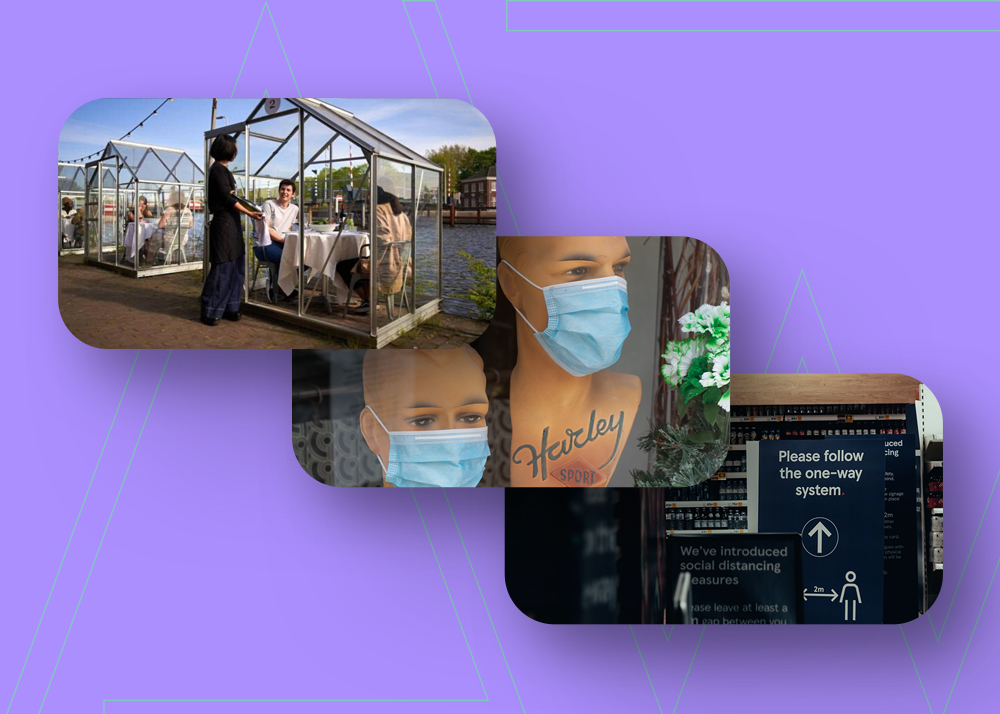
In Amsterdam, we see what may be one of the most creative containment and prevention measures so far. The vegan restaurant Mediamatic Eten came up with an unusual solution by placing its tables (which used to sit outside the restaurant, on the bank of a canal) inside glass greenhouses. The venue was able to reopen its doors to guests, providing safety and comfort to everyone. Learn more about this and other examples.

Mediamatic Eten vegan restaurant.
Photo: Mediamatic Eten vegan restaurant, in Amsterdam.

According to Camila Salek, the first step will be to prepare the store and the staff who will be in direct contact with the public, and to adopt the measures needed to maintain a safe and welcoming environment. She also shares a study developed by Vimer with tips for this reopening, which can be an excellent guide right now. Click here to check out the material.

VM is essential right now for reopening stores in a smart and safe way, following what we call the “culture of distance,” as Salek puts it. As retail professionals, we need to be aware of our social responsibility and seek to make the consumer journey easier. People are more alert and don’t want to waste time in stores when doing their shopping. In supermarkets, basic items are more visible and easy to find. The big mission is to provide solutions, to know how to present the product to the customer while showing what is essential to them at that moment. In other words, to make the shopping experience easier and not more stressful than it already is.

Enjoyed this content? Then subscribe to our newsletter and get the latest from our blog delivered straight to your inbox.


Inscreva-se em nossa Newsletter

Receba no seu email todas as novidades do nosso blog sobre tecnologia e varejo, além de ficar por dentro do novos projetos Alice Wonders.
Thank you for subscribing.

Something went wrong.

Previous ArticleNext Article

Innovative Retail Experiences: Augmented Reality at the POS Comments Off on Innovative Retail Experiences: Augmented Reality at the POS 2891

Innovative Retail Experiences: Augmented Reality at the POS

If you’re a retailer looking for innovation, we’ve got good news for you: Augmented Reality at the POS is here to transform your business into a space of innovative experiences and efficiency.

Here’s what we’ll explore:

  • Benefits of Augmented Reality at the POS – Learn how AR can take the customer experience to a whole new level and, as a result, boost your sales.
  • Augmented Reality Use Cases in Retail – Discover practical examples of how to implement AR in your store.
  • Challenges and Solutions – Get to know the obstacles you may face and how to overcome them efficiently.

Get ready to transform your point of sale and captivate your customers like never before!

What Is Augmented Reality?

Have you ever seen those social media filters that add bunny ears or sunglasses to your photo in real time? That’s a simple but effective example of Augmented Reality.

Augmented Reality (AR) is a technology that overlays digital information — such as images, videos, and sounds — onto the real world through a device, whether it’s a smartphone, a tablet, or special glasses.

This means that with AR, your customers can use their own smartphones to view additional information about a product, see reviews from other shoppers, or even visualize how a piece of furniture or an appliance would look in their home. And all of this happens while they’re physically in your store.

The magic of Augmented Reality lies in its ability to create a hybrid shopping experience that combines the best of the online and offline worlds.

The result is a more interactive, informative, and engaging sales environment.

Augmented Reality at the POS

Augmented Reality in Retail

Bringing Augmented Reality into your store represents a significant leap forward, not only in the way you sell, but also in the way customers shop.

Product Try-Ons

With Augmented Reality, trying on products reaches a whole new level. If you run a clothing store, your customers can “try on” different styles and sizes without having to deal with the fitting room. The same goes for eyewear, jewelry, and even sneakers.

All the customer has to do is point their smartphone at the item they want and see it virtually projected onto their own image.

Personalized Shopping

Augmented Reality enables a highly personalized shopping experience. Based on the customer’s interactions and choices, you can provide product recommendations, show related items, or even create a unique virtual store environment for each visitor.

Wayfinding and Information

Let he who has never gotten lost in a big store cast the first stone! With Augmented Reality, your customers can easily find what they’re looking for.

By pointing their smartphone at an aisle, they can see digital cues about the products in front of them, saving time and boosting customer satisfaction

Engagement and Gamification

Augmented Reality technology offers a range of opportunities to make shopping more interactive and fun.

You can create digital treasure hunts, quizzes, or other games that encourage customers to explore more of the store and, as a result, discover more of your products.

Watch the video of an Augmented Reality activation Alice Wonders created — packed with technology, fun, and engagement — to showcase all the technology available in modern agriculture:

Customer Behavior Analytics

With Augmented Reality, you can collect valuable data on how customers interact with products and the store environment. This data can be used to improve layout, inventory, and even marketing strategies.

Benefits of Augmented Reality at the POS

  • Higher Sales and Average Order Value

When you offer a more engaging and informative shopping experience, customers are more likely to spend more. Augmented Reality lets shoppers visualize how a product will fit into their lives before they even make a purchase, building confidence and encouraging higher-value sales.

  • Fewer Returns

One of the biggest challenges in retail is the high rate of returns. With Augmented Reality, customers get a clearer, more accurate picture of what they’re buying, which minimizes the chances of dissatisfaction and, consequently, of returns.

  • Competitive Differentiation

In a saturated market, every edge counts. Implementing Augmented Reality at your POS not only improves the customer experience but also positions your brand as innovative and in tune with tech trends.

  • Better Customer Experience

Augmented Reality’s power to deliver detailed information and realistic visualizations makes the buying process much easier and more enjoyable for the customer. On top of that, this technology can eliminate many of the uncertainties customers have when shopping, resulting in a more positive overall experience.

  • Store Space Optimization

Augmented Reality lets you make the most of your store’s physical space. How? By using Augmented Reality features, you can display a virtually unlimited inventory, which is especially useful if your store is short on space.

  • Employee Training

That’s right, Augmented Reality doesn’t just benefit customers. It’s also a valuable tool for training your team. Customer service scenarios, for example, can be simulated to prepare your employees for a wide variety of situations.

Conclusion

There’s no doubt that Augmented Reality is more than just a trend; it’s the future of retail.

By leveraging Augmented Reality at your Point of Sale, you’re taking a significant step toward a world of interactive possibilities, more effective sales, and happier customers.

So, what are you waiting for? The time to act is now.

Frequently Asked Questions

What is Augmented Reality at the Point of Sale (POS)? Augmented Reality at the Point of Sale is a technology that overlays digital information, such as images and data, onto the real world through mobile devices or special glasses. It gives customers a more interactive and informative shopping experience.

What are the benefits of Augmented Reality at the POS? The benefits are numerous and include increased sales, competitive differentiation, a better customer experience, optimized store space, and the potential for more effective employee training.

How can I implement Augmented Reality in my store? Implementation can range from simple mobile apps to more complex systems that use Augmented Reality glasses. The first step is to understand your specific needs and goals, then consult with specialized professionals to choose the best approach for your business.

Is Augmented Reality expensive to implement? Costs can vary, but thanks to technological advances, there are options for businesses of all sizes and budgets. The key is to start with a pilot project and scale up as you see the benefits and return on investment.

Is Augmented Reality just a fad, or is it here to stay? With continuous improvements in the technology and clear proof of value across many industries, Augmented Reality is an innovation that’s here to stay. Its power to engage customers in new and meaningful ways makes it a valuable tool for any retailer striving for operational excellence.

Inscreva-se em nossa Newsletter

Receba no seu email todas as novidades do nosso blog sobre tecnologia e varejo, além de ficar por dentro do novos projetos Alice Wonders.

Thank you for subscribing.

Something went wrong.

Sensory Rooms: Transforming Experiences at the Point of Sale (POS) Comments Off on Sensory Rooms: Transforming Experiences at the Point of Sale (POS) 1711

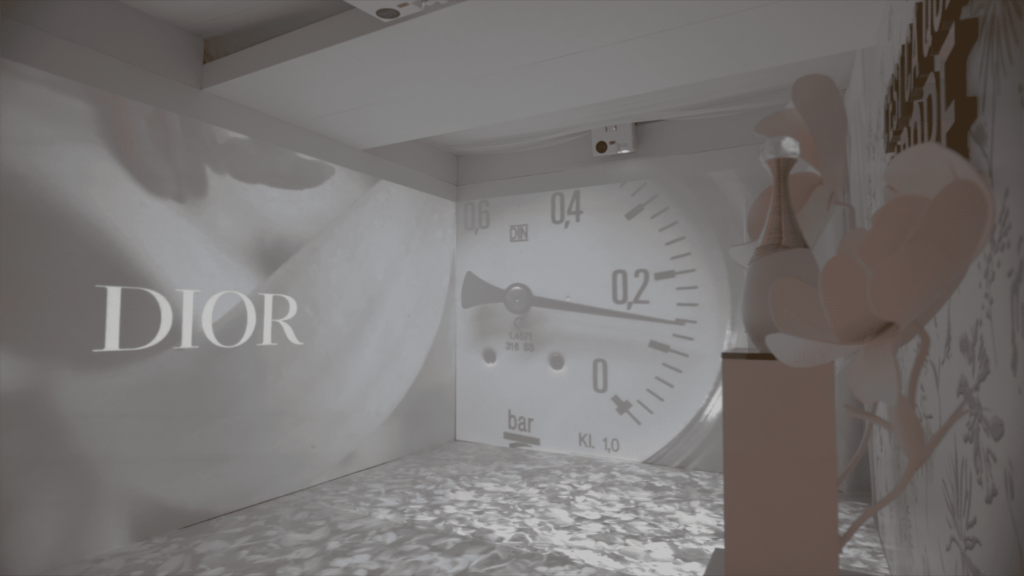
Sala imersiva Dior

Today we’re going to talk about an amazing tool that can completely transform your customers’ shopping experience: sensory rooms for points of sale.

A New Concept in Shopping Experience

You’re always looking for ways to stand out from the sea of competition in retail, right? One way to do that is by offering personalized, engaging experiences to your customers, and this is where sensory rooms come into play.

Sensory rooms are spaces designed to draw customers into an immersive experience, activating all of their senses: sight, hearing, touch, smell, and taste.

All five senses come into play, making the shopping experience truly memorable. Let’s look at some examples of how to use each sense:

Sight

You can use sensory rooms with lighting, colors, and visual effects to create a specific atmosphere.

Imagine, for example, that you own a furniture store. How about a sensory room that simulates different types of daytime and nighttime lighting? That way, your customers can see how the furniture looks under various lighting conditions.

  • Tok&Stok, a leading name in furniture and home decor, uses the visual experience in its stores so customers can picture themselves using the furniture in their own homes. Settings are put together with the store’s products, simulating living rooms, kitchens, bedrooms, offices, and more. The lighting is designed to highlight the products and create a welcoming atmosphere.

Hearing

Music or other sounds can be used to create a relaxing, welcoming environment.

For example, if you own a camping gear store, nature sounds, like birdsong or rain falling on a tent, can enhance your customers’ sensory experience and make them feel more connected to the camping environment.

Centro Nacional Store
Livraria Cultura is an example of a company that uses the auditory experience to create a more pleasant environment. Its stores usually have a soft soundtrack playing in the background, creating a relaxing environment that invites customers to spend more time in the store.

Touch

You can create sensory rooms that involve customers’ sense of touch.

If you own a clothing store, how about offering different fabrics and textures for customers to touch? It’s an amazing way for them to connect with your products.

  • Natura, the well-known cosmetics brand, lets customers try many of its products in its brick-and-mortar stores. They can feel the texture of creams, lotions, and makeup by applying them directly to their skin. This helps create a deeper connection with the products and allows customers to choose the items that best meet their needs and preferences.

Smell

Smell is a powerful sense, often underestimated when it comes to creating shopping experiences.

However, you can use it to create sensations and environments that match your products. For example:

  • Some stores, like coffee shops, already use the smell of coffee to create a more welcoming environment.
  • Imagine walking into a clothing store and smelling freshly washed fabrics. That would definitely improve the shopping experience.
  • Pão de Açúcar creates an olfactory experience through the aroma of breads and cakes baking in its in-store bakery. When customers walk into the store, they’re enveloped by these delicious smells, which creates a welcoming atmosphere and encourages purchases from the bakery.

A perfect example of a Sensory Room is the Dior activation at Hotel Sephora, developed by Alice Wonders. For a captivating, multisensory immersion in the brand’s exclusive space, we created projection mapping that brought to life the launch of J’adore Eau de Parfum, the brand’s newest fragrance. Check it out:

Taste

Last, but certainly not least, we have taste.

In some stores, especially those that sell food or beverages, you can offer tastings to customers.

  • Pão de Açúcar combines the sensory experience of smell with taste, also offering tastings of wines, cheeses, breads, and other products in its stores. This not only lets customers try before they buy, but also creates a more engaging and enjoyable shopping experience.
  • Another company that embraces this practice is Cacau Show, a chain of chocolate stores, which often offers samples of its products, letting customers enjoy the flavor before deciding to buy.

The Impact of Sensory Rooms at the POS

Now that we’ve talked about how to engage and stimulate each of your customers’ 5 senses at the POS, how about we look at the benefits of bringing it all together in Sensory Rooms for your brand?

The main goal of a sensory room at a point of sale is to create a unique and memorable experience for the customer.

On top of that, you not only set your store apart from the competition, but also encourage customers to come back. It’s a win-win strategy!

Here are some of the many benefits of creating sensory experiences in your store:

Benefits of the sensory experience for brands

The sensory experience helps brands stand out from the competition, increase the perceived value of their products, and create an emotional connection with customers.

Creating an Emotional Connection

When we engage all five senses in a shopping experience, we’re going beyond the simple act of selling a product. We’re creating an emotional connection with the customer.

We know that strong emotions are tied to our most lasting memories, so by providing a memorable, emotionally charged experience, we’re fostering customer loyalty and making sure they remember our brand in the future.

Market Differentiation

In today’s competitive retail world, it’s vital for your brand to stand out.

Sensory rooms can provide a unique advantage, setting your brand apart from competitors. Offering an immersive, multisensory experience is a powerful way to stand out and create a unique identity for your brand.

Added Value

The sensory experience adds value to the customer’s purchase, making it more than a simple transaction.

The customer isn’t just taking a product home, but a complete experience that engaged all of their senses. This can justify a higher price and increase profit margins for your brand.

Longer Dwell Time in the Store

When you provide an engaging sensory experience, customers tend to stay in the store longer. That’s because they’re immersed in an environment that stimulates their senses.

As a result, a longer visit increases the chances that customers will discover more products they like, which in turn raises the likelihood of generating more sales.

It Drives Word of Mouth

Creating a unique, unforgettable shopping experience makes customers want to share it with friends and family.

That’s where valuable word-of-mouth marketing comes into play, amplifying your brand’s visibility in a genuine, personal way.

Conclusion

Investing in sensory experiences at the point of sale is a strategy for transforming the way your customers interact with your brand.

By creating a shopping environment that engages all the senses, you deliver a richer, more appealing, and more memorable retail experience.

This not only boosts your sales opportunities and dwell time in the store, but also drives valuable word-of-mouth marketing, helping expand your brand’s visibility.

However, it’s important to conduct research to truly understand your audience and offer experiences that align with their expectations and desires. And you can count on us to help.

Get in touch with us and learn how you can create unique experiences for your customers and unlock your business’s full potential.

FAQ – People Also Ask:

  • What are sensory rooms for points of sale? Sensory rooms are spaces specially designed to engage the customer’s senses, delivering an immersive, delightful, and unique experience. This involves using techniques and technologies to stimulate customers’ sight, hearing, touch, smell, and taste.
  • Why should I consider the sensory experience in retail? The sensory experience can significantly improve the customer experience and increase sales. When their senses are engaged, customers tend to spend more time in the store, increasing the chances that they’ll make a purchase. In addition, a unique and memorable experience can lead customers to share it with others, driving word-of-mouth marketing.
  • What types of retail sectors can benefit from sensory experiences? Any retail sector can benefit from sensory experiences. Whether it’s a furniture store that uses different lighting scenarios to showcase its products or a bakery that uses the aroma of fresh bread to draw in customers, the possibilities are nearly endless.
  • How can I implement a sensory experience in my store? There are several strategies for introducing a sensory experience into your store, and they can be adapted to the nature of your business and the profile of your target audience. For example, you can use lighting and décor to create an environment that highlights your products’ attributes and encourages customer interaction. You can include themed spaces and strategic lighting to spotlight specific products, and choose colors and materials that evoke certain emotions or sensations.

Inscreva-se em nossa Newsletter

Receba no seu email todas as novidades do nosso blog sobre tecnologia e varejo, além de ficar por dentro do novos projetos Alice Wonders.
Thank you for subscribing.

Something went wrong.

Most Popular Topics

Editor Picks

Send this to a friend



