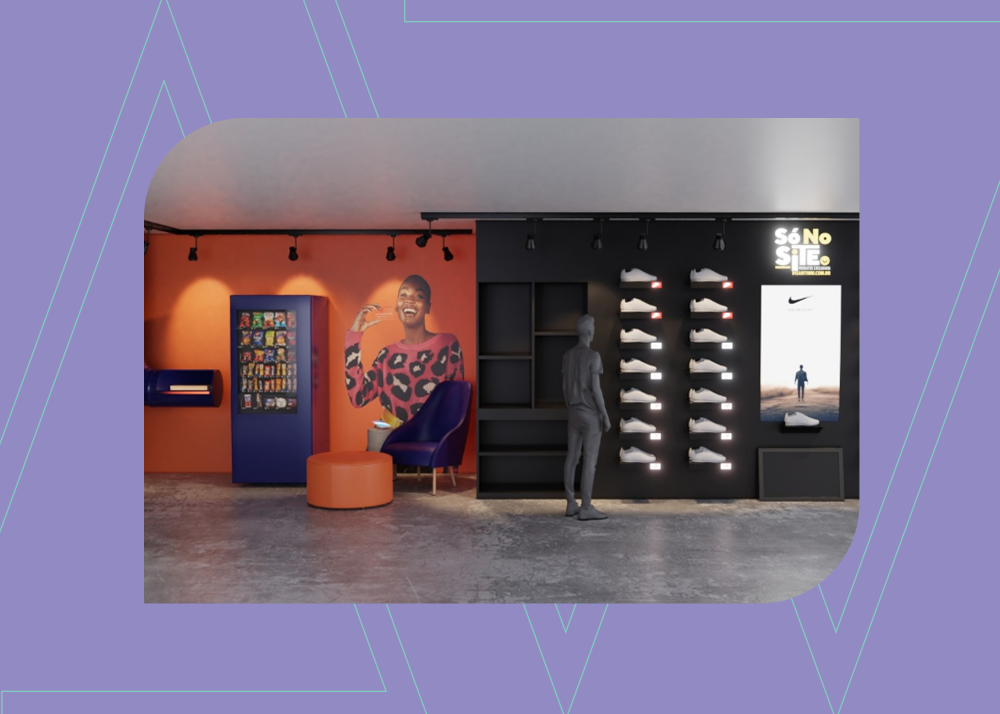
Retail Trends for 2020 Comments Off on Retail Trends for 2020 3726

To stay on top of what’s trending and invest wisely in retail, we’re sharing our take on the most relevant topics presented at this year’s NRF Retail’s Big Show, the industry’s leading trade show. We’ll talk about what we’ve been following and seeing succeed in retail in Brazil and around the world.

One topic that never goes out of style is how to understand the consumer profile and what lies behind it. And to map out your real consumer’s profile, with the goal of converting more sales, the best step is data collection.

Generate and analyze data

Adopt this rule: data first. Collecting data in retail isn’t limited to e-commerce. Investing in POS technology today is highly profitable and can become the foundation of your sales strategies.

With sensor-based interaction, capable of measuring, for example, how long a person spends in front of a shelf, we can see the relationship between traffic and conversion in practice. When sensors are well placed at strategic points, the data they generate reveals a range of precise and unique insights. All you need is to know how to work with that data to reach your goals.

TRESemmé shelf display, by Alice Wonders
TRESemmé shelf hologram, created by Alice Wonders. It generated 180,000 interactions and reached more than 25,000 people.

The innovative TRESemmé POS hologram with sensors made it possible to extract data showing around 3,600 interactions per day, in addition to capturing the attention of more than 25,000 people for over 5 seconds in front of the hologram. Our technology makes it possible to play videos similar to TV campaigns, delivering all the necessary information while creating the sensation that the products are floating in front of shoppers, resulting in a unique, standout experience.

Create unique experiences

Engaging consumers and connecting with them on an emotional level is an excellent strategy. Although it’s no longer new, this topic drew attention again this year at NRF, which reinforces the idea of continuing to invest in creating unique experiences for consumers.

You’ve probably noticed that technology is increasingly integrating human aspects, precisely to deliver emotions and sensations to people. This is what’s being called “humanological retail”, in other words, technology working in favor of humanizing the relationships of buying, selling, and experience.

If you can create a memory for your consumer through an experience, you’ve already achieved retention.

Put products to the test

Offering trials of your product is also about delivering experiences to consumers. Think of pop-up stores that hand out free samples, offer tastings, or even make a product available to try on. Having this opportunity is invaluable for customers, who give back constructive feedback to your brand, and it raises satisfaction levels.

In addition, your physical store can offer exclusive or made-to-order products. The more unique and special consumers feel, the greater the chances they’ll become loyal to your brand. Another advantage of producing exclusive products is reducing inventory levels. Think about it!

Personalizing spaces

Investing in space and new equipment – whether in store design or technology – is usually a long-term capital investment (ten to fifteen years). In another post here on our blog, we talked about the importance of personalizing physical spaces and how an environment affects the customer experience. Check it out!

“The visual communication of the environment needs to work together cohesively. What’s more, customers always assess both the aesthetic aspects of the decor and the functional ones. Furniture, lighting, the products themselves – it’s all part of it.”

Di Santini infinite window display, a project created by Alice Wonders.
Di Santini infinite window display, created by Alice Wonders. A project that brings together digital experiences and physical spaces.

Liked these tips and want to start applying these trends to your brand? Get in touch with us and let us help you bring amazing projects to life.

Inscreva-se em nossa Newsletter

Receba no seu email todas as novidades do nosso blog sobre tecnologia e varejo, além de ficar por dentro do novos projetos Alice Wonders.

Thank you for subscribing.

Something went wrong.

Previous ArticleNext Article

Immersive Marketing Strategies to Boost Sales Comments Off on Immersive Marketing Strategies to Boost Sales 1232

marketing imersivo

Consumer behavior has changed dramatically. Today, simply offering a product or service isn’t enough; brands need to create engaging, memorable experiences that build authentic, meaningful connections. And that’s where immersive marketing comes in.

Broadly speaking, it’s a strategy that transforms the sales funnel by combining technology, interactivity and storytelling to attract and engage audiences. Ready to learn more about this concept and its many possible uses and applications?

What Is Immersive Marketing?

Immersive marketing is a strategy that uses elements such as augmented reality (AR), virtual reality (VR), holography, interactive projections and sensory experiences to create a deeper connection between consumers and brands.

In other words, the goal of this strategy is to turn the POS (point of sale) and digital channels into dynamic spaces that encourage interaction and boost conversion rates.

How Does Immersive Marketing Impact Sales?

By integrating immersive techniques, marketing takes on new dimensions, becoming more appealing and effective at every stage of the sales funnel, which is divided into top, middle and bottom. Here’s how each stage breaks down:

Top of the funnel

At this stage, marketing sparks curiosity and builds brand awareness through interactive, viral campaigns. In other words, it introduces potential prospects to your brand and your services.

Middle of the funnel

Here, marketing acts as a tool that makes it easier to try out the product, reducing objections and increasing consumer interest in your brand.

Bottom of the funnel

In the final stage, marketing converts customers through personalized, memorable experiences that drive the purchase decision.

Practical Examples of Immersive Marketing

It’s clear that Immersive Marketing is revolutionizing the way brands and consumers interact, making shopping experiences more engaging, interactive and memorable.

As technology advances, new solutions are being rolled out in both brick-and-mortar and digital retail, amplifying the impact of engagement strategies. Check out a few practical examples!

1 – Augmented Reality at the POS

Today, retailers are investing in Augmented Reality to delight customers and, above all, to build a connection between brand and audience. A practical example is the interactive experiences Alice Wonders developed for Bauducco’s iconic digital flagship store on Av. Paulista:

2 – Digital Personalization

Major retailers use AI to recommend products based on user behavior and preferences, creating an immersive shopping environment. Alice Wonders, for example, developed a smart table that helped customers find the perfect laptop:

3 – VR Experiences

Stores across a wide range of segments are betting on Virtual Reality to take customers into a new dimension. From car dealerships that let consumers “drive” a new car before they even get behind the wheel, to real estate developers that let customers see the view from their dream apartment.

One example of the latter is FLOAT 4D, a multisensory journey that engages, delights and creates unforgettable memories. With it, you can launch a new development, showcase views and spaces enhanced with 4D effects, and connect customers with the dream of their new home:

How to Implement Immersive Marketing for Your Brand

It’s no secret that Immersive Marketing can transform the customer experience and set your brand apart in the market. To implement it successfully, you can follow a few basic steps:

  • Map the customer journey and identify touchpoints where immersion can add value;
  • Invest in technology that fits your audience and budget, whether AR, VR or digital interactivity;
  • Integrate immersive experiences with your online and offline marketing strategies;
  • Track results with engagement metrics, conversion rates and return on investment (ROI).

Overall, immersive marketing is expected to keep evolving, with new technologies and increasingly personalized applications. Brands that embrace this strategy now will get ahead of the competition, creating more engaging shopping experiences and significantly increasing their sales.

If your brand hasn’t explored immersive marketing yet, now is the time to start. The retail revolution is already underway, and immersion is the key to winning over today’s consumers!

Inscreva-se em nossa Newsletter

Receba no seu email todas as novidades do nosso blog sobre tecnologia e varejo, além de ficar por dentro do novos projetos Alice Wonders.

Thank you for subscribing.

Something went wrong.

Retail Media on the Rise: Why Is This Market Growing So Fast? Comments Off on Retail Media on the Rise: Why Is This Market Growing So Fast? 1410

retail media

The concept of retail media is becoming very common in the retail market, especially with the growth of digital marketing strategies. This advertising model not only helps brands reach their consumers more effectively, but also creates new opportunities for retail stores to become more interactive and personalized.

But why has this phenomenon gained so much momentum? The answer lies in retail media’s ability to integrate advertising campaigns directly into the shopping environment, which offers a smoother and more relevant experience for consumers.

Instead of relying exclusively on ads in traditional media or social networks, retail media allows advertisers to connect directly with their target audiences while they are already at the moment of purchase decision.

We also can’t overlook the fact that new real-time data collection technologies have allowed retail stores to create increasingly personalized experiences for consumers.

This makes retail media an even more powerful tool, as it allows retailers to better understand their customers’ behavior and adjust their marketing strategies quickly and effectively.

With that in mind, today we’ll look at what retail media is, how it works, and explore the reasons behind its steady growth, as well as examine the trends in this market that are driving this transformation and revolutionizing the shopping experience.

What is retail media and how does it work?

Retail media is a concept that is revolutionizing the way brands and advertisers connect with consumers within retail environments.

This advertising model allows brands to promote their products directly on the sales channels of large retail chains, such as marketplaces, e-commerce sites and even brick-and-mortar stores.

This way, communication happens at the most strategic moment of the shopping journey: when the consumer has already shown intent to buy a product. The retail media strategy has been gaining momentum globally and was also one of the highlights of NRF, the world’s largest retail event.

NRF has shown how major players in the industry are investing in their own media within their ecosystems, creating new revenue streams and offering brands a highly targeted channel to reach the right audience at the right time.

Retail media works by combining shopping behavior data with advertising formats integrated into consumer touchpoints, such as ads on retailer websites, personalized promotions in apps and digital screens in physical stores.

As a result, retailers become true media spaces, delivering more relevant experiences and increasing sales conversion. Whether for brands looking to expand their visibility or for retailers seeking new monetization opportunities, Retail Media has already established itself as one of the most promising strategies in the market.

Keeping an eye on the trends presented at NRF and those coming to the market is essential to understanding how this model can be applied innovatively in your retail store and strengthen your market presence.

Understand why Retail Media is booming in the market

As we’ve seen so far, retail media has established itself as one of the biggest trends in the global market, transforming the way brands and retailers engage with consumers.

With impressive growth, this strategy already moves billions of dollars and is increasingly present in the digital marketing strategies of major retail chains. But have you ever stopped to think about why retail media is booming and being so widely adopted?

To answer that question, we’ve highlighted five reasons that explain this phenomenon and its relevance in the market. Check them out below:

1 – A billion-dollar market in expansion

Retail media isn’t just a passing trend, but rather a sector in constant expansion. According to estimates, this form of advertising is expected to reach around US$ 110 billion globally by 2026, showing its enormous growth potential.

This growth reflects brands’ increasing interest in investing directly at the point of sale, where consumers are already highly likely to buy. Major retail companies have already built robust in-house advertising ecosystems, attracting significant investment and becoming true media giants.

2 – Accelerated adoption by retailers and manufacturers

Brazil has stood out in this landscape, following the global trend. Research indicates that 79% of manufacturers already use retail media, and all of them see this strategy as essential to the future of retail.

In addition, brands are realizing that advertising on e-commerce platforms and in brick-and-mortar stores can be much more efficient than traditional media, as it directly reaches consumers at the moment of purchase decision.

3 – A new source of monetization for retail

One of the reasons for retail media’s rapid growth is its positive financial impact on retailers. Large companies have already begun implementing advertising strategies on their platforms, following in the footsteps of giants like Amazon and Mercado Livre.

By turning their own sales channels into valuable advertising spaces, these companies can increase their profitability without relying exclusively on the profit margin of the products they sell.

4 – Technological advances and new partnerships

Technology has been a major ally in the growth of retail media. Large retail chains are investing heavily in artificial intelligence and data analytics to make ads more accurate and personalized.

In addition, new strategic partnerships between retailers and digital platforms are being formed to further boost this market. The trend is that, in the coming years, retail media campaigns will become increasingly targeted and efficient, delivering an even greater return on investment (ROI) for brands.

5 – Global prominence and accelerated growth

The importance of retail media has been widely discussed at the industry’s leading events, such as NRF, the world’s largest retail show. In recent years, NRF has spotlighted the rise of advertising platforms within both e-commerce and brick-and-mortar retail, reinforcing that this is one of the most promising strategies today.

The discussions at NRF New York show how major players are adapting their business models to integrate retail media, creating new opportunities for brands and retailers to maximize sales and audience engagement.

These are some of the reasons why retail media continues to grow at a rapid pace. Its ability to reach consumers at the moment of purchase, generate new revenue for retailers and deliver highly targeted campaigns makes it an indispensable strategy in today’s landscape.

With continued investment in technology, this trend is only set to grow stronger in the coming years. If you work in retail or digital marketing, it’s worth keeping an eye on retail media and the opportunities it can bring to your business!

The future and trends of retail design

The future of retail design is intrinsically linked to the integration of technology and customer experience, transforming retail stores into interactive and engaging spaces.

Events such as NRF in New York highlight trends that point to the need for innovation in store design, aimed at meeting the expectations of increasingly connected and demanding consumers.

In this context, Alice Wonders stands out as a company specializing in creating digital retail experiences. Combining design, technology and architecture, the company develops customized solutions that turn the point of sale into an interactive environment, delivering a distinctive shopping journey for customers.

By investing in retail design innovations, retail stores can stand out in an increasingly competitive market, offering unique experiences that build customer loyalty and boost sales.


Inscreva-se em nossa Newsletter

Receba no seu email todas as novidades do nosso blog sobre tecnologia e varejo, além de ficar por dentro do novos projetos Alice Wonders.

Thank you for subscribing.

Something went wrong.

Most Popular Topics

Editor Picks

Send this to a friend