Product test drives aren’t just for cars anymore. Widely used at car dealerships, the practice has been spreading to new types of markets as brands and retailers realize that letting consumers try before they buy is a great way to boost sales.
In this article, you’ll learn everything about product test drives. We start by explaining what they are and why they work. Then we share examples of businesses that have been using them and show how customers respond to this practice. Read on.
What is a product test drive?
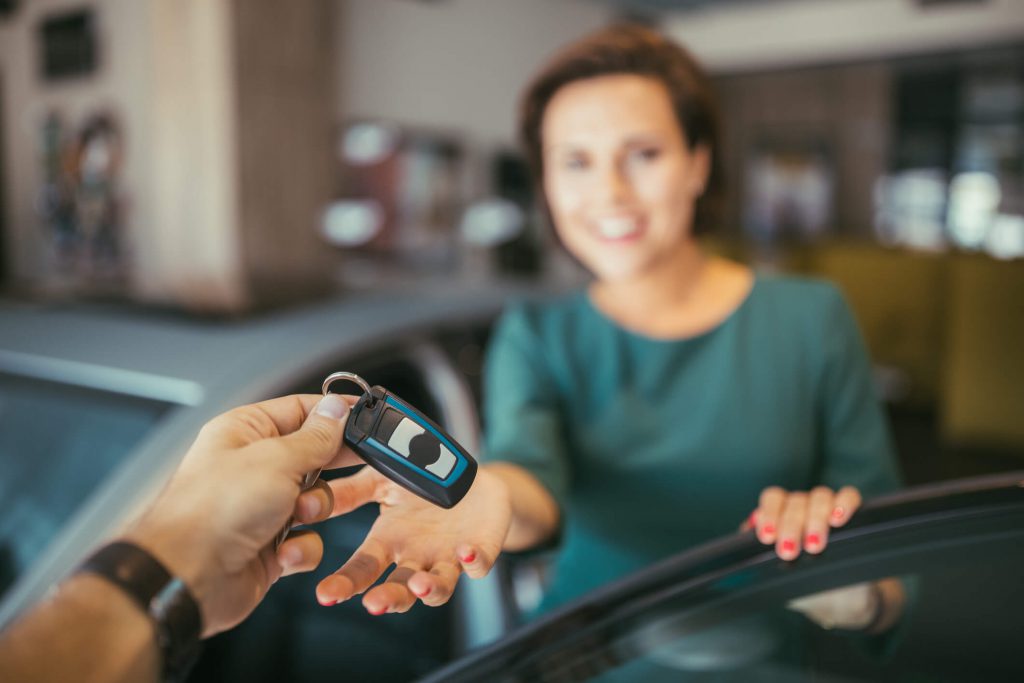
A test drive means letting consumers try out a product for free. How far that permission goes varies. It can be a spin around the block or use only inside the store, but it can also mean letting customers take the product home and use it for 100 days, with no strings attached. Check out some of its benefits below.
Test drives improve purchase satisfaction
Research reveals a lot of interesting things about test drives. One of them is that they change what consumers want. In an article published in 2007 in the scientific journal Journal of Consumer Research, researchers Rebecca W. Hamilton and Debora Viana Thompson showed that, after trying a product, consumers start thinking more concretely and opt for the item that’s easier to use.
In the study, consumers chose between two MP3 players: one loaded with more songs, and another that was easier to use. Those who took a test drive preferred the second one. There’s more: two weeks after making their choice, those who bought the player with more songs hadn’t changed their minds, which indicates that test drives help reduce dissatisfaction and buyer’s remorse.
The article concludes that many consumers may choose products based on indirect experiences (such as advertising) that don’t maximize their post-purchase satisfaction. Companies concerned with their brand, reputation, and long-term growth should therefore take test drives very seriously.
Test drives increase sales
Test drives are also used because they increase the likelihood that consumers will buy the product. When we touch something and spend a good amount of time with it, we’re more likely to feel like we “own” the object. Parting with the item is therefore psychologically perceived as a loss.
That’s why every clothing store lets customers try things on: once we see ourselves in the mirror wearing those pieces, it’s as if they were already ours. This is called the “endowment effect,” and it also explains why we value an object we own more than an identical one that doesn’t belong to us.
Test drives increase profit margins
Consumers who touch products are willing to pay more for them. In a study at the University of Wisconsin, students were split into two groups: one could touch the merchandise and the other couldn’t. The first group was willing to pay more for it. Note that the items were exactly the same, which proves that marketing isn’t just about “what” you sell, but “how” you sell it.
How are product test drives put into practice?
There are plenty of examples of test drives across a wide range of market segments, beyond the classic spin around the block at the dealership. Check out a few below.
3M
In 2011, 3M launched its Test Drive program in Brazil, which is still running today, according to its website. Customers sign up on the page to receive products for free. Each month, a segment of this audience, all with the same profile, receives the item at home and then fills out a questionnaire with their review. Products tested have included a Scotch-Brite lint roller and a clothes hanger.
Adidas
Adidas took a truck loaded with its sneakers to parks in São Paulo so runners could try them out. The program included athletes and digital influencers who exercised alongside potential customers.
Seven
Everyone is familiar with the “trial class” for all kinds of activities, from swimming to Pilates. But a single class is hardly enough to know whether something will successfully become part of your routine. That’s why the language school Seven offers a genuine test drive of four classes (two weeks) for adult students. This is a customer profile that’s harder to win over. After the trial, prospective students understand the course better and make a more informed decision.
Vitacon
Real estate developer and builder Vitacon offers apartment test drives. When you think about it, it makes perfect sense. A home is usually the most expensive thing we buy in our lives, so why not try it before buying? In Vitacon’s case, customers can spend a night on site. All they need to bring is a small bag with clothes and toiletries. That’s the only way to find out whether the place has noisy neighbors or holds other surprises.
Flow
And speaking of sleep, mattress store Flow lets customers take the product home and sleep on it for up to 100 days, with no strings attached. Let’s be honest, that’s a huge selling point.
Apple Store
The design of Apple Stores is known worldwide. All the laptops sit open on spacious tables, inviting customers to interact. On top of that, the devices are already connected to the internet, and you can browse freely at no cost. The more time customers spend there, the more they’ll feel they “own” the computer, and the more likely they’ll be to not want to part with it.
What are the advantages of product test drives?
As we’ve seen, test drives offer many benefits for retailers, since they increase both the chances that consumers will close the purchase and their satisfaction. When we try something out, we think more concretely about how we’d use the product and choose what appeals to us most, rather than the item with the most advertising.
Test drives also have several benefits for consumers. In a world overflowing with information, trying a product improves the shopping experience, helps answer questions, and lets people picture themselves with the product in action. It also builds trust in the brand: if a company is willing to put itself on the line by offering a trial, the product must really be good.
Product test drives are a growing practice across many market segments and could be the competitive edge you need to attract new consumers. Why not give it a try?
Did you find this article interesting? Then share it on your social media so your contacts can stay in the loop too!
Inscreva-se em nossa Newsletter
Receba no seu email todas as novidades do nosso blog sobre tecnologia e varejo, além de ficar por dentro do novos projetos Alice Wonders.
Thank you for subscribing.
Something went wrong.
Respeitamos sua privacidade e levamos a sério a sua proteção