



Direct to Consumer on the Rise Among Major Brands Comments Off on Direct to Consumer on the Rise Among Major Brands 3953

Direct to Consumer


The DTC strategy keeps growing and is transforming the way brands build relationships with end consumers

In a landscape where a “new consumer” is on the rise, with a more demanding profile, DTC (Direct To Consumer) delivers unique, personalized experiences that bring brands closer to this audience and build loyalty. One of the goals is to make the purchase process part of the user experience, driving engagement.

What has motivated manufacturers to adopt direct retail? Below, we list the five most relevant goals:

1. Strengthening the company’s image and building the brand

Brands that use DTC prioritize marketing, the brand name, and the direct experience with the consumer. In addition, social media has also helped bring audiences closer through direct interaction, promotions, engagement, and the generation of data.

2. Delivering a differentiated customer experience

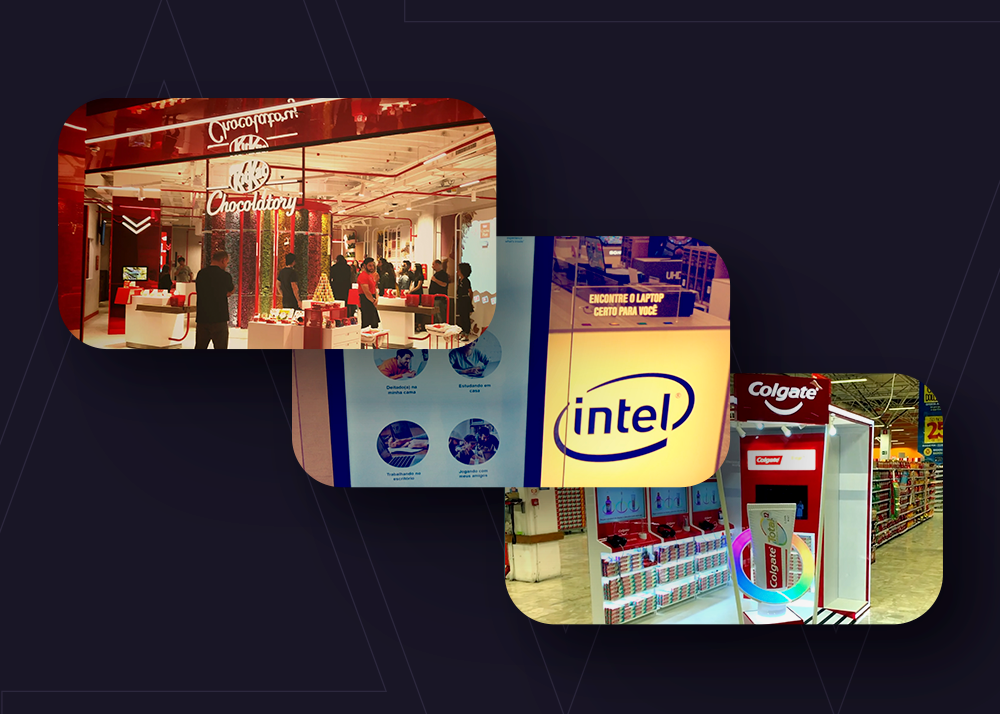
When a brand has its own POS, it has greater freedom to create activations in physical spaces. Interactions and digital experiences attract the public in a distinctive way, spark interest in the brand and its products, and generate more human-centered sales. Take our activation for Colgate, carried out in partnership with Get2Market, responsible for creating the project, and Creative Display, responsible for fabrication. We brought our technology to more than 32 locations across São Paulo, Rio de Janeiro, Brasília, Recife, Salvador, Curitiba, and Manaus. With Lift & Learn, people could pick up products from the glorifier, triggering content on the display and enjoying the custom LED animation, as well as learning tips from the dentist through the holographic cube.

Colgate store-in-store, by Alice Wonders
Colgate store-in-store at the Extra supermarket in Morumbi, São Paulo.

3. A broader, more complete portfolio

A brand that has its own space, whether e-commerce, a physical store, or even pop-up stores, can showcase its entire available product line and also offer exclusive products, which is a great strategy. That way, resellers don’t compete directly with the brand’s own POS. We were recently invited by Nestlé to develop digital experiences for the new Kit Kat Chocolatory flagship. In the interactive store, consumers can find all the new flavors and different sizes of Kit Kat.

Kit Kat Chocolatory store, Alice Wonders
Kit Kat Chocolatory store, the first in the world. Located at Shopping Morumbi, in São Paulo.

4. Collecting consumer data

Today, brands have several ways to reach consumers directly and collect data: through e-commerce, social media, and offline media. Collecting data at physical locations, however, still feels new. By implementing BI (Business Intelligence) in brick-and-mortar stores, brands can build a great sales strategy. At an event, Consumer Breakfast, Intel presented an Alice Wonders project as a new sales model for laptop retail. As a result, we were able to collect data showing average ticket, number of interactions, foot traffic, and which laptop model best matches each consumer’s needs, in a personalized way.

Intel store-in-store by Alice Wonders
Intel store-in-store at the Extra supermarket.

5. Greater independence from other sales channels

Brands are increasingly seeking to depend less on resellers. That doesn’t mean, however, that they will abandon their relationships with existing channels. Brands such as Granado, Havaianas, Swift, Garoto, Nestlé, P&G, Adidas, and Nike are some examples of successful DTC strategies.

Direct to consumer is one of the strongest and most efficient sales strategies on the market for major brands. And delivering amazing, personalized digital experiences to the public is the best way to retain them. Enjoyed this? Then read more about Shopping experience: how stores are evolving to delight consumers.


Inscreva-se em nossa Newsletter

Receba no seu email todas as novidades do nosso blog sobre tecnologia e varejo, além de ficar por dentro do novos projetos Alice Wonders.
Thank you for subscribing.

Something went wrong.

Previous ArticleNext Article

5 Reasons to Invest in a Vending Machine Comments Off on 5 Reasons to Invest in a Vending Machine 4012

Vending Machines Interativas, por Alice Wonders

A global trend, the vending machine makes shopping much easier. The convenience benefits both consumers and merchants. It’s a promising investment, especially now with changing habits and ways of consuming, in a landscape where technology is proving even more essential in retail.

Japan has more than 5 million vending machines, Europe has 3 million, and the US has 3.5 million. Meanwhile, in Brazil, this segment has approximately 100,000 machines, generating R$ 700 million, according to the Brazilian Association of Automatic Sales (ABVA). If you’re already interested in investing in a vending machine, now is the time!

Check out the advantages of this promising business:

Variety of products

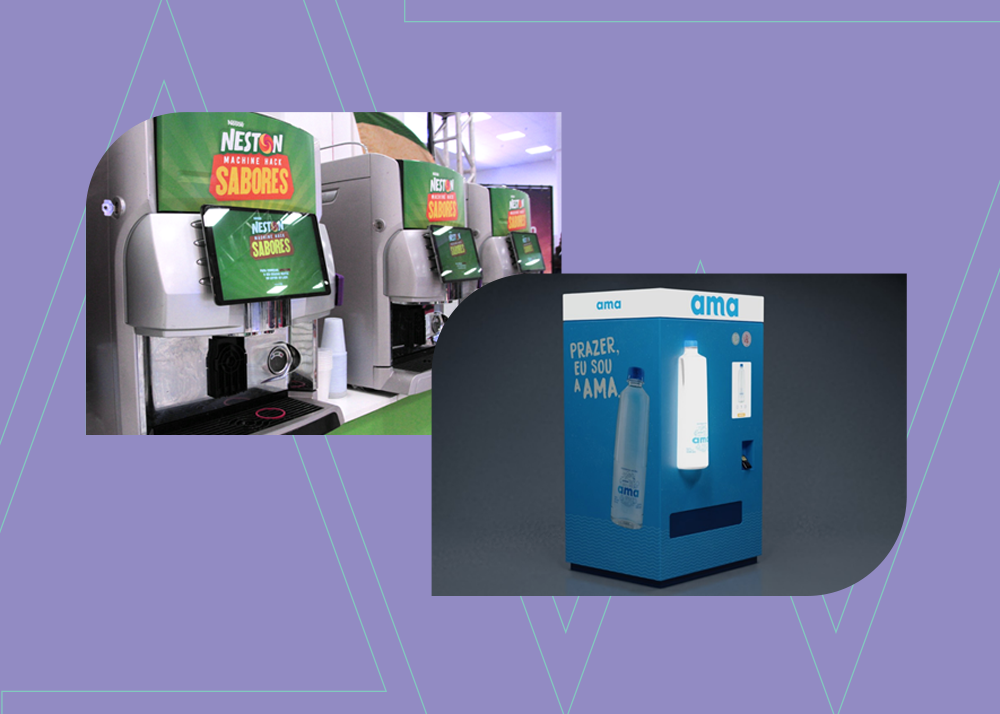
There are many categories of vending machines, offering everything from all kinds of food and beverages to books and even electronics. Coffee machines, for example, can serve a range of flavors. We recently developed technology for automated coffee machines that serve cold drinks. Our machines feature an interactive panel where users can rate the drinks, leaving a score (from 1 to 5 stars) for data analysis.

Hacked Machine / Vending Machine
Hacked cold drink machines for Nestlé, by Alice Wonders.

Business opportunity

Vending machines are installed in strategic, high-traffic locations. They can be found in subway stations and business settings such as offices, hospitals, and clinics, and they’re also great for events. Another advantage is that they don’t require any mass marketing campaign to promote them. They can be an opportunity for extra sales, complementing the services and products within your business.

Great cost-effectiveness

Consider that you won’t have expenses for expensive commercial rent or hiring staff. A vending machine operates 24 hours a day and is fully automated.

It’s all about savings and peace of mind for you and for the consumer, who gets a greater variety of products and a quick, easy shopping experience.

Maintenance

There are two ways to acquire a vending machine: you can buy it or rent it. The advantage of renting is that you’ll have all maintenance services available whenever you need them, hassle-free. All technical support is the responsibility of the contracted company, which provides a specialized team, and you can also count on new equipment from time to time. Your only concern will be stocking the machine and pricing the products.

Find your market

If you don’t yet know where to place a vending machine or which products to invest in, start by doing market research to find out which segment is most profitable. Machines for canned drinks and snacks, such as bags of chips, cookies, and chocolate, are the most popular.

Technology and design

For large companies, vending machines are also a great way to deliver technology and innovation in retail. That was the case with AMBEV, which relied on our expertise to give shape and life to the AMA project. We developed the Interactive Vending Machine not only to make the brand stand out, but to create an emotional connection at the moment of purchase. The machine invites reflection on the theme of social business, demonstrating its positive impact in practice with every sale while entertaining the consumer.

AMA AMBEV, Interactive Vending Machine, by Alice Wonders
Interactive Vending Machine for AMBEV, by Alice Wonders.

Vending machines are a great retail technology solution, offering excellent cost-effectiveness, low investment, and projected market growth. Contact us for a quote. We can help your company bring amazing projects to life!


Inscreva-se em nossa Newsletter

Receba no seu email todas as novidades do nosso blog sobre tecnologia e varejo, além de ficar por dentro do novos projetos Alice Wonders.

Thank you for subscribing.

Something went wrong.

Immersive Marketing Strategies to Boost Sales Comments Off on Immersive Marketing Strategies to Boost Sales 1233

marketing imersivo

Consumer behavior has changed dramatically. Today, simply offering a product or service isn’t enough; brands need to create engaging, memorable experiences that build authentic, meaningful connections. And that’s where immersive marketing comes in.

Broadly speaking, it’s a strategy that transforms the sales funnel by combining technology, interactivity and storytelling to attract and engage audiences. Ready to learn more about this concept and its many possible uses and applications?

What Is Immersive Marketing?

Immersive marketing is a strategy that uses elements such as augmented reality (AR), virtual reality (VR), holography, interactive projections and sensory experiences to create a deeper connection between consumers and brands.

In other words, the goal of this strategy is to turn the POS (point of sale) and digital channels into dynamic spaces that encourage interaction and boost conversion rates.

How Does Immersive Marketing Impact Sales?

By integrating immersive techniques, marketing takes on new dimensions, becoming more appealing and effective at every stage of the sales funnel, which is divided into top, middle and bottom. Here’s how each stage breaks down:

Top of the funnel

At this stage, marketing sparks curiosity and builds brand awareness through interactive, viral campaigns. In other words, it introduces potential prospects to your brand and your services.

Middle of the funnel

Here, marketing acts as a tool that makes it easier to try out the product, reducing objections and increasing consumer interest in your brand.

Bottom of the funnel

In the final stage, marketing converts customers through personalized, memorable experiences that drive the purchase decision.

Practical Examples of Immersive Marketing

It’s clear that Immersive Marketing is revolutionizing the way brands and consumers interact, making shopping experiences more engaging, interactive and memorable.

As technology advances, new solutions are being rolled out in both brick-and-mortar and digital retail, amplifying the impact of engagement strategies. Check out a few practical examples!

1 – Augmented Reality at the POS

Today, retailers are investing in Augmented Reality to delight customers and, above all, to build a connection between brand and audience. A practical example is the interactive experiences Alice Wonders developed for Bauducco’s iconic digital flagship store on Av. Paulista:

2 – Digital Personalization

Major retailers use AI to recommend products based on user behavior and preferences, creating an immersive shopping environment. Alice Wonders, for example, developed a smart table that helped customers find the perfect laptop:

3 – VR Experiences

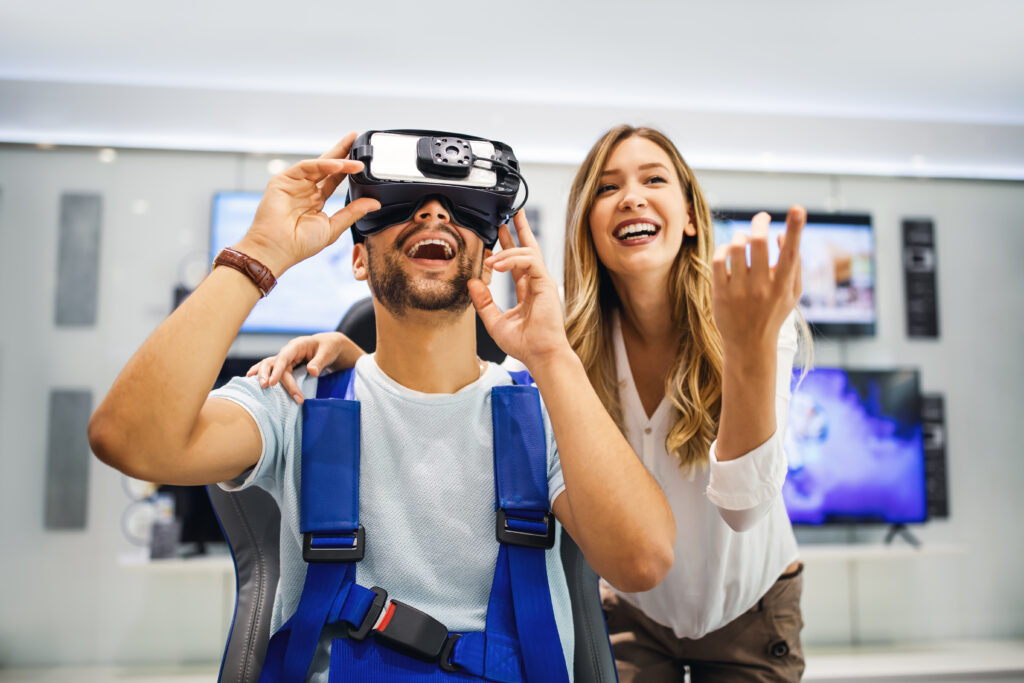
Stores across a wide range of segments are betting on Virtual Reality to take customers into a new dimension. From car dealerships that let consumers “drive” a new car before they even get behind the wheel, to real estate developers that let customers see the view from their dream apartment.

One example of the latter is FLOAT 4D, a multisensory journey that engages, delights and creates unforgettable memories. With it, you can launch a new development, showcase views and spaces enhanced with 4D effects, and connect customers with the dream of their new home:

How to Implement Immersive Marketing for Your Brand

It’s no secret that Immersive Marketing can transform the customer experience and set your brand apart in the market. To implement it successfully, you can follow a few basic steps:

  • Map the customer journey and identify touchpoints where immersion can add value;
  • Invest in technology that fits your audience and budget, whether AR, VR or digital interactivity;
  • Integrate immersive experiences with your online and offline marketing strategies;
  • Track results with engagement metrics, conversion rates and return on investment (ROI).

Overall, immersive marketing is expected to keep evolving, with new technologies and increasingly personalized applications. Brands that embrace this strategy now will get ahead of the competition, creating more engaging shopping experiences and significantly increasing their sales.

If your brand hasn’t explored immersive marketing yet, now is the time to start. The retail revolution is already underway, and immersion is the key to winning over today’s consumers!

Inscreva-se em nossa Newsletter

Receba no seu email todas as novidades do nosso blog sobre tecnologia e varejo, além de ficar por dentro do novos projetos Alice Wonders.
Thank you for subscribing.

Something went wrong.

Most Popular Topics

Editor Picks

Send this to a friend



