Being an entrepreneur means dreaming big! Comments Off on Being an entrepreneur means dreaming big! 2756

Every entrepreneurial venture has to overcome the major obstacles of day-to-day business to succeed, and it also has to stay positive and confident when those obstacles show up unexpectedly. But what does it mean to be an entrepreneur?

Entrepreneurship can be understood as the ability to conceive, organize, and execute strategies and projects. The term itself implies a challenge, simply because not only is it hard to be innovative and original, but turning plans into reality is a difficult and complex process.

With the financial crisis sweeping the country, things obviously don’t look positive at first glance, but the good news is that this is exactly how solutions to new problems emerge, and from there, they can be explored. For entrepreneurs, that’s the secret.

Keep in mind that not even all the money in the world combined with the best ideas can solve everything. Even so, what matters is having a good strategy and taking risks. That’s a fundamental step in the world of entrepreneurship!

Knowing where to invest and what the biggest challenges are is a major step toward success. Read on to learn more!

How to invest in your business

Before you start your venture, it’s important to have full control and understanding of how the following work:

  • personal and financial management;
  • red tape;
  • marketing and sales.

Having good management is what makes a company successful, but knowing how to carry it out is no easy task. Since managing means staying on top of everything involved in running a business and knowing your assets, capital, and employees, this is the biggest challenge for both the manager and the company.

Developing strong leaders, with well-prepared professionals, is important for a company to reach the peak of its growth and to thrive. A capable leader who knows how to manage can boost profits, which directly impacts the company’s finances and sound administration.

It’s essential to keep in mind that bureaucratic processes are a nightmare for entrepreneurs in Brazil. In four years, from 2014 to 2018, the ICMS (state sales tax) legislation went through more than 500 updates.

This example alone shows how hard it is for entrepreneurs to keep up with tax legislation. Being able to understand all of it has become a major setback for companies, which must stay constantly alert to avoid making irreversible mistakes.

Although marketing and sales are not the same thing, when they work together they can be a powerful force for a company. The challenge now lies in the promotional channels, which are increasingly competitive and restricted.

There have never been as many product options as there are today, so companies must invest more and more in making their brand visible to the public, which can be tricky.

How do you align your company with this? The marketing team will be responsible for attracting potential customers and, whenever possible, passing them on to the sales team, which also needs training and know-how on the most effective approach.

With all the possibilities and given how dynamic the market is, creating the best marketing strategies for your venture becomes a challenge for companies, which sometimes invest their precious time and money the wrong way.

Strengthening your company

Having a good public image, knowing how to win over your audience, and, as a result, increasing revenue is the perfect path to establishing yourself. Getting there, however, is not easy, and niches are one of the ways to achieve it.

What’s the best segment to invest in? That question has never been simple, but that’s how opportunities arise more easily. You should also consider the competition and learn from your competitors.

That’s precisely why, in the past, it was relatively easier for a business to become the top reference: there were fewer competitors, meaning companies had more room to grow.

In Brazil, few companies and ventures understand the importance of being present in multiple segments and areas precisely to strengthen the company and achieve stability. One of them is the renowned Grupo Ideal Trends.

Founded by José Paulo Pereira Silva, Grupo Ideal Trends is a group of 21 companies. Operating in health, cosmetics, services, business opportunities, digital marketing, and NGOs, this tech entrepreneur achieved success by investing in all of them. Grupo Ideal Trends stays tuned in and connected to the market, which allows it to carry out comprehensive and consistent work.

The companies of Grupo Ideal Trends.

The lesson Grupo Ideal Trends offers is that an entrepreneur who is well informed and committed to innovation makes the difference, and that this is the key to providing security and stability to a company.

Overcoming setbacks

Adversity is inevitable and can happen often in an entrepreneur’s life. It’s simply a new opportunity to achieve success. It’s important to plan well so that whatever difficulties arise don’t catch you by surprise.

It’s worth noting that great entrepreneurs have one thing in common: they know where they want to go and they know setbacks exist, but how prepared you and your company are for them is what determines whether or not you succeed.

Check out Grupo Ideal Trends’ channels: Website, Facebook, Instagram, and YouTube.

Inscreva-se em nossa Newsletter

Receba no seu email todas as novidades do nosso blog sobre tecnologia e varejo, além de ficar por dentro do novos projetos Alice Wonders.

Thank you for subscribing.

Something went wrong.

Previous ArticleNext Article

Experience: The New Competitive Advantage 0 110

Experiência imersiva em espaço tecnológico como diferencial competitivo para marcas

For a long time, experience took a back seat when it came to competitive advantage. Many brands competed on what was easiest to measure: price, product, features, reach, and technology.

Today, those elements still matter. But they are less and less enough to guarantee differentiation.

The real battle is happening somewhere else: in the ability to create experiences that are relevant, Technology has become more accessible. Artificial intelligence has accelerated creation and personalization processes. Products, services, and features can be replicated faster than ever. And in a landscape of information overload, capturing someone’s attention is only the first challenge.

The real battle is happening somewhere else: in the ability to create experiences that are relevant, meaningful, and memorable.

When different brands can offer similar products, technologies, and features, the way a company makes people feel can become a competitive advantage that is hard to replicate.

That’s why, today, experience is no longer just an add-on. It now plays a strategic role in creating value for both brands and consumers.

The challenge of competitive advantage in retail

Consumers have never had so many options. They can compare prices in seconds, find alternatives for virtually any product, and access similar experiences across different brands.

Technology, which once served as a major competitive advantage, has also become more democratic.

An artificial intelligence tool, an interactive screen, or an immersive experience, for example, is no longer necessarily new in and of itself. The result is a landscape in which many brands can offer similar kinds of products, technology, or interaction.

Which raises an important question:

What makes a person choose, remember, and connect with a brand when so many others can offer something similar?

The answer lies in experience.

When we talk about brand experiences, it’s common to think of technology right away:

  • Projections;
  • Augmented reality;
  • Artificial intelligence;
  • Sensors;
  • Interactive screens;
  • Immersive environments.

All of these resources can transform the way a person interacts with a brand. But technology alone doesn’t create a relevant experience.

A screen can grab attention. A projection can surprise. An installation can generate shares.

But a truly powerful experience needs a purpose.

It must address a brand need and, above all, make sense to the people living that moment.

How do you turn experience into a competitive advantage?

Creating relevant experiences doesn’t simply mean adding more technology to touchpoints. It means starting with strategy.

That’s why we’ve put together some best practices for turning experience into a competitive advantage.

1. Understand what the brand wants to evoke

Before choosing a technology or designing an installation, you need to understand what perception the

Before choosing a technology or designing an installation, you need to understand what perception the brand wants to build.

Do you want to spark delight? Curiosity? Belonging? Discovery? Trust?

The desired emotion helps guide the entire experience and ensures that every element has a role within the journey.

2. Understand how people behave

An experience is only relevant when it speaks to the people on the other side.

That’s why understanding habits, expectations, needs, and behaviors is essential to creating interactions that make sense — rather than experiences that merely grab attention.

The better a brand knows its audience, the better it can build relevant, personalized experiences.

3. Use technology with purpose

Technology should solve a problem or amplify an idea.

It can make content more interactive, create new ways to participate, personalize a journey, or turn a space into a dynamic experience.

But there’s one key point: technology needs to serve a bigger narrative.

It’s this combination of strategy, creativity, and technology that turns a tech feature into a meaningful experience.

4. Create something people want to experience

The experience needs to invite participation.

The more the audience goes from being mere spectators to becoming part of the experience, the greater the potential for connecting with the brand.

The goal isn’t just to create something that’s seen, but something that’s lived, remembered, and shared.

5. Think beyond the moment

An experience doesn’t end when the person leaves the space.

It can live on in conversations, on social media, in photos, in memories, and in the way that person comes to see the brand.

That’s why experiences need to be designed as part of a journey — not as isolated activations.

This perspective expands the potential of experience as a competitive advantage, connecting the physical moment to the brand’s other touchpoints.

Experience as a competitive advantage

In an increasingly competitive market, simply offering something new may not be enough.

The real advantage lies in the ability to create something relevant for people.

Experience can turn a product into a story, a space into a point of connection, and an interaction into a memory.

And that takes more than technology. It takes understanding the audience, setting clear goals, and building a cohesive journey between brand, space, and people.

Recent research reinforces this shift. PwC points out that price and quality are increasingly becoming baseline requirements, while personalized, meaningful experiences are gaining importance in building value and loyalty.

That’s why thinking of experience as a competitive advantage doesn’t mean abandoning product, price, or technology. It means connecting those elements to something bigger: an experience with purpose.

Turn technology into experience with Alice Wonders

At Alice Wonders, we believe technology only makes sense when there’s a story to tell, a connection to create, and an experience to build.

That’s why we develop experiences that combine strategy, creativity, technology, and design to turn physical spaces into points of connection between brands and people.

From concept to execution, we create experiences designed to generate more than interaction: we want to create moments that spark emotions, build connections, and stay in people’s memories.

Because in a market where technology is becoming more and more accessible, the real competitive advantage lies in knowing what to do with it.

Is your brand ready to stop just being seen and start being experienced?

Get to know Alice Wonders and discover how to turn technology into experiences that make sense — and make people remember.

Inscreva-se em nossa Newsletter

Receba no seu email todas as novidades do nosso blog sobre tecnologia e varejo, além de ficar por dentro do novos projetos Alice Wonders.

Thank you for subscribing.

Something went wrong.

What Will Still Transform Retail in 2026: Trends for the Second Half of the Year Comments Off on What Will Still Transform Retail in 2026: Trends for the Second Half of the Year 260

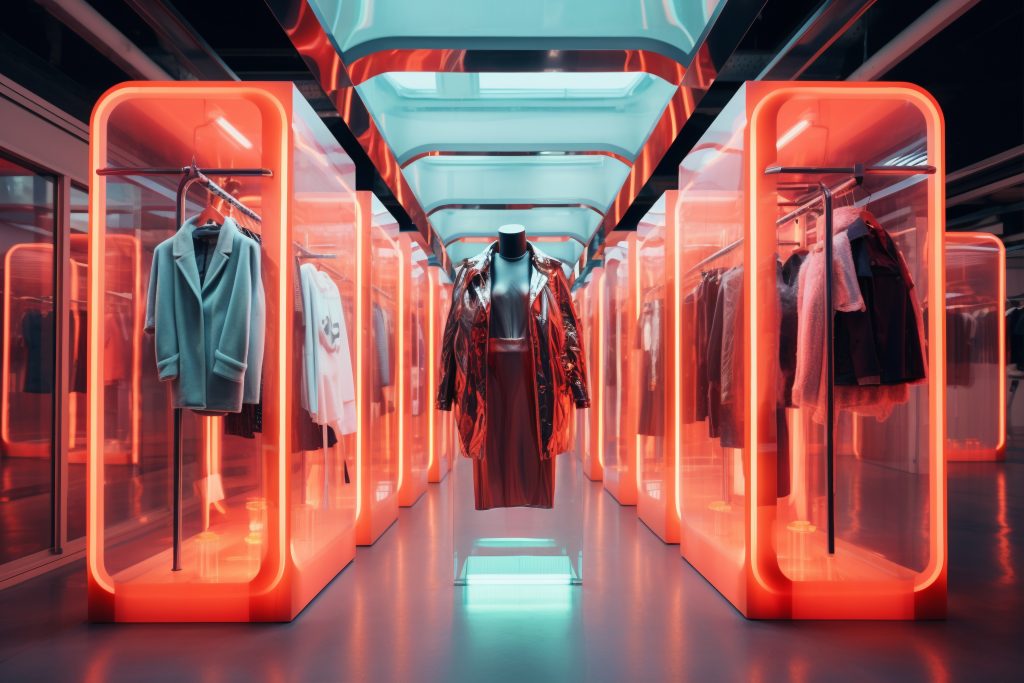
Loja imersiva com design futurista, iluminação digital e exposição de produtos, representando as tendências de inovação e experiência no varejo em 2026.

Half the year is already behind us, and plenty of trends have played out in the retail market, but there’s still a lot of new stuff on the way. In 2026, experience has cemented itself as one of retail’s main competitive differentiators. Every interaction has become an opportunity to strengthen bonds, build brand recall, and create lasting relationships with consumers.

Over the past few years, audiences have become more demanding, more connected, and more selective. People are looking for convenience, personalization, and, above all, experiences that make sense for their routines and values. In this landscape, keeping up with market shifts is no longer just a matter of innovation; it has become an essential strategy for keeping a brand relevant.

However, keeping up with trends doesn’t simply mean following fads. The real challenge lies in understanding which movements reflect structural changes in consumer behavior and how they can be incorporated in a way that’s consistent with the company’s identity.

With that in mind, in today’s article we’ll cover some of the trends that promise to make a significant impact on the retail sector in the second half of this year, and how you can draw inspiration from them to create new campaigns, experiences, and innovations for your business and your audience. Let’s get started! 

What defined the first half of 2026

To kick things off, it’s important to understand that the first months of 2026 were marked by the consolidation of trends that had already been gaining momentum and that delivered concrete results for both consumers and businesses.

Artificial intelligence, for example, stopped being just an operational tool and started playing a direct role in the customer experience. Hyper-personalized recommendations, smart assistants, shopping journeys adapted in real time, and predictive analytics allowed brands to deliver far more relevant and efficient interactions.

Another highlight was the evolution of the phygital concept. The integration between physical and digital channels made the journey more seamless, allowing consumers to move between apps, social media, e-commerce, and physical stores with virtually no noticeable barriers. The experience became continuous, regardless of the touchpoint chosen.

Retail spaces designed for lingering and socializing also gained ground. Many stores went from being merely places to shop to becoming spaces for discovery, relationship-building, and community, investing in events, activations, cafés, workshops, and areas dedicated to interaction between consumers and brands.

These movements reinforce an important point: the greater the perceived value of the experience, the less competition tends to rely solely on price. Today, consumers still take price into account when they buy, but what truly matters to them, and what will make a lasting impression in that space, is the experience.

3 trends set to transform the second half of the year

There’s a lot of innovation arriving in the retail segment that promises to transform the consumer experience. One important common thread among these trends is the use and encouragement of technology, which is a powerful ally when it comes to building great experiences. 

So we’ve selected 3 trends that promise to transform the second half of 2026 and that you can use as inspiration for something new in your space. Check them out: 

1. Multifunctional stores and immersive experiences

The very concept of a store continues to undergo a significant transformation. More and more, physical spaces are no longer serving a purely commercial function and are taking on multiple roles within brand strategy.

Beyond selling products, stores are now offering spaces for events, launches, demos, coworking, content creation, workshops, and sensory experiences that encourage consumers to stay longer.

This movement strengthens what’s known as retailtainment, the combination of retail and entertainment, turning a store visit into a memorable experience and expanding opportunities for brands to build relationships with their audience.

2. AI-driven personalization

If AI had already taken center stage in the market during the first months of the year, in the second half it’s poised to become even more sophisticated. We’ll see AI not as a threat to the market, but as a powerful ally in day-to-day work and in the consumer experience. 

As the tools evolve, it will be possible to understand individual preferences with far greater precision, delivering communications, offers, store layouts, recommendations, and experiences tailored to each consumer’s profile.

More than automating processes, artificial intelligence now supports strategic decisions about the customer experience, allowing brands to anticipate needs and create far more relevant and efficient journeys.

3. Brand communities as a loyalty strategy

Brands that manage to create a sense of belonging tend to build longer-lasting relationships with their consumers. That’s why one of the big bets for the second half of the year is the strengthening of brand communities. 

Instead of focusing solely on selling products, companies are investing in relationship programs, exclusive events, interest groups, collaborative experiences, and spaces where customers share values, interests, and stories.

In this context, store design also takes on a new role. Spaces are no longer merely functional; they now encourage encounters, conversations, and spontaneous interactions, making the physical experience an important point of emotional connection.

The result of applying these trends is a relationship with your audience that’s less transactional and far more grounded in identification, trust, and repeat engagement. This way, you can keep up with what’s new in the market and adapt those innovations to the essence of your business. 

Remember: trends should strengthen your brand identity

The second half of 2026 promises to consolidate a retail landscape that’s even more focused on people, technology, and meaningful experiences. However, keeping up with trends doesn’t mean adopting them indiscriminately.

It’s always worth remembering that not every innovation makes sense for every company. When trends are adopted just because they’re hot, they can lead to experiences that are disconnected from the brand’s identity and create inconsistent messaging for the audience.

That’s why, before implementing any new market development or trend in your business, it’s essential to assess whether it aligns with the company’s purpose, reinforces its values, and truly meets consumer expectations.

Trends come and go. Brands with consistent positioning endure. And it’s precisely those that manage to balance innovation, authenticity, and experience that will be best prepared to build strong, meaningful relationships in the future of retail.

Inscreva-se em nossa Newsletter

Receba no seu email todas as novidades do nosso blog sobre tecnologia e varejo, além de ficar por dentro do novos projetos Alice Wonders.

Thank you for subscribing.

Something went wrong.

Most Popular Topics

Editor Picks

Send this to a friend