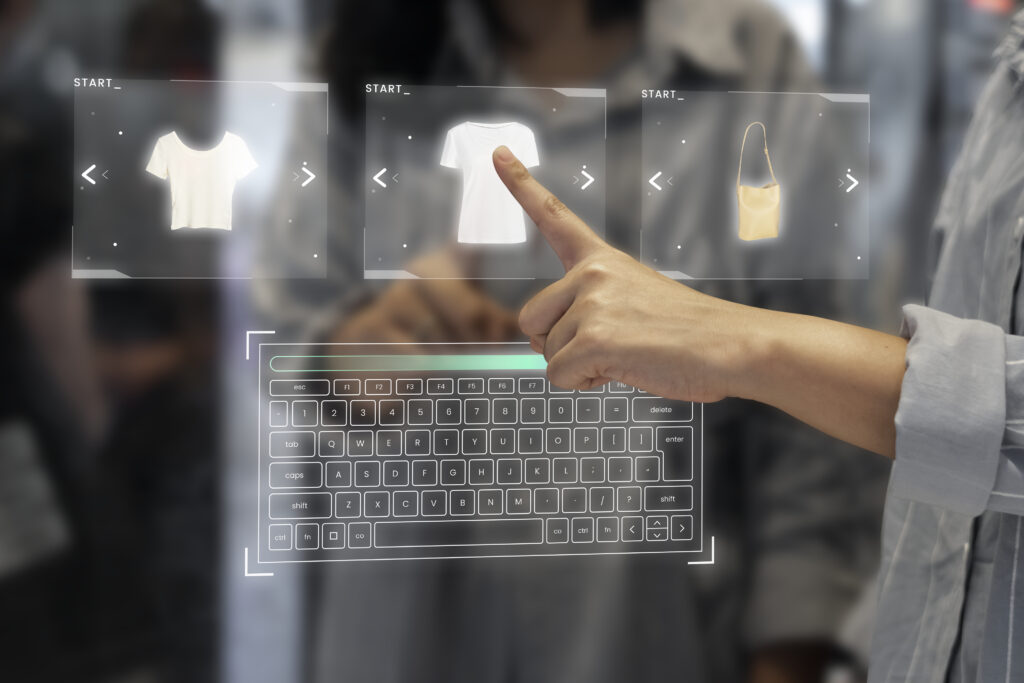
Retail media at the POS is transforming brick-and-mortar retail into an ecosystem of media, data, and monetization. More than an exposure channel, the point of sale now operates as a strategic platform capable of generating incremental revenue, personalizing experiences, and strengthening the connection between brands and consumers.
This shift requires a significant change in mindset: it’s not just about installing screens or creating new display spaces, but about building an ecosystem where data, media, and experience work in an integrated, measurable way.
For companies that have already moved past the initial stage of understanding the concept, the challenge is now more sophisticated. They need to build an operation capable of capturing high-quality data, activating campaigns intelligently, measuring impact accurately, and, above all, turning all of this into a scalable monetization model.
In this context, the POS is no longer a passive environment and instead becomes a dynamic platform, where every interaction can be interpreted, optimized, and converted into value — for both the retailer and its brand partners.
Data Architecture for Retail Media at the POS
Building a consistent retail media strategy at the point of sale depends directly on data management maturity. Unlike the digital environment, where data collection is largely structured, physical retail requires greater effort in instrumentation and integration to turn interactions into actionable information.
The big opportunity lies precisely in capturing signals that reveal behavior in context — something digital alone can’t offer with the same depth. Some of the signals that support data architecture in this environment are:
Identifying truly actionable data
In the physical environment, the relevance of data is directly tied to the ability to translate behavior into intent. Information such as foot traffic, circulation patterns, dwell time in specific areas, and interaction with products or screens provides a richer reading of the consumer journey inside the store.
When this data is combined with transactional information — such as sell-out by SKU, purchase times, and repeat purchases — it creates a solid foundation for understanding not only the end result, but also the factors that influenced the decision.
In addition, data from loyalty programs and CRM adds a layer of context that connects in-store behavior to the consumer’s history. This marks an evolution from a mass-exposure logic to a more precise approach, where retail media is targeted based on real behavioral patterns.
Structuring a data layer in the physical environment
For this data to generate value, it’s essential to build an architecture that enables its continuous capture, processing, and activation. In physical retail, this involves integrating multiple sources — sensors, cameras, POS systems, apps, and digital platforms — into a unified layer that organizes the data and makes it accessible.
This process is far from trivial, as it requires standardization, quality, and consistency, especially when the goal is to scale the operation. Building an efficient data layer involves creating clear processing flows, in which captured data is enriched, integrated with platforms such as CDPs, and made available for activation in campaigns and analyses.
Even when the consumer isn’t directly identified, it’s possible to work with behavioral modeling and segmentation based on browsing and interaction patterns. This ability to turn anonymous data into strategic insights is what drives the evolution of retail media measurement in physical stores.
Governance and LGPD as a strategic factor
Data governance in the physical environment shouldn’t be seen merely as a legal requirement, but as a strategic component of the operation — after all, taking care of data has become a fundamental responsibility in the market.
Compliance with the LGPD, with clear transparency and consent practices, helps build trust, an increasingly valuable asset in a landscape of intensive data use. Beyond avoiding risks, companies that structure their governance well can operate more securely and tap into the potential of data more efficiently.
This balance between protection and smart use is essential to sustaining retail media initiatives, especially when physical and digital channels are integrated. Consumer trust becomes a determining factor for the quality of the data collected and, consequently, for the effectiveness of media strategies.
Technologies That Enable In-Store Retail Media
And of course, we couldn’t leave out technology, which is the main enabler of retail media in the physical environment and, at the same time, the biggest competitive differentiator between more mature operations and those still in their early stages.
The real value doesn’t lie simply in adopting standalone tools, but in the ability to integrate different technology layers into a cohesive system capable of turning data into decisions and experiences into measurable results. To achieve this, we can rely on technologies from different systems, such as:
Physical layer (hardware)
The physical layer is the direct point of contact with the consumer and is made up of devices that capture data and deliver communication. Digital screens, sensors, cameras, beacons, and electronic shelf labels create an infrastructure capable of transforming the store into an interactive, responsive environment.
However, simply using these elements doesn’t guarantee efficiency. Strategic placement, data integration, and alignment with the consumer journey are key factors in making sure these assets truly contribute to retail media.
In this context, the POS becomes a sensory environment, where visual and contextual stimuli directly influence behavior. Technology, therefore, doesn’t just enable communication — it redefines how consumers perceive and interact with the space.
Logical layer (software and intelligence)
If the physical layer is responsible for execution, the logical layer is what makes it possible to scale and optimize the operation. Media management platforms, analytics systems, BI tools, and CDPs form the foundation for turning the POS into a data-driven environment, with logic similar to that of digital.
This structure makes it possible to segment audiences, personalize campaigns, track performance in real time, and continuously adjust strategies. Integrating these platforms is one of the biggest challenges and, at the same time, one of the biggest opportunities.
When well implemented, this integration connects data from different points along the journey, creating a unified view of the consumer and expanding measurement capabilities. This is essential for evolving retail media KPIs, which come to reflect not just exposure, but real impact on behavior and sales.
The role of artificial intelligence and neuroscience
Artificial intelligence acts as a catalyst for this transformation, making it possible to analyze large volumes of data and generate automated decisions in real time. With AI, content displayed on screens can be adjusted based on traffic patterns, time of day, store profile, and even external conditions such as weather or seasonality.
When combined with principles of neuroscience, the technology reaches an even more sophisticated level. We know that a large share of purchasing decisions happen unconsciously, influenced by sensory and contextual stimuli.
Elements such as color, motion, repetition, and placement have a direct impact on consumer attention and memory. By using data to understand behavior and applying these stimuli strategically, retailers can create experiences that don’t just inform but influence decisions in a subtle and effective way.
This is one of the most powerful aspects of in-store retail media: the ability to bring together technology and human behavior to create more relevant interactions, cutting through the noise and increasing conversion.
Measurement and attribution: the big competitive differentiator
Generating and capturing data is extremely valuable in today’s market, but knowing how to measure and attribute it correctly is just as important, because measurement is what turns in-store retail media into a truly sustainable model.
Without the ability to prove impact, media in the physical environment remains limited to an exposure-based logic, similar to what trade marketing has historically been. That’s why measuring this data in retail media calls for a few key strategies, such as:
Defining relevant KPIs
When it comes to retail media KPIs, the focus is no longer limited to reach metrics and expands to include indicators that demonstrate direct business impact. Incremental sales uplift, for example, makes it possible to identify how much a campaign actually influenced purchasing behavior.
Conversion rate per exposure, in turn, helps gauge how effective the messaging is, while ROI ties together the relationship between investment and return. These indicators require a structured, integrated data foundation capable of connecting media exposure to purchasing behavior — one of the biggest challenges in measuring in-store retail media.
Attribution methods in the physical environment
Unlike digital, where attribution is more straightforward, the physical environment requires tailored approaches. A/B testing across stores, control groups, and correlation analyses are some of the methodologies used to isolate the impact of media.
Although more complex, these approaches offer a level of depth that strengthens the credibility of the operation and enables smarter decisions. The ability to measure impact consistently is what underpins the evolution of in-store retail media as a strategic investment channel.
Closing the loop with brands
Consolidating the model depends on the ability to turn data into value that brands can see. That means delivering not just reports, but actionable insights that guide future decisions.
When retailers can clearly demonstrate the impact of campaigns on sales and behavior, they expand their monetization opportunities. Closing this loop is essential to building a sustainable model, where retail media stops being a cost and becomes an investment with proven returns.
Trends that will redefine physical Retail Media
We couldn’t wrap up this piece without talking about the future of in-store retail media, which is directly tied to the evolution of technology and the integration across channels. Programmatic physical media, personalization at scale, and unified omnichannel data are shifts that are set to redefine how retail operates.
In this landscape, the concept of the Brand Ship Store stands out as an evolution of the traditional flagship. More than a space for showcasing products, this model offers an environment for the ultimate brand experience, where community, content, services, and technology come together to create a deeper connection with consumers.
The store becomes a relationship hub, capable of generating ongoing engagement and consistently strengthening the brand. Examples of this model include spaces that offer events, workshops, interactive experiences, and personalized services, creating a journey that goes beyond the purchase.
Technology plays a central role, connecting these experiences to data and enabling measurement and personalization. In this context, in-store retail media is no longer just a communication channel; it becomes part of the experience itself, helping build brand value and generate revenue.
The point of sale is undergoing a structural transformation, evolving from a mere conversion channel into an integrated platform for media, data, and experience. The rise of in-store retail media reflects a broader shift in the role of retail, which is now also operating as a relevant player in the media ecosystem.
Companies that can integrate technology, data, and an understanding of human behavior build operations that are more efficient, measurable, and scalable. Combining in-store retail media measurement, strategic use of data, and the application of neuroscience principles not only boosts campaign performance but also elevates the quality of the consumer experience.
In this new landscape, the competitive edge will belong to those who can turn the point of sale into an intelligent environment, where every interaction generates learning, every campaign delivers results, and every experience strengthens the relationship with the consumer.
Inscreva-se em nossa Newsletter
Receba no seu email todas as novidades do nosso blog sobre tecnologia e varejo, além de ficar por dentro do novos projetos Alice Wonders.
Thank you for subscribing.
Something went wrong.
Respeitamos sua privacidade e levamos a sério a sua proteção