Retail Media on the Rise: Why Is This Market Growing So Fast? Comments Off on Retail Media on the Rise: Why Is This Market Growing So Fast? 1411

retail media

The concept of retail media is becoming very common in the retail market, especially with the growth of digital marketing strategies. This advertising model not only helps brands reach their consumers more effectively, but also creates new opportunities for retail stores to become more interactive and personalized.

But why has this phenomenon gained so much momentum? The answer lies in retail media’s ability to integrate advertising campaigns directly into the shopping environment, which offers a smoother and more relevant experience for consumers.

Instead of relying exclusively on ads in traditional media or social networks, retail media allows advertisers to connect directly with their target audiences while they are already at the moment of purchase decision.

We also can’t overlook the fact that new real-time data collection technologies have allowed retail stores to create increasingly personalized experiences for consumers.

This makes retail media an even more powerful tool, as it allows retailers to better understand their customers’ behavior and adjust their marketing strategies quickly and effectively.

With that in mind, today we’ll look at what retail media is, how it works, and explore the reasons behind its steady growth, as well as examine the trends in this market that are driving this transformation and revolutionizing the shopping experience.

What is retail media and how does it work?

Retail media is a concept that is revolutionizing the way brands and advertisers connect with consumers within retail environments.

This advertising model allows brands to promote their products directly on the sales channels of large retail chains, such as marketplaces, e-commerce sites and even brick-and-mortar stores.

This way, communication happens at the most strategic moment of the shopping journey: when the consumer has already shown intent to buy a product. The retail media strategy has been gaining momentum globally and was also one of the highlights of NRF, the world’s largest retail event.

NRF has shown how major players in the industry are investing in their own media within their ecosystems, creating new revenue streams and offering brands a highly targeted channel to reach the right audience at the right time.

Retail media works by combining shopping behavior data with advertising formats integrated into consumer touchpoints, such as ads on retailer websites, personalized promotions in apps and digital screens in physical stores.

As a result, retailers become true media spaces, delivering more relevant experiences and increasing sales conversion. Whether for brands looking to expand their visibility or for retailers seeking new monetization opportunities, Retail Media has already established itself as one of the most promising strategies in the market.

Keeping an eye on the trends presented at NRF and those coming to the market is essential to understanding how this model can be applied innovatively in your retail store and strengthen your market presence.

Understand why Retail Media is booming in the market

As we’ve seen so far, retail media has established itself as one of the biggest trends in the global market, transforming the way brands and retailers engage with consumers.

With impressive growth, this strategy already moves billions of dollars and is increasingly present in the digital marketing strategies of major retail chains. But have you ever stopped to think about why retail media is booming and being so widely adopted?

To answer that question, we’ve highlighted five reasons that explain this phenomenon and its relevance in the market. Check them out below:

1 – A billion-dollar market in expansion

Retail media isn’t just a passing trend, but rather a sector in constant expansion. According to estimates, this form of advertising is expected to reach around US$ 110 billion globally by 2026, showing its enormous growth potential.

This growth reflects brands’ increasing interest in investing directly at the point of sale, where consumers are already highly likely to buy. Major retail companies have already built robust in-house advertising ecosystems, attracting significant investment and becoming true media giants.

2 – Accelerated adoption by retailers and manufacturers

Brazil has stood out in this landscape, following the global trend. Research indicates that 79% of manufacturers already use retail media, and all of them see this strategy as essential to the future of retail.

In addition, brands are realizing that advertising on e-commerce platforms and in brick-and-mortar stores can be much more efficient than traditional media, as it directly reaches consumers at the moment of purchase decision.

3 – A new source of monetization for retail

One of the reasons for retail media’s rapid growth is its positive financial impact on retailers. Large companies have already begun implementing advertising strategies on their platforms, following in the footsteps of giants like Amazon and Mercado Livre.

By turning their own sales channels into valuable advertising spaces, these companies can increase their profitability without relying exclusively on the profit margin of the products they sell.

4 – Technological advances and new partnerships

Technology has been a major ally in the growth of retail media. Large retail chains are investing heavily in artificial intelligence and data analytics to make ads more accurate and personalized.

In addition, new strategic partnerships between retailers and digital platforms are being formed to further boost this market. The trend is that, in the coming years, retail media campaigns will become increasingly targeted and efficient, delivering an even greater return on investment (ROI) for brands.

5 – Global prominence and accelerated growth

The importance of retail media has been widely discussed at the industry’s leading events, such as NRF, the world’s largest retail show. In recent years, NRF has spotlighted the rise of advertising platforms within both e-commerce and brick-and-mortar retail, reinforcing that this is one of the most promising strategies today.

The discussions at NRF New York show how major players are adapting their business models to integrate retail media, creating new opportunities for brands and retailers to maximize sales and audience engagement.

These are some of the reasons why retail media continues to grow at a rapid pace. Its ability to reach consumers at the moment of purchase, generate new revenue for retailers and deliver highly targeted campaigns makes it an indispensable strategy in today’s landscape.

With continued investment in technology, this trend is only set to grow stronger in the coming years. If you work in retail or digital marketing, it’s worth keeping an eye on retail media and the opportunities it can bring to your business!

The future and trends of retail design

The future of retail design is intrinsically linked to the integration of technology and customer experience, transforming retail stores into interactive and engaging spaces.

Events such as NRF in New York highlight trends that point to the need for innovation in store design, aimed at meeting the expectations of increasingly connected and demanding consumers.

In this context, Alice Wonders stands out as a company specializing in creating digital retail experiences. Combining design, technology and architecture, the company develops customized solutions that turn the point of sale into an interactive environment, delivering a distinctive shopping journey for customers.

By investing in retail design innovations, retail stores can stand out in an increasingly competitive market, offering unique experiences that build customer loyalty and boost sales.

Inscreva-se em nossa Newsletter

Receba no seu email todas as novidades do nosso blog sobre tecnologia e varejo, além de ficar por dentro do novos projetos Alice Wonders.

Thank you for subscribing.

Something went wrong.

Previous ArticleNext Article

5 phygital stores that are revolutionizing retail Comments Off on 5 phygital stores that are revolutionizing retail 70103

phygital

The phygital concept is transforming retail, bringing together the best of the physical and digital worlds to create immersive, personalized experiences at the point of sale (POS). By combining technology, innovative design and real-time interaction, some stores are taking the customer experience to a whole new level.

Check out five phygital stores that are revolutionizing retail:

1. Bandai Namco Cross Store: a paradise for Japanese pop culture fans

If you’re a fan of anime, games and collectibles, you’ll love the Bandai Namco Cross Store in the United States. Following the success of the London location, this megastore in Industry City brings all of the company’s iconic brands together under one roof:

  • 10 official spaces dedicated to exclusive Bandai Namco products;
  • Anime and gaming collectibles and figures;
  • Exclusive card games, such as the One Piece Card Game;
  • The nostalgic return of Tamagotchis;
  • PAC-MAN, Tekken and Dragon Ball merchandise.

Located in Industry City’s Japan Village, the store offers an immersive experience, complete with a Japanese market, food stalls, a sake shop and much more. More than just a point of sale, the Cross Store is a place to experience the Bandai Namco universe in an authentic, interactive way.

2. Adore Beauty: technology and personalization in brick-and-mortar retail

Adore Beauty, known for revolutionizing beauty e-commerce, has expanded its strategy into physical stores. Its Melbourne location is a true hub of technology and personalized experience.

The store features the Observ 520x, which performs a detailed digital skin analysis for personalized recommendations; an event and masterclass space that brings customers and brands closer together; and more than 300 brands, creating a complete assortment for different consumer profiles.

By investing in an interactive environment, Adore Beauty reinforces its commitment to innovation and expertise in the beauty industry.

3. Nike House of Innovation: The Future of Retail in New York

Located on Fifth Avenue in Manhattan, the Nike House of Innovation redefines the brick-and-mortar store concept with six floors of technology and interactive design.

The space features mobile payments and access to information via QR codes; digitally activated, customized Scenic mannequin bases; and multisensory environments that connect shoppers directly to the brand.

By combining digital and physical elements, the Nike House of Innovation is an example of high-performance phygital retail

4. Jacquemus Boutique in Paris: phygital gaining momentum

The Jacquemus boutique on Avenue Montaigne in Paris is an invitation to interactivity and immersive experiences. With a storefront window featuring a vintage computer displaying the message “site down,” the space encourages people to explore the store in person.

The space also boasts a minimalist, luxurious design that showcases the products like works of art, along with a facade of large windows that flood the space with light and reinforce the brand’s modern aesthetic. The store turns shopping into a sensory experience that blends technology, design and exclusivity.

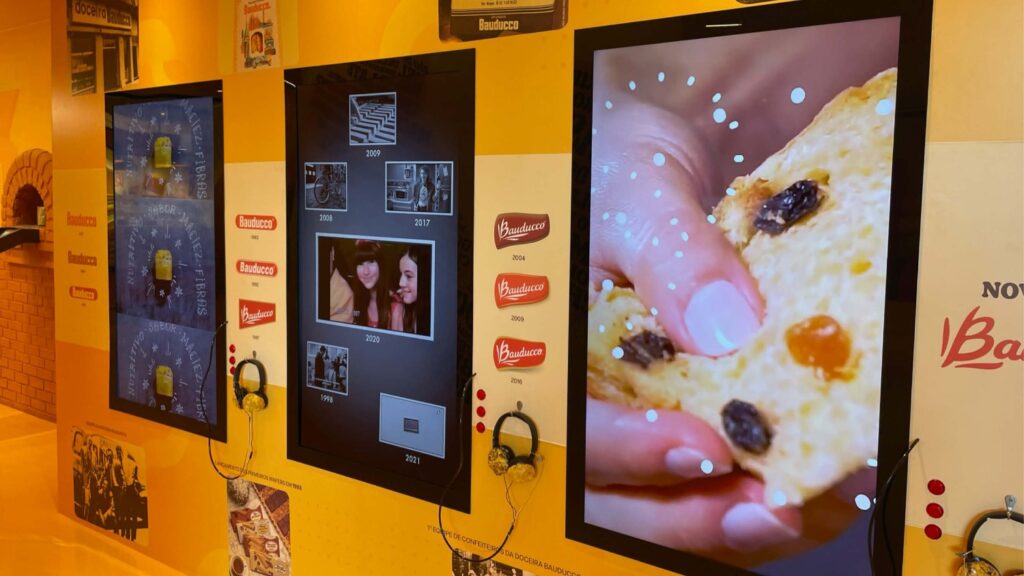
5. Bauducco’s Ecoparada: experience and interactivity across 1,000 m²

Bauducco’s Ecoparada is a concept store that takes interactivity to another level. Spanning more than 1,000 m², the space offers an immersive dive into the brand’s history and production, all through:

  • Custom panettone making in a playful, interactive space;
  • Big screens with headphones, allowing visitors to watch the story of Bauducco;
  • Live panettone production, bringing consumers closer to the brand.

Ecoparada Bauducco is an example of how phygital can turn the POS into a space for experience and connection with customers.

Conclusion

Phygital retail is redefining the point of sale, creating immersive, interactive experiences that engage consumers in innovative ways. By integrating technology, personalization and interactivity, these stores show that the future of retail is a perfect blend of physical and digital.

Whether through personalized analyses, interactive storefronts or digital art installations, brands that invest in phygital are creating new ways to drive engagement and loyalty. Keep an eye on these trends and follow along as retail continues to evolve in the years ahead!

Inscreva-se em nossa Newsletter

Receba no seu email todas as novidades do nosso blog sobre tecnologia e varejo, além de ficar por dentro do novos projetos Alice Wonders.

Thank you for subscribing.

Something went wrong.

Immersive Marketing Strategies to Boost Sales Comments Off on Immersive Marketing Strategies to Boost Sales 1233

marketing imersivo

Consumer behavior has changed dramatically. Today, simply offering a product or service isn’t enough; brands need to create engaging, memorable experiences that build authentic, meaningful connections. And that’s where immersive marketing comes in.

Broadly speaking, it’s a strategy that transforms the sales funnel by combining technology, interactivity and storytelling to attract and engage audiences. Ready to learn more about this concept and its many possible uses and applications?

What Is Immersive Marketing?

Immersive marketing is a strategy that uses elements such as augmented reality (AR), virtual reality (VR), holography, interactive projections and sensory experiences to create a deeper connection between consumers and brands.

In other words, the goal of this strategy is to turn the POS (point of sale) and digital channels into dynamic spaces that encourage interaction and boost conversion rates.

How Does Immersive Marketing Impact Sales?

By integrating immersive techniques, marketing takes on new dimensions, becoming more appealing and effective at every stage of the sales funnel, which is divided into top, middle and bottom. Here’s how each stage breaks down:

Top of the funnel

At this stage, marketing sparks curiosity and builds brand awareness through interactive, viral campaigns. In other words, it introduces potential prospects to your brand and your services.

Middle of the funnel

Here, marketing acts as a tool that makes it easier to try out the product, reducing objections and increasing consumer interest in your brand.

Bottom of the funnel

In the final stage, marketing converts customers through personalized, memorable experiences that drive the purchase decision.

Practical Examples of Immersive Marketing

It’s clear that Immersive Marketing is revolutionizing the way brands and consumers interact, making shopping experiences more engaging, interactive and memorable.

As technology advances, new solutions are being rolled out in both brick-and-mortar and digital retail, amplifying the impact of engagement strategies. Check out a few practical examples!

1 – Augmented Reality at the POS

Today, retailers are investing in Augmented Reality to delight customers and, above all, to build a connection between brand and audience. A practical example is the interactive experiences Alice Wonders developed for Bauducco’s iconic digital flagship store on Av. Paulista:

2 – Digital Personalization

Major retailers use AI to recommend products based on user behavior and preferences, creating an immersive shopping environment. Alice Wonders, for example, developed a smart table that helped customers find the perfect laptop:

3 – VR Experiences

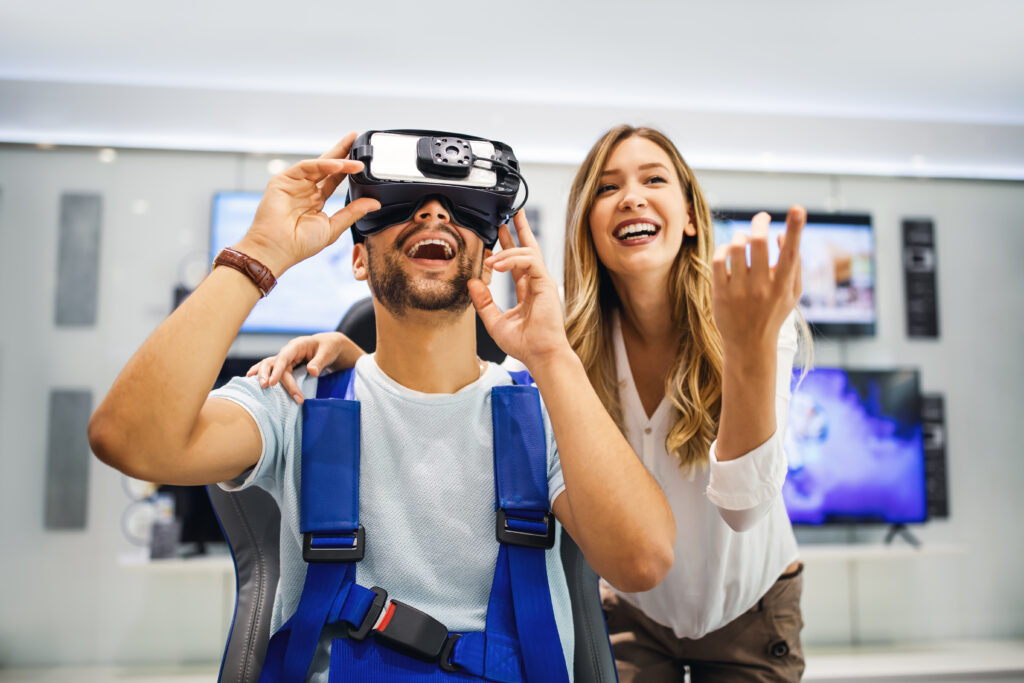
Stores across a wide range of segments are betting on Virtual Reality to take customers into a new dimension. From car dealerships that let consumers “drive” a new car before they even get behind the wheel, to real estate developers that let customers see the view from their dream apartment.

One example of the latter is FLOAT 4D, a multisensory journey that engages, delights and creates unforgettable memories. With it, you can launch a new development, showcase views and spaces enhanced with 4D effects, and connect customers with the dream of their new home:

How to Implement Immersive Marketing for Your Brand

It’s no secret that Immersive Marketing can transform the customer experience and set your brand apart in the market. To implement it successfully, you can follow a few basic steps:

  • Map the customer journey and identify touchpoints where immersion can add value;
  • Invest in technology that fits your audience and budget, whether AR, VR or digital interactivity;
  • Integrate immersive experiences with your online and offline marketing strategies;
  • Track results with engagement metrics, conversion rates and return on investment (ROI).

Overall, immersive marketing is expected to keep evolving, with new technologies and increasingly personalized applications. Brands that embrace this strategy now will get ahead of the competition, creating more engaging shopping experiences and significantly increasing their sales.

If your brand hasn’t explored immersive marketing yet, now is the time to start. The retail revolution is already underway, and immersion is the key to winning over today’s consumers!

Inscreva-se em nossa Newsletter

Receba no seu email todas as novidades do nosso blog sobre tecnologia e varejo, além de ficar por dentro do novos projetos Alice Wonders.

Thank you for subscribing.

Something went wrong.

Most Popular Topics

Editor Picks

Send this to a friend